

Penguin Publishing Group
Sizing People Up
Sizing People Up
Couldn't load pickup availability
Collapsible content
ABOUT
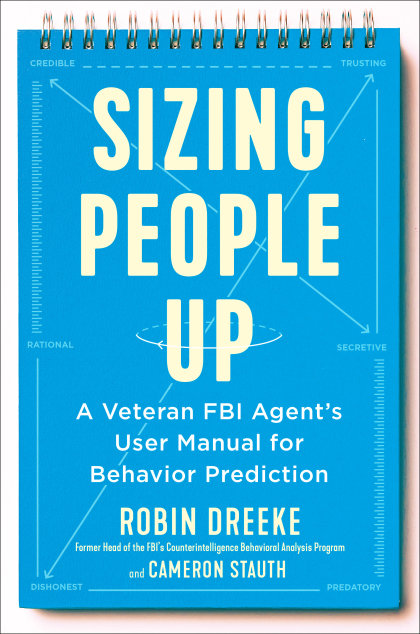
After two decades as a behavior analyst in the FBI, Robin Dreeke knows a thing or two about sizing people up. He's navigated complex situations that range from handling Russian spies to navigating the internal politics at the Bureau. Through that experience, he was forced to develop a knack for reading people--their intentions, their capabilities, their desires and their fears.
Dreeke's first book, It's Not All About "Me," has become a cult favorite with readers seeking to build quick rapport with others. His last book, The Code of Trust, was about how to inspire trust in others as a leader. In Sizing People Up, Dreeke shares his simple, six-step system that helps you predict anyone's future behavior based on their words, goals, patterns of action, and the situation at hand.
Predicting the behavior of others is an urgent need for anyone whose work involves relationships with others, whether it's leading an organization, collaborating with a teammate, or closing a sale. But predictability is not as simple as good and evil, or truth and fiction. Allies might make a promise with every intention of keeping it, not realizing that they will be unable to do so due to some personal shortcoming. And those seeking to thwart your endeavor may not realize how reliable their malevolent tells have become.
Dreeke's system is simple, but powerful. For instance, a colleague might have a strong moral code, but do they believe your relationship will be long-term? Even the most upstanding person can betray your trust if they don't see themselves tied to you or your desired result in the long term. How can you determine whether someone has both the skill and will to do what they've said they're going to do? Behaviors as subtle as how they take notes will reveal their reliability.
Using this book as their manual, readers will be able to quickly and easily determine who they can trust and who they can't; who is likely to deliver on promises and who will disappoint; and when a person is vested in your success vs when they are actively plotting your demise. With this knowledge they can confidently embark on anything from a business venture to a romantic relationship to a covert operation without the stress of the unknown.
STANDARD, PRIMARY, DM AND VARIANT COVERS
Standard and Primary covers are widely available through general retailers. They often have higher print runs and can be cheaper, especially during sales.
In contrast, Direct Market (DM) and variant covers are primarily sold in comic shops. DM editions tend to have more limited availability and may be more valuable to collectors.
The main differences lie in artwork style, availability, price, and collector appeal. Ultimately, the choice between standard and variant covers depends on personal preference, budget, and individual collecting goals.
PRODUCT TYPES
Comic book enthusiasts have various formats to choose from when collecting their favorite stories.
Here's a brief overview of the main types:
Omnibus
- Large, hardcover collections
- Usually contain complete runs or extensive story arcs
- Typically 800-1000+ pages
- Higher price point, often €100-€150
Oversized Hardcover (OHC)
- Similar dimensions to omnibus, but thinner
- Collect shorter runs or story arcs
- Usually 300-600 pages
- Priced between €30-€50
Hardcover (HC)
- Standard-sized hardcover books
- Collect 6-12 issues typically
- Similar dimensions to single issues, but with a hard cover
- Priced around €25-€35
Trade Paperback (TP)
- Softcover collections
- Standard comic book size
- Usually collect 4-6 issues
- Most affordable option, typically €15-€25
Other Formats
- Absolute Editions: Oversized, deluxe hardcovers (mainly DC Comics)
- Compendiums: Massive paperback collections
- Graphic Novels (OGN/GN): Original stories not previously released as single issues
The choice between these formats often depends on personal preference, budget, and collecting goals. Omnibus and OHC editions offer larger artwork and more content but at a higher price, while TPs provide a more affordable way to collect complete story arcs