

Berrett-Koehler Publishers
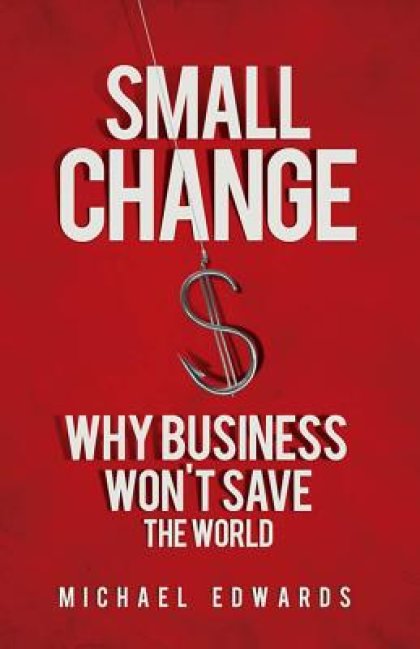
Small Change
Small Change
Couldn't load pickup availability
Collapsible content
ABOUT
A new movement is afoot that promises to save the world by bringing the magic of the market to philanthropy. Nonprofits should be run like businesses, its adherents say, and businesses can find new sources of revenue by marketing goods and services that benefit society. What could be wrong with that?
Plenty, argues Michael Edwards. In this hard-hitting, controversial expose he marshals a wealth of evidence to show just how far short the promise of so-called philanthrocapitalism has fallen, and why the whole concept is fundamentally flawed. Some business practices can be beneficial to nonprofits, and it’s definitely a good thing that the for-profit sector is developing a social conscience. Edwards carefully specifies when businesses and business thinking can help. But to really get at the root causes of the systemic problems most nonprofits wrestle with—hunger, poverty, disease, violence—a completely different way of operating is required.
Social transformation demands cooperation rather than competition, collective action more than individual effort, and patient, long-term support for solutions over short-term results. Philanthrocapitalism concentrates power in the hands of a few major players, mirroring the very inequities civil organizations should be trying to ameliorate. With a vested interest in the status quo, it shies away from fundamental change. At most all it can promise is valuable but limited advances: small change. Ultimately, Edwards declares that the use of business thinking can and does corrupt civil society. It’s time to differentiate the two—and re-assert the independence of global citizen action.
“Anyone who wants the truth of philanthropy in America should read this book.” —Robert B. Reich
PRE-ORDER
Secure the best deal by acting fast! Our Pre-Order promo offers unbeatable prices on must-have items. Be quick to lock in the lowest cost before the promo ends.
The best part? You won't be charged until your item is ready to ship. This means you can reserve your product at the best price without immediate payment. Whether you're first in line or just ahead of the crowd, you're making a smart choice. Reserve your item now and enjoy the benefits of being an early buyer, with the added flexibility of delayed payment!
STANDARD, PRIMARY, DM AND VARIANT COVERS
Standard and Primary covers are widely available through general retailers. They often have higher print runs and can be cheaper, especially during sales.
In contrast, Direct Market (DM) and variant covers are primarily sold in comic shops. DM editions tend to have more limited availability and may be more valuable to collectors.
The main differences lie in artwork style, availability, price, and collector appeal. Ultimately, the choice between standard and variant covers depends on personal preference, budget, and individual collecting goals.
PRODUCT TYPES
Comic book enthusiasts have various formats to choose from when collecting their favorite stories.
Here's a brief overview of the main types:
Omnibus
- Large, hardcover collections
- Usually contain complete runs or extensive story arcs
- Typically 800-1000+ pages
- Higher price point, often €100-€150
Oversized Hardcover (OHC)
- Similar dimensions to omnibus, but thinner
- Collect shorter runs or story arcs
- Usually 300-600 pages
- Priced between €30-€50
Hardcover (HC)
- Standard-sized hardcover books
- Collect 6-12 issues typically
- Similar dimensions to single issues, but with a hard cover
- Priced around €25-€35
Trade Paperback (TP)
- Softcover collections
- Standard comic book size
- Usually collect 4-6 issues
- Most affordable option, typically €15-€25
Other Formats
- Absolute Editions: Oversized, deluxe hardcovers (mainly DC Comics)
- Compendiums: Massive paperback collections
- Graphic Novels (OGN/GN): Original stories not previously released as single issues
The choice between these formats often depends on personal preference, budget, and collecting goals. Omnibus and OHC editions offer larger artwork and more content but at a higher price, while TPs provide a more affordable way to collect complete story arcs