

Random House Publishing Group
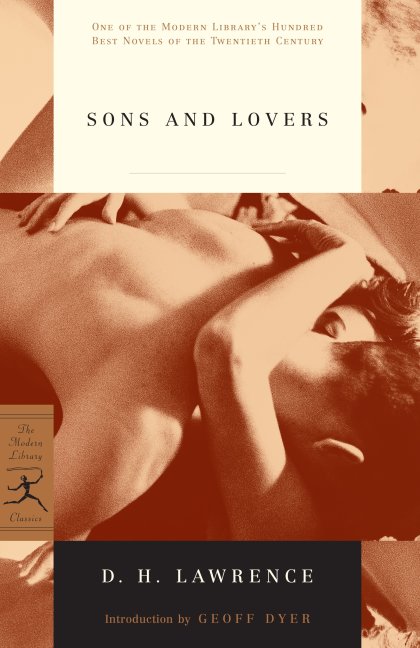
Sons and Lovers
Sons and Lovers
Couldn't load pickup availability
Collapsible content
ABOUT
With a new Introduction by Geoff Dyer
Commentary by Anthony Burgess, Jessie Chambers, Frieda Lawrence, V.S. Pritchett, Kate Millett, and Alfred Kazin
Of all Lawrence's work, Sons and Lovers tells us most about the emotional source of his ideas," observed Diana Trilling. "The famous Lawrence theme of the struggle for sexual power--and he is sure that all the struggles of civilized life have their root in this primary contest--is the constantly elaborated statement of the fierce battle which tore Lawrence's family."
Sons and Lovers is one of the landmark novels of the twentieth century. When it appeared in 1913, it was immediately recognized as the first great modern restatement of the oedipal drama, and it is now widely considered the major work of D. H. Lawrence's early period. This intensely autobiographical novel recounts the story of Paul Morel, a young artist growing to manhood in a British working-class family rife with conflict. The author's vivid evocation of the all-consuming nature of possessive love and sexual attraction makes this one of his most powerful novels.
For the critic Kate Millett, "Sons and Lovers is a great novel because it has the ring of something written from deeply felt experience. The past remembered, it conveys more of Lawrence's own knowledge of life than anything else he wrote. His other novels appear somehow artificial beside it."
STANDARD, PRIMARY, DM AND VARIANT COVERS
Standard and Primary covers are widely available through general retailers. They often have higher print runs and can be cheaper, especially during sales.
In contrast, Direct Market (DM) and variant covers are primarily sold in comic shops. DM editions tend to have more limited availability and may be more valuable to collectors.
The main differences lie in artwork style, availability, price, and collector appeal. Ultimately, the choice between standard and variant covers depends on personal preference, budget, and individual collecting goals.
PRODUCT TYPES
Comic book enthusiasts have various formats to choose from when collecting their favorite stories.
Here's a brief overview of the main types:
Omnibus
- Large, hardcover collections
- Usually contain complete runs or extensive story arcs
- Typically 800-1000+ pages
- Higher price point, often €100-€150
Oversized Hardcover (OHC)
- Similar dimensions to omnibus, but thinner
- Collect shorter runs or story arcs
- Usually 300-600 pages
- Priced between €30-€50
Hardcover (HC)
- Standard-sized hardcover books
- Collect 6-12 issues typically
- Similar dimensions to single issues, but with a hard cover
- Priced around €25-€35
Trade Paperback (TP)
- Softcover collections
- Standard comic book size
- Usually collect 4-6 issues
- Most affordable option, typically €15-€25
Other Formats
- Absolute Editions: Oversized, deluxe hardcovers (mainly DC Comics)
- Compendiums: Massive paperback collections
- Graphic Novels (OGN/GN): Original stories not previously released as single issues
The choice between these formats often depends on personal preference, budget, and collecting goals. Omnibus and OHC editions offer larger artwork and more content but at a higher price, while TPs provide a more affordable way to collect complete story arcs