

Doubleday Canada
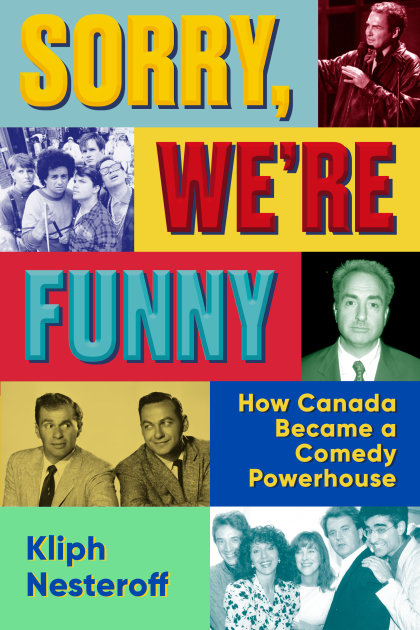
Sorry, We're Funny
Sorry, We're Funny
Couldn't load pickup availability
Collapsible content
ABOUT
"Canada is chock-full of broadcasting talent but hasn't a comedian worth his salt." So said the first Canadian Radio Commissioner echoing a near universal sentiment throughout most of the twentieth century: Canadians simply weren't that funny. They were too deferential, too serious, too Canadian to be funny. And yet, behind their polite exterior, Canadians were pioneering modern comedy.
Canadians built the first Hollywood studios, produced the first comedy films and trained scores of burgeoning comedy directors, writers and actors. "You can hardly move about Hollywood and Manhattan without bumping into Canadians," wrote Variety in the 1960s, so ubiquitous were their presence in writers' rooms, studios and TV boardrooms. This wasn't because they preferred working in the US to Canada; rather, the lack of opportunity and appreciation in their home country offered them few other choices.
But Canadian comics continued to dream of a comedy scene they could call their very own. And from Vancouver to St. John's, from one generation to the next, they began building the country's comedy infrastructure, one revue, troupe and late-night sketch show at a time. Pushing back against cultural conservatism, media control and national modesty, they were inventing a new kind of comedy—sly and subversive, character-driven and absurdist, and quietly revolutionary. It was distinctly Canadian, made by and for Canadians, and it would soon take the comedy world by storm.
Weaving together more than a century of Canada's funniest voices, Sorry, We're Funny is the most in-depth telling yet of how—against all odds—Canada discovered its comedic voice and became a comedy powerhouse.
STANDARD, PRIMARY, DM AND VARIANT COVERS
Standard and Primary covers are widely available through general retailers. They often have higher print runs and can be cheaper, especially during sales.
In contrast, Direct Market (DM) and variant covers are primarily sold in comic shops. DM editions tend to have more limited availability and may be more valuable to collectors.
The main differences lie in artwork style, availability, price, and collector appeal. Ultimately, the choice between standard and variant covers depends on personal preference, budget, and individual collecting goals.
PRODUCT TYPES
Comic book enthusiasts have various formats to choose from when collecting their favorite stories.
Here's a brief overview of the main types:
Omnibus
- Large, hardcover collections
- Usually contain complete runs or extensive story arcs
- Typically 800-1000+ pages
- Higher price point, often €100-€150
Oversized Hardcover (OHC)
- Similar dimensions to omnibus, but thinner
- Collect shorter runs or story arcs
- Usually 300-600 pages
- Priced between €30-€50
Hardcover (HC)
- Standard-sized hardcover books
- Collect 6-12 issues typically
- Similar dimensions to single issues, but with a hard cover
- Priced around €25-€35
Trade Paperback (TP)
- Softcover collections
- Standard comic book size
- Usually collect 4-6 issues
- Most affordable option, typically €15-€25
Other Formats
- Absolute Editions: Oversized, deluxe hardcovers (mainly DC Comics)
- Compendiums: Massive paperback collections
- Graphic Novels (OGN/GN): Original stories not previously released as single issues
The choice between these formats often depends on personal preference, budget, and collecting goals. Omnibus and OHC editions offer larger artwork and more content but at a higher price, while TPs provide a more affordable way to collect complete story arcs