

Knopf Canada
Spelling Mississippi
Spelling Mississippi
Couldn't load pickup availability
Collapsible content
ABOUT
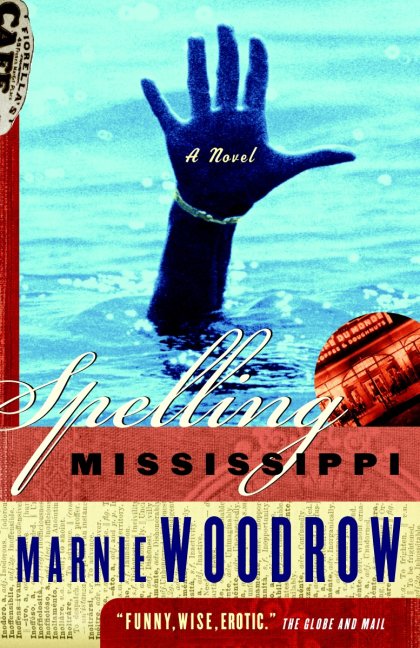
After Cleo arrives in New Orleans on holiday, she’s not quite sure what she means to find there, or how long she will stay. At first, all that is important is that she’s finally “away”: that she can let go of her life in Toronto and allow herself to be caught up in the swirls of the city itself. This is the New Orleans of magnolia breezes and bourbon afternoons, and Cleo gives herself over to days spent experiencing the French Quarter in the languorous fashion it seems to require. But then one night, while sitting alone on a wharf watching the Mississippi roll by, something happens that wakes her up from her reverie and gives her an urgent sense of the direction in which she must go.
When a woman in an evening gown and a rhinestone tiara leaps over Cleo’s head and into the Mississippi River and disappears into a mammoth swell, Cleo is at a loss for what to do, and can only run away. Having just witnessed what she believes to be a suicide, she spends the night distraught and alone in her hotel, the Pommes Royales, replaying the scene in her mind and unsuccessfully barricading the doors against the flood of emotions headed her way. Over the next days, despite efforts to return to her explorations of the city, she cannot shake loose the intensity of this experience, as if some aspect of it has opened her eyes to truths unknown.
Madeline, it turns out, had not intended to commit suicide, and did not. Rather, she leapt into the river because she needed to, and survived her crossing -- and the night itself -- despite the evening clothes weighing her down. For her, water has always had an irresistible pull, and at that dark hour, when everything in her life and in her marriage appeared to be falling apart, it was just the remedy for her anger and her pain. When she emerges on the other shore, Madeline isn’t sure of how exactly this swim has changed her, but she knows it has, and triumphantly sits down for some turtle soup and a bourbon at a favourite café. She will spend the next days trying to take back control of her life. What she doesn’t realize, though, is that she has also changed the life of another.
A brief report on the evening news about a mysterious river-swimmer who has just been unwillingly plucked out of the Mississippi sends Cleo the lifeline that she needs. Certain that this second swimmer must be the same woman, Cleo becomes determined to find her, having become tangled in the flowing robes of her story on that fateful night. And as we follow them separately -- Cleo on her search through the streets of New Orleans for Madeline, and Madeline through her struggles to figure out what she even needs to find -- each woman’s story unfolds in waves of experience and memory in such a way that it seems fate has always meant for them to meet.
For instance, Madeline and Cleo both arrived in New Orleans haunted by, and trying to escape, their pasts. Cleo’s mother disappeared when she was young, as the family was moving to Canada from England, and Cleo has never been able to escape the pain of her absence. Madeline’s mother was always too present; not only could she not make up for Madeline’s father leaving, but she pushed her daughter away besides. Yet Cleo and Madeline also share in not being able to come to terms with what pushes them forward. They are like two rivers flowing to a single path, each gaining momentum as it nears the other. And when the confluence occurs at last, their shared desires and needs come together with startling force, crashing at the shores of their histories one experience and one memory at a time.
As it continues on to its enchanting conclusion, Spelling Mississippi redoubles in both intensity and magic, and Woodrow draws us into its flow with writing driven by equal parts passion and wry humour. This is a love story set in New Orleans, after all, and the rules do not necessarily apply. What is certain, though, is that this book marks the debut of a thrilling new novelist, whose work will stay with us just as surely as Cleo and Madeline and New Orleans will haunt each other for time to come.
STANDARD, PRIMARY, DM AND VARIANT COVERS
Standard and Primary covers are widely available through general retailers. They often have higher print runs and can be cheaper, especially during sales.
In contrast, Direct Market (DM) and variant covers are primarily sold in comic shops. DM editions tend to have more limited availability and may be more valuable to collectors.
The main differences lie in artwork style, availability, price, and collector appeal. Ultimately, the choice between standard and variant covers depends on personal preference, budget, and individual collecting goals.
PRODUCT TYPES
Comic book enthusiasts have various formats to choose from when collecting their favorite stories.
Here's a brief overview of the main types:
Omnibus
- Large, hardcover collections
- Usually contain complete runs or extensive story arcs
- Typically 800-1000+ pages
- Higher price point, often €100-€150
Oversized Hardcover (OHC)
- Similar dimensions to omnibus, but thinner
- Collect shorter runs or story arcs
- Usually 300-600 pages
- Priced between €30-€50
Hardcover (HC)
- Standard-sized hardcover books
- Collect 6-12 issues typically
- Similar dimensions to single issues, but with a hard cover
- Priced around €25-€35
Trade Paperback (TP)
- Softcover collections
- Standard comic book size
- Usually collect 4-6 issues
- Most affordable option, typically €15-€25
Other Formats
- Absolute Editions: Oversized, deluxe hardcovers (mainly DC Comics)
- Compendiums: Massive paperback collections
- Graphic Novels (OGN/GN): Original stories not previously released as single issues
The choice between these formats often depends on personal preference, budget, and collecting goals. Omnibus and OHC editions offer larger artwork and more content but at a higher price, while TPs provide a more affordable way to collect complete story arcs