

Library of America
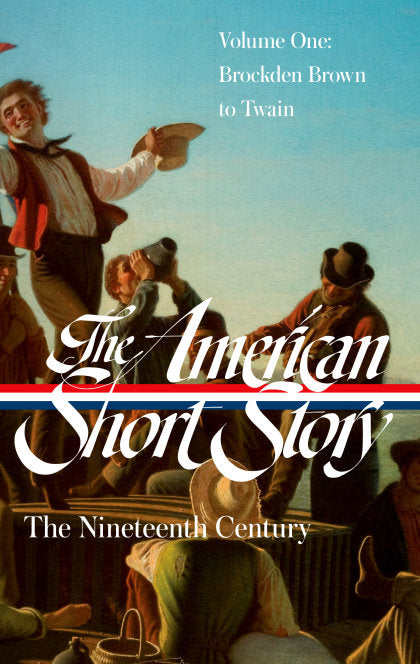
The American Short Story: The Nineteenth Century, Volume 1 (LOA #394)
The American Short Story: The Nineteenth Century, Volume 1 (LOA #394)
Couldn't load pickup availability
Collapsible content
ABOUT
A diverse, unprecedented gathering of more than one hundred stories, representing work by fifty different writers
As much a nineteenth-century American invention as the cotton gin and the steamboat, the short story emerged here with a range of innovation and a variety of styles and subjects that has still not been fully appreciated. Diverse, wide-ranging, and unprecedented in its scope, The American Short Story: The Nineteenth Century gathers more than one hundred stories by fifty different writers.
This first volume of Library of America’s two-volume collection of nineteenth-century American short fiction tracks the development of the American short story from Charles Brockden Brown’s fragments and Washington Irving’s sketches to Poe’s gothic tales of horror to Mark Twain’s humorous stories. Represented here by generous selections are all the major figures—Irving, Poe, Hawthorne, Melville, and Twain—as well as Rose Terry Cooke, also a major writer, restored to a place of prominence in this anthology with three unforgettable masterpieces.
Among the many unexpected writers in this volume are: William Austin, so crucial to the development of Hawthorne and Poe; the antebellum Black writer and physician James McCune Smith, whose sketches in his “Heads of the Colored People” series lampooned the pseudoscientific racism of phrenology ; Lucretia Hale, the author of the feminist fantasy “The Queen of the Red Chessman,” perhaps the greatest one-hit wonder of the mid-nineteenth century; Francis Parkman, whose early magazine fiction remains unknown today even to many scholars; and Fitz-James O’Brien, the author of such unnerving horror stories as “The Lost Room” and “What Was It?,” whose true themes and concerns twenty-first century readers, accustomed to reading gay fiction, will not miss.
Unrivaled in its range and textual authority, the anthology includes biographies of each writer, a chronology of writers and the American short story from 1800 to 1900, and extensive notes.
STANDARD, PRIMARY, DM AND VARIANT COVERS
Standard and Primary covers are widely available through general retailers. They often have higher print runs and can be cheaper, especially during sales.
In contrast, Direct Market (DM) and variant covers are primarily sold in comic shops. DM editions tend to have more limited availability and may be more valuable to collectors.
The main differences lie in artwork style, availability, price, and collector appeal. Ultimately, the choice between standard and variant covers depends on personal preference, budget, and individual collecting goals.
PRODUCT TYPES
Comic book enthusiasts have various formats to choose from when collecting their favorite stories.
Here's a brief overview of the main types:
Omnibus
- Large, hardcover collections
- Usually contain complete runs or extensive story arcs
- Typically 800-1000+ pages
- Higher price point, often €100-€150
Oversized Hardcover (OHC)
- Similar dimensions to omnibus, but thinner
- Collect shorter runs or story arcs
- Usually 300-600 pages
- Priced between €30-€50
Hardcover (HC)
- Standard-sized hardcover books
- Collect 6-12 issues typically
- Similar dimensions to single issues, but with a hard cover
- Priced around €25-€35
Trade Paperback (TP)
- Softcover collections
- Standard comic book size
- Usually collect 4-6 issues
- Most affordable option, typically €15-€25
Other Formats
- Absolute Editions: Oversized, deluxe hardcovers (mainly DC Comics)
- Compendiums: Massive paperback collections
- Graphic Novels (OGN/GN): Original stories not previously released as single issues
The choice between these formats often depends on personal preference, budget, and collecting goals. Omnibus and OHC editions offer larger artwork and more content but at a higher price, while TPs provide a more affordable way to collect complete story arcs