

Penguin Publishing Group
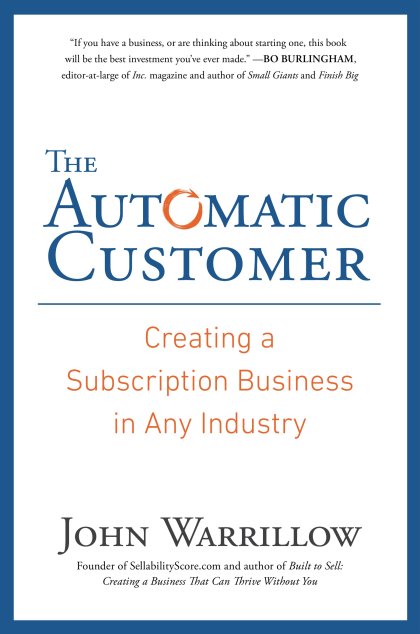
The Automatic Customer
The Automatic Customer
Couldn't load pickup availability
Collapsible content
ABOUT
These days virtually anything you need can be purchased through a subscription, with more convenience than ever before. Far beyond Spotify, Netflix, and New York Times subscriptions, you can sign up for weekly or monthly supplies of everything from groceries (AmazonFresh) to cosmetics (Birchbox) to razor blades (Dollar Shave Club).
According to John Warrillow, this emerging subscription economy offers huge opportunities to companies that know how to turn customers into subscribers. Automatic customers are the key to increasing cash flow, igniting growth, and boosting the value of your company.
Consider Whatsapp, the internet-based messaging service that was purchased by Facebook for $19 billion. While other services bombarded users with invasive ads in order to fund a free messaging platform, Whatsapp offered a refreshingly private tool on a subscription platform, charging just $1 per year. Their business model enabled the kind of service that customers wanted and ensured automatic customers for years to come.
As Warrillow shows, subscriptions aren’t limited to technology or media businesses. Companies in nearly any industry, from start-ups to the Fortune 500, from home contractors to florists, can build subscriptions into their business.
Warrillow provides the essential blueprint for winning automatic customers with one of the nine subscription business models, including:
• The Membership Website Model: Companies like The Wood Whisperer Guild, ContractorSelling, and DanceStudioOwner offer access to highly specialized, high quality information, recognizing that people will pay for good content. This model can work for any business with a tightly defined niche market and insider information.
• The Simplifier Model: Companies like Mosquito Squad (pest control) and Hassle Free Homes (home maintenance) take a recurring task off your to-do list. Any business serving busy consumers can adopt this model not only to create a recurring revenue stream, but also to take advantage of the opportunity to cross-sell or bundle their services.
• The Surprise Box Model: Companies like BarkBox (dog treats) and Standard Cocoa (craft chocolate) send their subscribers curated packages of goodies each month. If you can handle the logistics of shipping, giving customers joy in something new can translate to sales on your larger e-commerce site.
This book also shows you how to master the psychology of selling subscriptions and how to reduce churn and provides a road map for the essential statistics you need to measure the health of your subscription business.
Whether you want to transform your entire business into a recurring revenue engine or just pick up an extra 5 percent of sales growth, The Automatic Customer will be your secret weapon.
STANDARD, PRIMARY, DM AND VARIANT COVERS
Standard and Primary covers are widely available through general retailers. They often have higher print runs and can be cheaper, especially during sales.
In contrast, Direct Market (DM) and variant covers are primarily sold in comic shops. DM editions tend to have more limited availability and may be more valuable to collectors.
The main differences lie in artwork style, availability, price, and collector appeal. Ultimately, the choice between standard and variant covers depends on personal preference, budget, and individual collecting goals.
PRODUCT TYPES
Comic book enthusiasts have various formats to choose from when collecting their favorite stories.
Here's a brief overview of the main types:
Omnibus
- Large, hardcover collections
- Usually contain complete runs or extensive story arcs
- Typically 800-1000+ pages
- Higher price point, often €100-€150
Oversized Hardcover (OHC)
- Similar dimensions to omnibus, but thinner
- Collect shorter runs or story arcs
- Usually 300-600 pages
- Priced between €30-€50
Hardcover (HC)
- Standard-sized hardcover books
- Collect 6-12 issues typically
- Similar dimensions to single issues, but with a hard cover
- Priced around €25-€35
Trade Paperback (TP)
- Softcover collections
- Standard comic book size
- Usually collect 4-6 issues
- Most affordable option, typically €15-€25
Other Formats
- Absolute Editions: Oversized, deluxe hardcovers (mainly DC Comics)
- Compendiums: Massive paperback collections
- Graphic Novels (OGN/GN): Original stories not previously released as single issues
The choice between these formats often depends on personal preference, budget, and collecting goals. Omnibus and OHC editions offer larger artwork and more content but at a higher price, while TPs provide a more affordable way to collect complete story arcs