

Random House Publishing Group
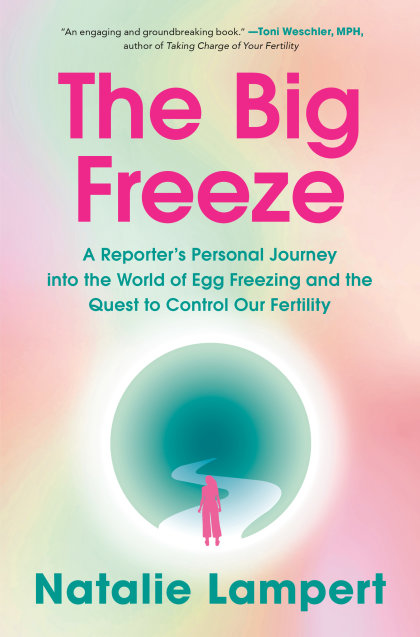
The Big Freeze
The Big Freeze
Couldn't load pickup availability
Collapsible content
ABOUT
“The most comprehensive book on the subject of egg freezing.”—The New York Review of Books
LONGLISTED FOR THE PEN/E.O. WILSON LITERARY SCIENCE WRITING AWARD • A PUBLISHERS WEEKLY BEST BOOK OF THE YEAR
Ovaries. Most women have two; journalist Natalie Lampert has only one. Then, in her early twenties, she almost lost it, along with her ability to ever have biological children. Doctors urged her to freeze her eggs, and Lampert started asking questions.
The Big Freeze is the story of Lampert's personal quest to investigate egg freezing as well as the multibillion-dollar femtech industry, in order to decide the best way to preserve her own fertility. She attended flashy egg-freezing parties, visited high-priced fertility clinics, talked to dozens of women who have frozen their eggs, toured the facility in Italy where the technology was developed, and even attended a memorial service for thousands of accidentally destroyed embryos.
What was once science fiction is now simply science: Fertility can be frozen in time. Between 2009 and 2023, more than 150,000 women in the United States opted to freeze their eggs. Along with in vitro fertilization, egg freezing is touted as a way for women to “have it all” by conquering their biological clocks, in line with the global trend of delaying childbirth. A generation after the Pill, this revolutionary technology offers a new kind of freedom for women—career-focused ones in particular. But does egg freezing give women real agency or just the illusion of it?
A personal and deeply researched guide to the pros, cons, and many facets of this wildly popular technology, The Big Freeze is a page-turning exploration of the quest to control fertility, with invaluable information that answers the questions women have been afraid to ask—or didn't know they should ask in the first place.
STANDARD, PRIMARY, DM AND VARIANT COVERS
Standard and Primary covers are widely available through general retailers. They often have higher print runs and can be cheaper, especially during sales.
In contrast, Direct Market (DM) and variant covers are primarily sold in comic shops. DM editions tend to have more limited availability and may be more valuable to collectors.
The main differences lie in artwork style, availability, price, and collector appeal. Ultimately, the choice between standard and variant covers depends on personal preference, budget, and individual collecting goals.
PRODUCT TYPES
Comic book enthusiasts have various formats to choose from when collecting their favorite stories.
Here's a brief overview of the main types:
Omnibus
- Large, hardcover collections
- Usually contain complete runs or extensive story arcs
- Typically 800-1000+ pages
- Higher price point, often €100-€150
Oversized Hardcover (OHC)
- Similar dimensions to omnibus, but thinner
- Collect shorter runs or story arcs
- Usually 300-600 pages
- Priced between €30-€50
Hardcover (HC)
- Standard-sized hardcover books
- Collect 6-12 issues typically
- Similar dimensions to single issues, but with a hard cover
- Priced around €25-€35
Trade Paperback (TP)
- Softcover collections
- Standard comic book size
- Usually collect 4-6 issues
- Most affordable option, typically €15-€25
Other Formats
- Absolute Editions: Oversized, deluxe hardcovers (mainly DC Comics)
- Compendiums: Massive paperback collections
- Graphic Novels (OGN/GN): Original stories not previously released as single issues
The choice between these formats often depends on personal preference, budget, and collecting goals. Omnibus and OHC editions offer larger artwork and more content but at a higher price, while TPs provide a more affordable way to collect complete story arcs