

Harmony/Rodale/Convergent
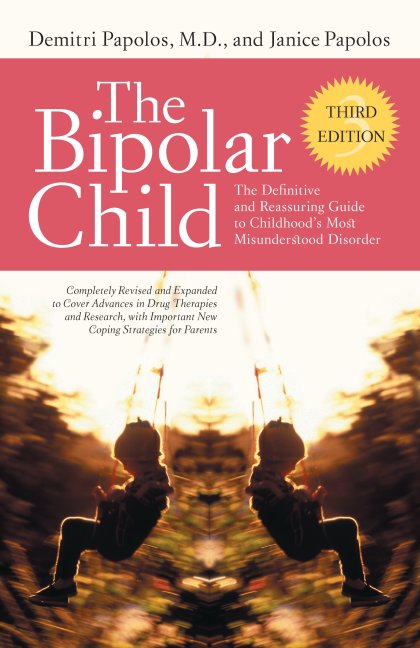
The Bipolar Child (Third Edition)
The Bipolar Child (Third Edition)
Couldn't load pickup availability
Collapsible content
ABOUT
Bipolar disorder—manic depression—was once thought to be rare in children. Now researchers are discovering not only that bipolar disorder can begin early in life, but that it is much more common than ever imagined. Yet the illness is often misdiagnosed and mistreated with medications that can exacerbate the symptoms. Why? Bipolar disorder manifests itself differently in children than in adults, and in children there is an overlap of symptoms with other childhood psychiatric disorders. As a result, these kids may be labeled with any of a number of psychiatric conditions: “ADHD,” “depression,” “oppositional defiant disorder,” “obsessive-compulsive disorder,” or “generalized anxiety disorder.” Too often they are treated with stimulants or antidepressants—medications that can actually worsen the bipolar condition.
Since the publication of its first edition, The Bipolar Child has helped many thousands of families get to the root cause of their children’s behaviors and symptoms and find what they need to know. The Papoloses comprehensively detail the diagnosis, explain how to find good treatment and medications, and advise parents about ways to advocate effectively for their children in school. In this edition, a greatly expanded education chapter describes all the changes in educational law due to the 2004 reauthorization of IDEA (Individuals with Disabilities Education Act), and offers a multitude of ideas for parents and educators to help the children feel more comfortable in the academic environment. The book also contains crucial information about hospitalization, the importance of neuropsychological testing (with a recommended battery of tests), and the world of insurance. Included in these pages is information on promising new drugs, greater insight into the special concerns of teenagers, and additional sections on the impact of the illness on the family. In addition, an entirely new chapter focuses on major advances taking place in the field of molecular genetics and offers hope that researchers will better understand the illness and develop more targeted and easier-to-tolerate medicines.
The Bipolar Child is rich with the voices of parents, siblings, and the children themselves, opening up the long-closed world of the families struggling with this condition. This book has already proved to be an invaluable resource for parents whose children suffer from mood disorders, as well as for the professionals who treat and educate them, and this new edition is sure to continue to light the way.
STANDARD, PRIMARY, DM AND VARIANT COVERS
Standard and Primary covers are widely available through general retailers. They often have higher print runs and can be cheaper, especially during sales.
In contrast, Direct Market (DM) and variant covers are primarily sold in comic shops. DM editions tend to have more limited availability and may be more valuable to collectors.
The main differences lie in artwork style, availability, price, and collector appeal. Ultimately, the choice between standard and variant covers depends on personal preference, budget, and individual collecting goals.
PRODUCT TYPES
Comic book enthusiasts have various formats to choose from when collecting their favorite stories.
Here's a brief overview of the main types:
Omnibus
- Large, hardcover collections
- Usually contain complete runs or extensive story arcs
- Typically 800-1000+ pages
- Higher price point, often €100-€150
Oversized Hardcover (OHC)
- Similar dimensions to omnibus, but thinner
- Collect shorter runs or story arcs
- Usually 300-600 pages
- Priced between €30-€50
Hardcover (HC)
- Standard-sized hardcover books
- Collect 6-12 issues typically
- Similar dimensions to single issues, but with a hard cover
- Priced around €25-€35
Trade Paperback (TP)
- Softcover collections
- Standard comic book size
- Usually collect 4-6 issues
- Most affordable option, typically €15-€25
Other Formats
- Absolute Editions: Oversized, deluxe hardcovers (mainly DC Comics)
- Compendiums: Massive paperback collections
- Graphic Novels (OGN/GN): Original stories not previously released as single issues
The choice between these formats often depends on personal preference, budget, and collecting goals. Omnibus and OHC editions offer larger artwork and more content but at a higher price, while TPs provide a more affordable way to collect complete story arcs