

Beacon Press
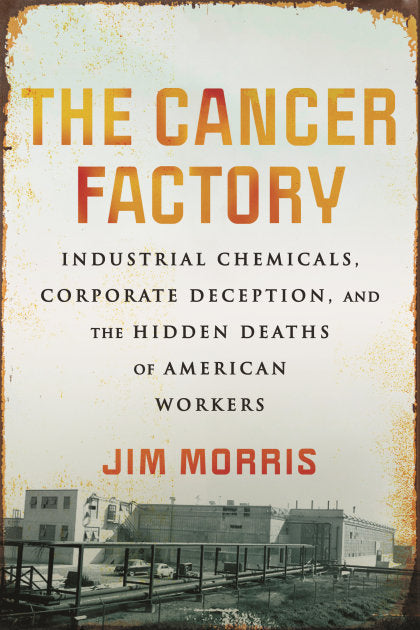
The Cancer Factory
The Cancer Factory
Couldn't load pickup availability
Collapsible content
ABOUT
“No journalist knows more about toxic chemicals in the workplace than Jim Morris.”
—Dan Fagin, author of the Pulitzer Prize–winning Toms River
“A powerful and essential read.”
—Anna Clark, author of The Poisoned City
The story of a group of Goodyear Tire and Rubber workers fatally exposed to toxic chemicals, the lawyer who sought justice on their behalf, and the shameful lack of protection our society affords all workers
Working at the Goodyear Tire and Rubber Company chemical plant in Niagara Falls, New York, was considered a good job. It was the kind of industrial manufacturing job that allowed blue-collar workers to thrive in the latter half of the 20th century—that allowed them to buy their own home, and maybe a small boat for the lake.
But it was also the kind of job that exposed you to toxic chemicals and offered little to no protection from them, either in the way of protective gear or adequate ventilation. Eventually, it was a job that gave you bladder cancer.
The Cancer Factory tells the story of the workers who experienced one of the nation’s worst, and best-documented, outbreaks of work-related cancer, and the lawyer who has represented the bladder-cancer victims at the plant for more than 30 years. Goodyear, and its chemical supplier, DuPont, knew that two of the chemicals used in the plant had been shown to cause cancer, but made little effort to protect the plant’s workers until the cluster of cancer cases—and deaths—was undeniable.
In doing so it tells a broader story of corporate malfeasance and governmental neglect. Workers have only weak protections from exposure to toxic substances in America, and regulatory breaches contribute to an estimated 95,000 deaths from occupational illness each year. Based on 4 decades of reporting and delving deeply into the scientific literature about toxic substances and health risks, the arcana of worker regulations, and reality of loose enforcement, The Cancer Factory exposes the terrible health risks too many workers face.
STANDARD, PRIMARY, DM AND VARIANT COVERS
Standard and Primary covers are widely available through general retailers. They often have higher print runs and can be cheaper, especially during sales.
In contrast, Direct Market (DM) and variant covers are primarily sold in comic shops. DM editions tend to have more limited availability and may be more valuable to collectors.
The main differences lie in artwork style, availability, price, and collector appeal. Ultimately, the choice between standard and variant covers depends on personal preference, budget, and individual collecting goals.
PRODUCT TYPES
Comic book enthusiasts have various formats to choose from when collecting their favorite stories.
Here's a brief overview of the main types:
Omnibus
- Large, hardcover collections
- Usually contain complete runs or extensive story arcs
- Typically 800-1000+ pages
- Higher price point, often €100-€150
Oversized Hardcover (OHC)
- Similar dimensions to omnibus, but thinner
- Collect shorter runs or story arcs
- Usually 300-600 pages
- Priced between €30-€50
Hardcover (HC)
- Standard-sized hardcover books
- Collect 6-12 issues typically
- Similar dimensions to single issues, but with a hard cover
- Priced around €25-€35
Trade Paperback (TP)
- Softcover collections
- Standard comic book size
- Usually collect 4-6 issues
- Most affordable option, typically €15-€25
Other Formats
- Absolute Editions: Oversized, deluxe hardcovers (mainly DC Comics)
- Compendiums: Massive paperback collections
- Graphic Novels (OGN/GN): Original stories not previously released as single issues
The choice between these formats often depends on personal preference, budget, and collecting goals. Omnibus and OHC editions offer larger artwork and more content but at a higher price, while TPs provide a more affordable way to collect complete story arcs