

Random House Publishing Group
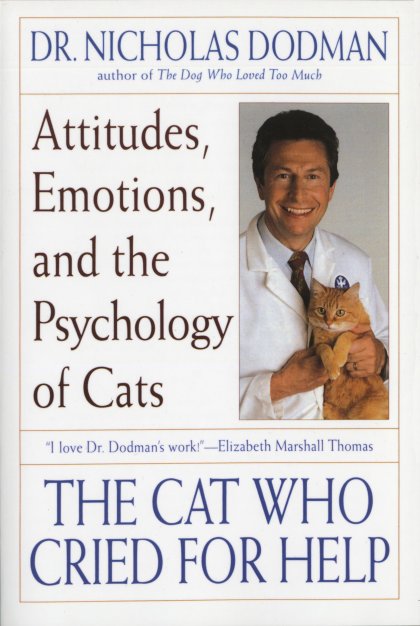
The Cat Who Cried for Help
The Cat Who Cried for Help
Couldn't load pickup availability
Collapsible content
ABOUT
What do you do about a cat determined to tear your sofa to shreds? Or one who gorges himself on your best running shoes . . . or attacks anyone who dares to open the refrigerator door? Drawing on remarkable real-life stories from his practice at the prestigious Tufts University School of Veterinary Medicine, Dr. Dodman shares the unique, compassionate, dramatically successful treatment programs that have given problem cats a new lease on life . . . and their perplexed owners long-term solutions to even the most intractable disorders.
As any cat owner knows, changing a cat's behavior can seem like an impossible task. But contrary to popular belief, cats can be trained and cured of irritating habits and undesirable behaviors. The Cat Who Cried for Help shows how minor adjustments in diet, exercise regimen, and environment can effect dramatic breakthroughs in resolving almost any feline problem. From cat panic attacks to eating disorders, from litterbox aversion to depression and a wide range of feline phobias, Dr. Dodman has successfully treated and resolved these and many other heretofore untreatable behaviors.
Inside, you'll meet Ashley, the boss-cat who literally bites the hand that feeds him; Jonathan, the binge-eater; Rubles, the Abyssinian Jekyll and Hyde, pussycat one minute, man-eating tiger the next; and Thomas, the cat who cried for help--a little too loudly. Dr. Dodman's techniques are based on the most up-to-date research in pharmacology and feline behaviorism. Yet the primary objective of his treatments is to respect and protect the qualities of independence and dignity fundamental to a cat's nature.
Including descriptions of symptoms, treatment options, and tips on prevention, The Cat Who Cried for Help provides everything you need to know to ensure both you and your feline friend a long, happy, and healthy relationship. If you've ever wanted to better understand the nature of this mysterious, enigmatic, and fascinating creature, Dr. Dodman's book provides a penetrating look into the intriguing and intricate world of the cat in your life.
STANDARD, PRIMARY, DM AND VARIANT COVERS
Standard and Primary covers are widely available through general retailers. They often have higher print runs and can be cheaper, especially during sales.
In contrast, Direct Market (DM) and variant covers are primarily sold in comic shops. DM editions tend to have more limited availability and may be more valuable to collectors.
The main differences lie in artwork style, availability, price, and collector appeal. Ultimately, the choice between standard and variant covers depends on personal preference, budget, and individual collecting goals.
PRODUCT TYPES
Comic book enthusiasts have various formats to choose from when collecting their favorite stories.
Here's a brief overview of the main types:
Omnibus
- Large, hardcover collections
- Usually contain complete runs or extensive story arcs
- Typically 800-1000+ pages
- Higher price point, often €100-€150
Oversized Hardcover (OHC)
- Similar dimensions to omnibus, but thinner
- Collect shorter runs or story arcs
- Usually 300-600 pages
- Priced between €30-€50
Hardcover (HC)
- Standard-sized hardcover books
- Collect 6-12 issues typically
- Similar dimensions to single issues, but with a hard cover
- Priced around €25-€35
Trade Paperback (TP)
- Softcover collections
- Standard comic book size
- Usually collect 4-6 issues
- Most affordable option, typically €15-€25
Other Formats
- Absolute Editions: Oversized, deluxe hardcovers (mainly DC Comics)
- Compendiums: Massive paperback collections
- Graphic Novels (OGN/GN): Original stories not previously released as single issues
The choice between these formats often depends on personal preference, budget, and collecting goals. Omnibus and OHC editions offer larger artwork and more content but at a higher price, while TPs provide a more affordable way to collect complete story arcs