

Crown
The Catch
The Catch
Couldn't load pickup availability
Collapsible content
ABOUT
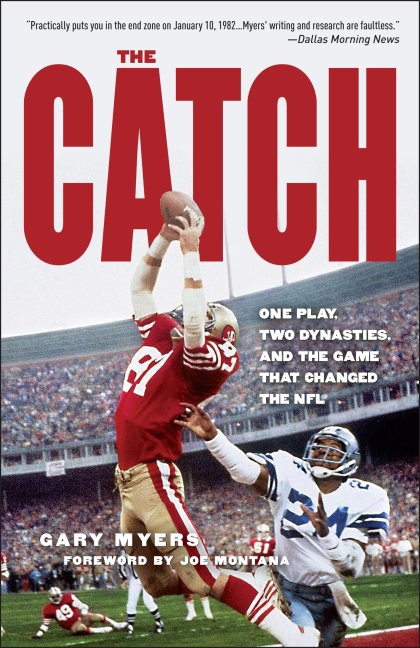
Drama like this couldn't be scripted any better. Dallas was still reigning as America's team. San Francisco was hungry for a ticket to its first Super Bowl. With less than a minute left, the 49ers were one touchdown and extra point away from pulling it off, six yards from the end zone. Too Tall Jones and the Cowboys' celebrated defense were primed to stop Montana and the 49ers. The play came in from head coach Bill Walsh: Sprint Right Option. It almost never worked in practice. But this was game on. It had to work. Montana took the snap and rolled right. With 700 pounds of prime defensive talent bearing down on him, leaning backward, in his last moment of upright balance, Montana sent the ball to the back of the end zone. The primary receiver had slipped and was not in place. But the secondary receiver, Dwight Clark, was streaking toward the corner, leaping higher than he ever had or ever would again. With his arms reaching for the sky, his fingers splayed, he snatched the impossibly high pass, briefly lost control, regained it . . . touchdown!
Franchises, careers, lives, and dynasties all changed in that moment.
Sports journalist Gary Myers was there, and now with fresh revelations from key players, including Montana, Clark, Ronnie Lott, Randy Cross, Tony Dorsett, Drew Pearson, Charlie Waters, and others, he takes fans back to an iconic game and one of the NFL's most breathtaking plays. Myers presents new details on the rise of Montana and the 49ers and the fall of the '80s Cowboys. He reveals what Bill Walsh saw in an overlooked third-round draft pick named Joe Montana and how Walsh accidentally discovered Dwight Clark. He shows how legendary Dallas head coach Tom Landry, who as reputed did put winning first, was not above crying over players whose personal careers had to come second. He celebrates forgotten heroes like journeyman running back Lenvil Elliott, who picked that particular game–and that final drive down the field–to shine. It's all here, from the death threat that spooked Montana during the game to 49ers owner Eddie DeBartolo's bad luck when his view of the historic play was literally blocked by a horse's ass.
The Catch is both the ultimate replay of a sports moment for the ages and a penetrating look into the inner dynamics of the NFL.
STANDARD, PRIMARY, DM AND VARIANT COVERS
Standard and Primary covers are widely available through general retailers. They often have higher print runs and can be cheaper, especially during sales.
In contrast, Direct Market (DM) and variant covers are primarily sold in comic shops. DM editions tend to have more limited availability and may be more valuable to collectors.
The main differences lie in artwork style, availability, price, and collector appeal. Ultimately, the choice between standard and variant covers depends on personal preference, budget, and individual collecting goals.
PRODUCT TYPES
Comic book enthusiasts have various formats to choose from when collecting their favorite stories.
Here's a brief overview of the main types:
Omnibus
- Large, hardcover collections
- Usually contain complete runs or extensive story arcs
- Typically 800-1000+ pages
- Higher price point, often €100-€150
Oversized Hardcover (OHC)
- Similar dimensions to omnibus, but thinner
- Collect shorter runs or story arcs
- Usually 300-600 pages
- Priced between €30-€50
Hardcover (HC)
- Standard-sized hardcover books
- Collect 6-12 issues typically
- Similar dimensions to single issues, but with a hard cover
- Priced around €25-€35
Trade Paperback (TP)
- Softcover collections
- Standard comic book size
- Usually collect 4-6 issues
- Most affordable option, typically €15-€25
Other Formats
- Absolute Editions: Oversized, deluxe hardcovers (mainly DC Comics)
- Compendiums: Massive paperback collections
- Graphic Novels (OGN/GN): Original stories not previously released as single issues
The choice between these formats often depends on personal preference, budget, and collecting goals. Omnibus and OHC editions offer larger artwork and more content but at a higher price, while TPs provide a more affordable way to collect complete story arcs