

Crown
The Curse of the Marquis de Sade
The Curse of the Marquis de Sade
Couldn't load pickup availability
Collapsible content
ABOUT
“Reading The Curse of the Marquis de Sade, with the Marquis, the sabotage of rare manuscript sales, and a massive Ponzi scheme at its center, felt like a twisty waterslide shooting through a sleazy and bizarre landscape. This book is wild.”—Adam McKay, Academy Award–winning filmmaker
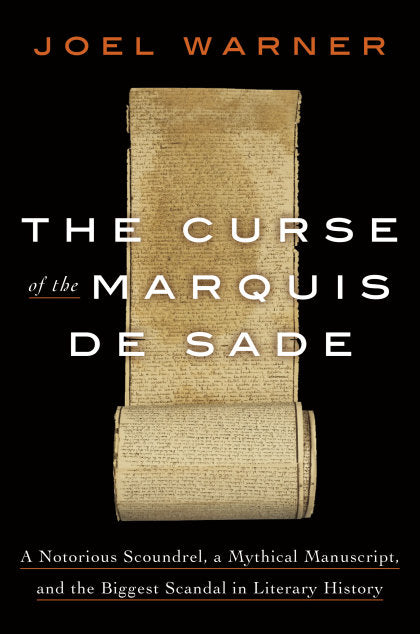
Described as both “one of the most important novels ever written” and “the gospel of evil,” 120 Days of Sodom was written by the Marquis de Sade, a notorious eighteenth-century aristocrat who waged a campaign of mayhem and debauchery across France, evaded execution, and inspired the word “sadism,” which came to mean receiving pleasure from pain. Despite all his crimes, Sade considered this work to be his greatest transgression.
The original manuscript of 120 Days of Sodom, a tiny scroll penned in the bowels of the Bastille in Paris, would embark on a centuries-spanning odyssey across Europe, passing from nineteenth-century banned book collectors to pioneering sex researchers to avant-garde artists before being hidden away from Nazi book burnings. In 2014, the world heralded its return to France when the scroll was purchased for millions by Gérard Lhéritier, the self-made son of a plumber who had used his savvy business skills to upend France’s renowned rare-book market. But the sale opened the door to vendettas by the government, feuds among antiquarian booksellers, manuscript sales derailed by sabotage, a record-breaking lottery jackpot, and allegations of a decade-long billion-euro con, the specifics of which, if true, would make the scroll part of France’s largest-ever Ponzi scheme.
Told with gripping reporting and flush with deceit and scandal, The Curse of the Marquis de Sade weaves together the sweeping odyssey of 120 Days of Sodom and the spectacular rise and fall of Lhéritier, once the “king of manuscripts” and now known to many as the Bernie Madoff of France. At its center is an urgent question for all those who cherish the written word: As the age of handwriting comes to an end, what do we owe the original texts left behind?
STANDARD, PRIMARY, DM AND VARIANT COVERS
Standard and Primary covers are widely available through general retailers. They often have higher print runs and can be cheaper, especially during sales.
In contrast, Direct Market (DM) and variant covers are primarily sold in comic shops. DM editions tend to have more limited availability and may be more valuable to collectors.
The main differences lie in artwork style, availability, price, and collector appeal. Ultimately, the choice between standard and variant covers depends on personal preference, budget, and individual collecting goals.
PRODUCT TYPES
Comic book enthusiasts have various formats to choose from when collecting their favorite stories.
Here's a brief overview of the main types:
Omnibus
- Large, hardcover collections
- Usually contain complete runs or extensive story arcs
- Typically 800-1000+ pages
- Higher price point, often €100-€150
Oversized Hardcover (OHC)
- Similar dimensions to omnibus, but thinner
- Collect shorter runs or story arcs
- Usually 300-600 pages
- Priced between €30-€50
Hardcover (HC)
- Standard-sized hardcover books
- Collect 6-12 issues typically
- Similar dimensions to single issues, but with a hard cover
- Priced around €25-€35
Trade Paperback (TP)
- Softcover collections
- Standard comic book size
- Usually collect 4-6 issues
- Most affordable option, typically €15-€25
Other Formats
- Absolute Editions: Oversized, deluxe hardcovers (mainly DC Comics)
- Compendiums: Massive paperback collections
- Graphic Novels (OGN/GN): Original stories not previously released as single issues
The choice between these formats often depends on personal preference, budget, and collecting goals. Omnibus and OHC editions offer larger artwork and more content but at a higher price, while TPs provide a more affordable way to collect complete story arcs