

Random House Publishing Group
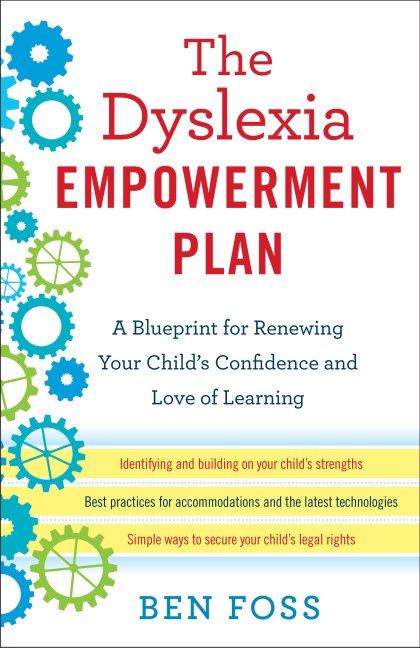
The Dyslexia Empowerment Plan
The Dyslexia Empowerment Plan
Couldn't load pickup availability
Collapsible content
ABOUT
More than thirty million people in the United States are dyslexic—a brain-based genetic trait, often labeled as a “learning disability” or “learning difference,” that makes interpreting text and reading difficult. Yet even though children with dyslexia may have trouble reading, they don’t have any problems learning; dyslexia has nothing to do with a lack of intellect.
While other books tell you what dyslexia is, this book tells you what to do. Dyslexics’ innate skills, which may include verbal, social, spatial, kinesthetic, visual, mathematical, or musical abilities, are their unique key to acquiring knowledge. Figuring out where their individual strengths lie, and then harnessing these skills, offers an entrée into learning and excelling. And by keeping the focus on learning, not on standard reading the same way everyone else does, a child with dyslexia can and will develop the self-confidence to flourish in the classroom and beyond.
After years of battling with a school system that did not understand his dyslexia and the shame that accompanied it, renowned activist and entrepreneur Ben Foss is not only open about his dyslexia, he is proud of it. In The Dyslexia Empowerment Plan he shares his personal triumphs and failures so that you can learn from his experiences, and provides a three-step approach for success:
• Identify your child’s profile: By mapping your child’s strengths and weaknesses and assisting her to better understand who she is, you can help your child move away from shame and feelings of inadequacy and move toward creating a powerful program for learning.
• Help your child help himself: Coach your child to become his own best advocate by developing resiliency, confidence, and self-awareness, and focusing on achievable goals in areas that matter most to him.
• Create community: Dyslexic children are not broken, but too often the system designed to educate them is. Dare to change your school so that your child has the resources to thrive. Understanding your rights and finding allies will make you and your child feel connected and no longer alone.
Packed with practical ideas and strategies dyslexic children need for excelling in school and in life, this empowering guide provides the framework for charting a future for your child that is bright with hope and unlimited potential.
Praise for The Dyslexia Empowerment Plan
“A passionate and well-articulated guide . . . This extremely practical and motivational book will be welcomed by parents of dyslexic children.”—Publishers Weekly (starred review)
“Accessible and reassuring.”—Library Journal
“This step-by-step guide will become a go-to resource for parents.”—James H. Wendorf, executive director, National Center for Learning Disabilities
“I study dyslexia in the lab and am a parent of a wonderful daughter who fits this profile. Ben Foss’s book should be considered essential to any collection on the subject. It was extremely useful, especially for a mom.”—Maria Luisa Gorno Tempini, M.D., Ph.D., professor of neurology, UCSF, Memory and Aging Center
“As someone with a learning profile that made school tough, and as a parent, I know kids need the right support. Ben Foss knows how to get access to education because he’s been through it. I was thrilled to read this book. It offers a wise collection of insights that are both practical and touching.”—James Gandolfini, actor, The Sopranos
STANDARD, PRIMARY, DM AND VARIANT COVERS
Standard and Primary covers are widely available through general retailers. They often have higher print runs and can be cheaper, especially during sales.
In contrast, Direct Market (DM) and variant covers are primarily sold in comic shops. DM editions tend to have more limited availability and may be more valuable to collectors.
The main differences lie in artwork style, availability, price, and collector appeal. Ultimately, the choice between standard and variant covers depends on personal preference, budget, and individual collecting goals.
PRODUCT TYPES
Comic book enthusiasts have various formats to choose from when collecting their favorite stories.
Here's a brief overview of the main types:
Omnibus
- Large, hardcover collections
- Usually contain complete runs or extensive story arcs
- Typically 800-1000+ pages
- Higher price point, often €100-€150
Oversized Hardcover (OHC)
- Similar dimensions to omnibus, but thinner
- Collect shorter runs or story arcs
- Usually 300-600 pages
- Priced between €30-€50
Hardcover (HC)
- Standard-sized hardcover books
- Collect 6-12 issues typically
- Similar dimensions to single issues, but with a hard cover
- Priced around €25-€35
Trade Paperback (TP)
- Softcover collections
- Standard comic book size
- Usually collect 4-6 issues
- Most affordable option, typically €15-€25
Other Formats
- Absolute Editions: Oversized, deluxe hardcovers (mainly DC Comics)
- Compendiums: Massive paperback collections
- Graphic Novels (OGN/GN): Original stories not previously released as single issues
The choice between these formats often depends on personal preference, budget, and collecting goals. Omnibus and OHC editions offer larger artwork and more content but at a higher price, while TPs provide a more affordable way to collect complete story arcs