

Random House Publishing Group
The Eagle's Claw
The Eagle's Claw
Couldn't load pickup availability
Collapsible content
ABOUT
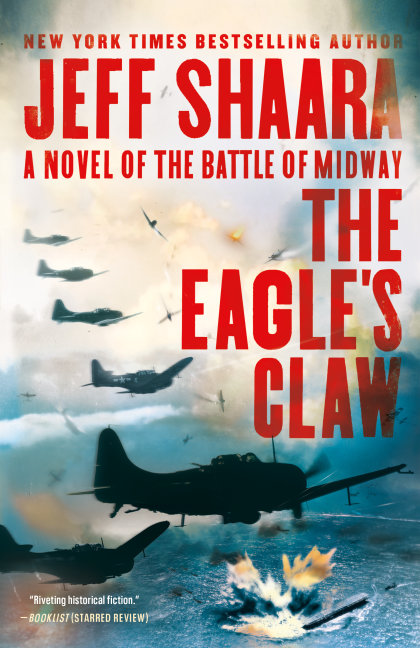
Spring 1942. The United States is reeling from the blow the Japanese inflicted at Pearl Harbor. But the Americans are determined to turn the tide. The key comes from Commander Joe Rochefort, a little known “code breaker” who cracks the Japanese military encryption. With Rochefort’s astonishing discovery, Admiral Chester Nimitz will know precisely what the Japanese are planning.
But the battle to counter those plans must still be fought.
From the American side, the shocking conflict is seen through the eyes of Rochefort and Admiral Nimitz, as well as fighter pilot Lieutenant Percy “Perk” Baker and Marine Gunnery Sergeant Doug Ackroyd.
On the Japanese side, Admiral Isoroku Yamamoto is the mastermind. His key subordinates are Admiral Chuichi Nagumo, aging and infirm, and Admiral Tamon Yamaguchi, a firebrand who has no patience for Nagumo’s hesitation. Together, these two men must play out the chess game designed by Yamamoto, without any idea that the Americans are anticipating their every move on the sea and in the air.
Jeff Shaara recounts in electrifying detail what happens when these two sides finally meet, in what will be known ever after as one of the most definitive and heroic examples of combat ever seen. In The Eagle’s Claw, he recounts, with his trademark you-are-there immediacy and signature depth of research, one single battle that changed not only the outcome of a war but the course of our entire global history.
The story of Midway has been told many times, but never before like this.
STANDARD, PRIMARY, DM AND VARIANT COVERS
Standard and Primary covers are widely available through general retailers. They often have higher print runs and can be cheaper, especially during sales.
In contrast, Direct Market (DM) and variant covers are primarily sold in comic shops. DM editions tend to have more limited availability and may be more valuable to collectors.
The main differences lie in artwork style, availability, price, and collector appeal. Ultimately, the choice between standard and variant covers depends on personal preference, budget, and individual collecting goals.
PRODUCT TYPES
Comic book enthusiasts have various formats to choose from when collecting their favorite stories.
Here's a brief overview of the main types:
Omnibus
- Large, hardcover collections
- Usually contain complete runs or extensive story arcs
- Typically 800-1000+ pages
- Higher price point, often €100-€150
Oversized Hardcover (OHC)
- Similar dimensions to omnibus, but thinner
- Collect shorter runs or story arcs
- Usually 300-600 pages
- Priced between €30-€50
Hardcover (HC)
- Standard-sized hardcover books
- Collect 6-12 issues typically
- Similar dimensions to single issues, but with a hard cover
- Priced around €25-€35
Trade Paperback (TP)
- Softcover collections
- Standard comic book size
- Usually collect 4-6 issues
- Most affordable option, typically €15-€25
Other Formats
- Absolute Editions: Oversized, deluxe hardcovers (mainly DC Comics)
- Compendiums: Massive paperback collections
- Graphic Novels (OGN/GN): Original stories not previously released as single issues
The choice between these formats often depends on personal preference, budget, and collecting goals. Omnibus and OHC editions offer larger artwork and more content but at a higher price, while TPs provide a more affordable way to collect complete story arcs