

Beacon Press
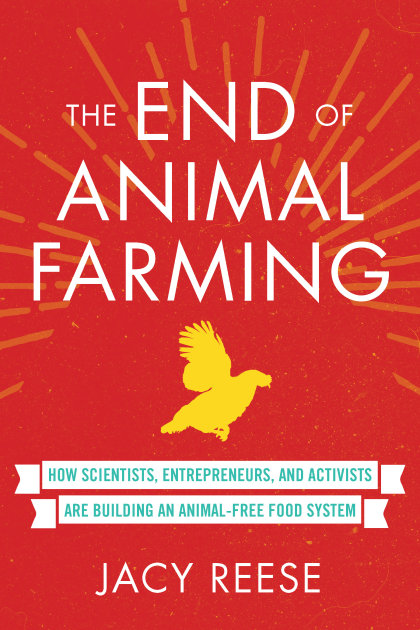
The End of Animal Farming
The End of Animal Farming
Couldn't load pickup availability
Collapsible content
ABOUT
Michael Pollan’s The Omnivore’s Dilemma and Jonathan Safran Foer’s Eating Animals brought widespread attention to the disturbing realities of factory farming. The End of Animal Farming pushes this conversation forward by outlining a strategic roadmap to a humane, ethical, and efficient food system in which slaughterhouses are obsolete—where the tastes of even the most die-hard meat eater are satisfied by innovative food technologies like cultured meats and plant-based protein. Social scientist and animal advocate Jacy Reese analyzes the social forces leading us toward the downfall of animal agriculture, the technology making this change possible for the meat-hungry public, and the activism driving consumer demand for plant-based and cultured foods.
Reese contextualizes the issue of factory farming—the inhumane system of industrial farming that 95 percent of farmed animals endure—as part of humanity’s expanding moral circle. Humanity increasingly treats nonhuman animals, from household pets to orca whales, with respect and kindness, and Reese argues that farmed animals are the next step. Reese applies an analytical lens of “effective altruism,” the burgeoning philosophy of using evidence-based research to maximize one’s positive impact in the world, in order to better understand which strategies can help expand the moral circle now and in the future.
The End of Animal Farming is not a scolding treatise or a prescription for an ascetic diet. Reese invites readers—vegan and non-vegan—to consider one of the most important and transformational social movements of the coming decades.
STANDARD, PRIMARY, DM AND VARIANT COVERS
Standard and Primary covers are widely available through general retailers. They often have higher print runs and can be cheaper, especially during sales.
In contrast, Direct Market (DM) and variant covers are primarily sold in comic shops. DM editions tend to have more limited availability and may be more valuable to collectors.
The main differences lie in artwork style, availability, price, and collector appeal. Ultimately, the choice between standard and variant covers depends on personal preference, budget, and individual collecting goals.
PRODUCT TYPES
Comic book enthusiasts have various formats to choose from when collecting their favorite stories.
Here's a brief overview of the main types:
Omnibus
- Large, hardcover collections
- Usually contain complete runs or extensive story arcs
- Typically 800-1000+ pages
- Higher price point, often €100-€150
Oversized Hardcover (OHC)
- Similar dimensions to omnibus, but thinner
- Collect shorter runs or story arcs
- Usually 300-600 pages
- Priced between €30-€50
Hardcover (HC)
- Standard-sized hardcover books
- Collect 6-12 issues typically
- Similar dimensions to single issues, but with a hard cover
- Priced around €25-€35
Trade Paperback (TP)
- Softcover collections
- Standard comic book size
- Usually collect 4-6 issues
- Most affordable option, typically €15-€25
Other Formats
- Absolute Editions: Oversized, deluxe hardcovers (mainly DC Comics)
- Compendiums: Massive paperback collections
- Graphic Novels (OGN/GN): Original stories not previously released as single issues
The choice between these formats often depends on personal preference, budget, and collecting goals. Omnibus and OHC editions offer larger artwork and more content but at a higher price, while TPs provide a more affordable way to collect complete story arcs