

Random House Publishing Group
The End of Country
The End of Country
Couldn't load pickup availability
Collapsible content
ABOUT
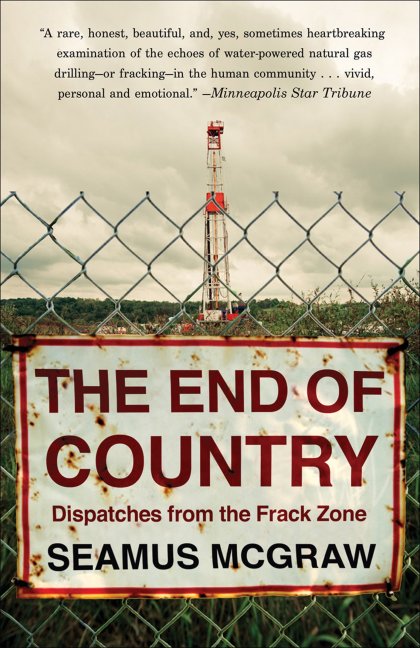
“A rare, honest, beautiful, and, yes, sometimes heartbreaking examination of the echoes of water-powered natural gas drilling—or fracking—in the human community . . . vivid, personal and emotional.”—Minneapolis Star Tribune
Susquehanna County, in the remote northeastern corner of Pennsylvania, is a community of stoic, low-income dairy farmers and homesteaders seeking haven from suburban sprawl—and the site of the Marcellus Shale, a natural gas deposit worth more than one trillion dollars. In The End of Country, journalist and area native Seamus McGraw opens a window on the battle for control of this land, revealing a conflict that pits petrodollar billionaires and the forces of corporate America against a band of locals determined to extract their fair share of the windfall—but not at the cost of their values or their way of life. Rich with a sense of place and populated by unforgettable personalities, McGraw tells a tale of greed, hubris, and envy, but also of hope, family, and the land that binds them all together.
“To tell a great story, you need a great story. Seamus McGraw . . . has lived a great story. . . . [He] is just one of its many characters—very real characters—caught up in a very human story in which they must make tough, life-altering decisions for themselves, their community, and ultimately their country.”—Allentown Morning Call
“Compelling . . . The End of Country is like a phone call from a close friend or relative living smack-dab in the middle of the Pennsylvania gas rush. . . . Anyone with even a passing interest in the [fracking debate should] read it.”—Harrisburg Patriot-News
“This cautionary tale should be required reading for all those tempted by the calling cards of easy money and precarious peace of mind.”—Tom Brokaw
“A page-turner . . . McGraw brings us to the front lines of the U.S. energy revolution to deliver an honest and humbling account that could hardly possess greater relevance.”—The Humanist
STANDARD, PRIMARY, DM AND VARIANT COVERS
Standard and Primary covers are widely available through general retailers. They often have higher print runs and can be cheaper, especially during sales.
In contrast, Direct Market (DM) and variant covers are primarily sold in comic shops. DM editions tend to have more limited availability and may be more valuable to collectors.
The main differences lie in artwork style, availability, price, and collector appeal. Ultimately, the choice between standard and variant covers depends on personal preference, budget, and individual collecting goals.
PRODUCT TYPES
Comic book enthusiasts have various formats to choose from when collecting their favorite stories.
Here's a brief overview of the main types:
Omnibus
- Large, hardcover collections
- Usually contain complete runs or extensive story arcs
- Typically 800-1000+ pages
- Higher price point, often €100-€150
Oversized Hardcover (OHC)
- Similar dimensions to omnibus, but thinner
- Collect shorter runs or story arcs
- Usually 300-600 pages
- Priced between €30-€50
Hardcover (HC)
- Standard-sized hardcover books
- Collect 6-12 issues typically
- Similar dimensions to single issues, but with a hard cover
- Priced around €25-€35
Trade Paperback (TP)
- Softcover collections
- Standard comic book size
- Usually collect 4-6 issues
- Most affordable option, typically €15-€25
Other Formats
- Absolute Editions: Oversized, deluxe hardcovers (mainly DC Comics)
- Compendiums: Massive paperback collections
- Graphic Novels (OGN/GN): Original stories not previously released as single issues
The choice between these formats often depends on personal preference, budget, and collecting goals. Omnibus and OHC editions offer larger artwork and more content but at a higher price, while TPs provide a more affordable way to collect complete story arcs