

Crown
The Entertainment Economy
The Entertainment Economy
Couldn't load pickup availability
Collapsible content
ABOUT
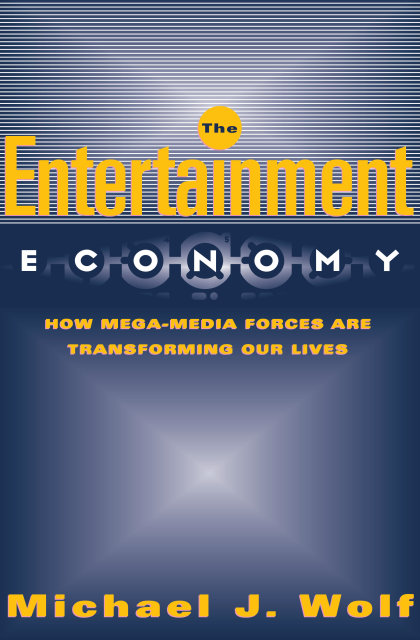
In The Entertainment Economy, Michael J. Wolf, the industry's most in-demand strategist, demonstrates that media and entertainment have moved beyond culture to become the driving wheel of the global economy. From New York to New Delhi, from London to Lagos, from Singapore to Seattle, every business is locked in the same battle for consumer attention that movie producers and television programmers deal with on a daily basis. Consumer businesses just like entertainment businesses have to turn to content for the competitive edge. As adviser to companies like MTV, Paramount, Hearst, NBC, Universal, News Corporation, Bertelsmann and the NBA, Wolf is known by industry insiders as the moguls' secret weapon. In clear, brash prose, full of real-life examples, Wolf shows how tomorrow's successful business person will have to act like a mogul in a global economy defined by hits and blockbusters.
From MTV to Ford Motor Company, from Tommy Hilfiger to Martha Stewart, from Citibank to Amazon.com, from Stephen Spielberg to Richard Branson, Wolf shares the insights gained through his unique perspective as the founder of the world's largest media consulting practice, leaving no doubt that the watchwords for all consumer businesses in the 21st century are truly, "There's no business without show business." Written with equal degrees of business and pop culture savvy, The Entertainment Economy is a book for everyone.
STANDARD, PRIMARY, DM AND VARIANT COVERS
Standard and Primary covers are widely available through general retailers. They often have higher print runs and can be cheaper, especially during sales.
In contrast, Direct Market (DM) and variant covers are primarily sold in comic shops. DM editions tend to have more limited availability and may be more valuable to collectors.
The main differences lie in artwork style, availability, price, and collector appeal. Ultimately, the choice between standard and variant covers depends on personal preference, budget, and individual collecting goals.
PRODUCT TYPES
Comic book enthusiasts have various formats to choose from when collecting their favorite stories.
Here's a brief overview of the main types:
Omnibus
- Large, hardcover collections
- Usually contain complete runs or extensive story arcs
- Typically 800-1000+ pages
- Higher price point, often €100-€150
Oversized Hardcover (OHC)
- Similar dimensions to omnibus, but thinner
- Collect shorter runs or story arcs
- Usually 300-600 pages
- Priced between €30-€50
Hardcover (HC)
- Standard-sized hardcover books
- Collect 6-12 issues typically
- Similar dimensions to single issues, but with a hard cover
- Priced around €25-€35
Trade Paperback (TP)
- Softcover collections
- Standard comic book size
- Usually collect 4-6 issues
- Most affordable option, typically €15-€25
Other Formats
- Absolute Editions: Oversized, deluxe hardcovers (mainly DC Comics)
- Compendiums: Massive paperback collections
- Graphic Novels (OGN/GN): Original stories not previously released as single issues
The choice between these formats often depends on personal preference, budget, and collecting goals. Omnibus and OHC editions offer larger artwork and more content but at a higher price, while TPs provide a more affordable way to collect complete story arcs