

Random House Publishing Group
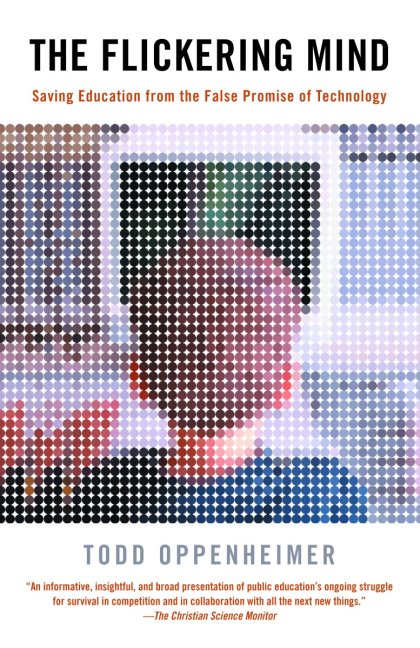
The Flickering Mind
The Flickering Mind
Couldn't load pickup availability
Collapsible content
ABOUT
American education faces an unusual moment of crisis. For decades, our schools have been beaten down by a series of curriculum fads, empty crusades for reform, and stingy funding. Now education and political leaders have offered their biggest and most expensive promise ever—the miracle of computers and the Internet—at a cost of approximately $70 billion just during the decade of the 1990s. Computer technology has become so prevalent that it is transforming nearly every corner of the academic world, from our efforts to close the gap between rich and poor, to our hopes for school reform, to our basic methods of developing the human imagination. Technology is also recasting the relationships that schools strike with the business community, changing public beliefs about the demands of tomorrow’s working world, and reframing the nation’s systems for researching, testing, and evaluating achievement.
All this change has led to a culture of the flickering mind, and a generation teetering between two possible futures. In one, youngsters have a chance to become confident masters of the tools of their day, to better address the problems of tomorrow. Alternatively, they can become victims of commercial novelties and narrow measures of ability, underscored by misplaced faith in standardized testing.
At this point, America’s students can’t even make a fair choice. They are an increasingly distracted lot. Their ability to reason, to listen, to feel empathy, is quite literally flickering. Computers and their attendant technologies did not cause all these problems, but they are quietly accelerating them. In this authoritative and impassioned account of the state of education in America, Todd Oppenheimer shows why it does not have to be this way.
Oppenheimer visited dozens of schools nationwide—public and private, urban and rural—to present the compelling tales that frame this book. He consulted with experts, read volumes of studies, and came to strong and persuasive conclusions: that the essentials of learning have been gradually forgotten and that they matter much more than the novelties of technology. He argues that every time we computerize a science class or shut down a music program to pay for new hardware, we lose sight of what our priority should be: “enlightened basics.” Broad in scope and investigative in treatment, The Flickering Mind will not only contribute to a vital public conversation about what our schools can and should be—it will define the debate.
STANDARD, PRIMARY, DM AND VARIANT COVERS
Standard and Primary covers are widely available through general retailers. They often have higher print runs and can be cheaper, especially during sales.
In contrast, Direct Market (DM) and variant covers are primarily sold in comic shops. DM editions tend to have more limited availability and may be more valuable to collectors.
The main differences lie in artwork style, availability, price, and collector appeal. Ultimately, the choice between standard and variant covers depends on personal preference, budget, and individual collecting goals.
PRODUCT TYPES
Comic book enthusiasts have various formats to choose from when collecting their favorite stories.
Here's a brief overview of the main types:
Omnibus
- Large, hardcover collections
- Usually contain complete runs or extensive story arcs
- Typically 800-1000+ pages
- Higher price point, often €100-€150
Oversized Hardcover (OHC)
- Similar dimensions to omnibus, but thinner
- Collect shorter runs or story arcs
- Usually 300-600 pages
- Priced between €30-€50
Hardcover (HC)
- Standard-sized hardcover books
- Collect 6-12 issues typically
- Similar dimensions to single issues, but with a hard cover
- Priced around €25-€35
Trade Paperback (TP)
- Softcover collections
- Standard comic book size
- Usually collect 4-6 issues
- Most affordable option, typically €15-€25
Other Formats
- Absolute Editions: Oversized, deluxe hardcovers (mainly DC Comics)
- Compendiums: Massive paperback collections
- Graphic Novels (OGN/GN): Original stories not previously released as single issues
The choice between these formats often depends on personal preference, budget, and collecting goals. Omnibus and OHC editions offer larger artwork and more content but at a higher price, while TPs provide a more affordable way to collect complete story arcs