

McClelland & Stewart
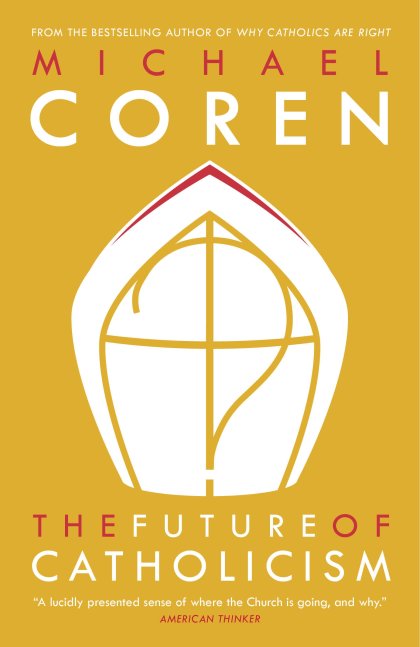
The Future of Catholicism
The Future of Catholicism
Couldn't load pickup availability
Collapsible content
ABOUT
When Cardinal Jorge Mario Bergoglio, Archbishop of Buenos Aires, became Pope Francis in March 2013, there were almost 6,000 journalists in Rome to cover the Papal election. Some of them reported on the conclave with expertise and empathy, but others--either out of ignorance or an agenda--insisted on asking the same questions again and again: Is the Church going to change? Will the new Pope be flexible? Is Catholicism going to adapt to the times and alter its teaching on same-sex marriage, abortion, contraception, female ordination, celibate clergy, and divorce? Interestingly, these questions center on moral and sexual issues rather than directly theological topics, but they are all based on the premise that the Church is wrong, outdated, in need of fundamental transformation.
Does the Church need to change, and if so, where? Where it cannot change, why is this so? In his signature frank style, Coren will explain and outline why the Church believes as it does on many of the most pressing moral issues, giving reasons for teaching and belief, and applying these to contemporary challenges. And for those areas where the Church must change and establish reform--the transparency of leadership and finance; the competence of the curia and Vatican civil service; the approach the Church takes towards media, the way it deals with the detritus of the abuse crisis; and its approach to the developing world band towards others religions, particularly Islam--Coren will offer insight into the faith's next steps.
The Church is at a crossroads, but perhaps more significantly and accurately, the Western world is at a crossroads, and how the Church reacts to and deals with this phenomenon will decide and define so very much of the future--of our future.
STANDARD, PRIMARY, DM AND VARIANT COVERS
Standard and Primary covers are widely available through general retailers. They often have higher print runs and can be cheaper, especially during sales.
In contrast, Direct Market (DM) and variant covers are primarily sold in comic shops. DM editions tend to have more limited availability and may be more valuable to collectors.
The main differences lie in artwork style, availability, price, and collector appeal. Ultimately, the choice between standard and variant covers depends on personal preference, budget, and individual collecting goals.
PRODUCT TYPES
Comic book enthusiasts have various formats to choose from when collecting their favorite stories.
Here's a brief overview of the main types:
Omnibus
- Large, hardcover collections
- Usually contain complete runs or extensive story arcs
- Typically 800-1000+ pages
- Higher price point, often €100-€150
Oversized Hardcover (OHC)
- Similar dimensions to omnibus, but thinner
- Collect shorter runs or story arcs
- Usually 300-600 pages
- Priced between €30-€50
Hardcover (HC)
- Standard-sized hardcover books
- Collect 6-12 issues typically
- Similar dimensions to single issues, but with a hard cover
- Priced around €25-€35
Trade Paperback (TP)
- Softcover collections
- Standard comic book size
- Usually collect 4-6 issues
- Most affordable option, typically €15-€25
Other Formats
- Absolute Editions: Oversized, deluxe hardcovers (mainly DC Comics)
- Compendiums: Massive paperback collections
- Graphic Novels (OGN/GN): Original stories not previously released as single issues
The choice between these formats often depends on personal preference, budget, and collecting goals. Omnibus and OHC editions offer larger artwork and more content but at a higher price, while TPs provide a more affordable way to collect complete story arcs