

Catapult
The Future Was Color
The Future Was Color
Couldn't load pickup availability
Collapsible content
ABOUT
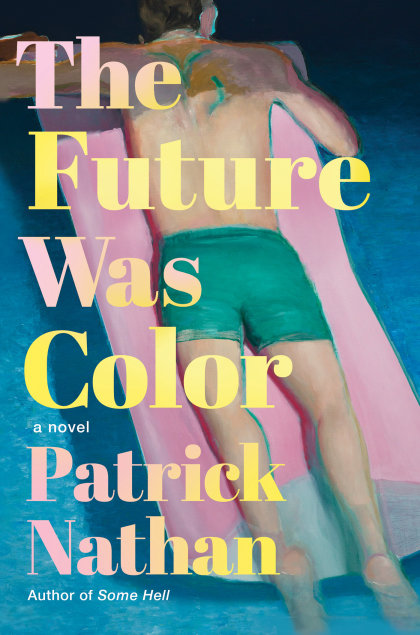
As a Hungarian immigrant working as a studio hack writing monster movies in 1950s Hollywood, George Curtis must navigate the McCarthy-era studio system filled with possible communists and spies, the life of closeted men along Sunset Boulevard, and the inability of the era to cleave love from persecution and guilt. But when Madeline, a famous actress, offers George a writing residency at her estate in Malibu to work on the political writing he cares most deeply about, his world is blown open. Soon Madeline is carrying George like an ornament into a class of postwar L.A. society ordinarily hidden from men like him.
What this lifestyle hides behind, aside from the monsters on the screen, are the monsters dwelling closer to home: this bacchanalia covers a gnawing hole shelled wide by the horror of the war they thought they’d left behind and the glimpse of an atomic future. It’s here that George understands he can never escape his past as György, the queer Jew who fled Budapest before the war and landed in New York, all alone, a decade prior.
Spanning from sun-drenched Los Angeles to the hidden corners of working-class New York to a virtuosic climax in the Las Vegas desert, The Future Was Color is an immaculately written exploration of postwar American decadence, reinventing the self through art, and the psychosis that lingers in a world that’s seen the bomb.
STANDARD, PRIMARY, DM AND VARIANT COVERS
Standard and Primary covers are widely available through general retailers. They often have higher print runs and can be cheaper, especially during sales.
In contrast, Direct Market (DM) and variant covers are primarily sold in comic shops. DM editions tend to have more limited availability and may be more valuable to collectors.
The main differences lie in artwork style, availability, price, and collector appeal. Ultimately, the choice between standard and variant covers depends on personal preference, budget, and individual collecting goals.
PRODUCT TYPES
Comic book enthusiasts have various formats to choose from when collecting their favorite stories.
Here's a brief overview of the main types:
Omnibus
- Large, hardcover collections
- Usually contain complete runs or extensive story arcs
- Typically 800-1000+ pages
- Higher price point, often €100-€150
Oversized Hardcover (OHC)
- Similar dimensions to omnibus, but thinner
- Collect shorter runs or story arcs
- Usually 300-600 pages
- Priced between €30-€50
Hardcover (HC)
- Standard-sized hardcover books
- Collect 6-12 issues typically
- Similar dimensions to single issues, but with a hard cover
- Priced around €25-€35
Trade Paperback (TP)
- Softcover collections
- Standard comic book size
- Usually collect 4-6 issues
- Most affordable option, typically €15-€25
Other Formats
- Absolute Editions: Oversized, deluxe hardcovers (mainly DC Comics)
- Compendiums: Massive paperback collections
- Graphic Novels (OGN/GN): Original stories not previously released as single issues
The choice between these formats often depends on personal preference, budget, and collecting goals. Omnibus and OHC editions offer larger artwork and more content but at a higher price, while TPs provide a more affordable way to collect complete story arcs