

Beacon Press
The Good Death
The Good Death
Couldn't load pickup availability
Collapsible content
ABOUT
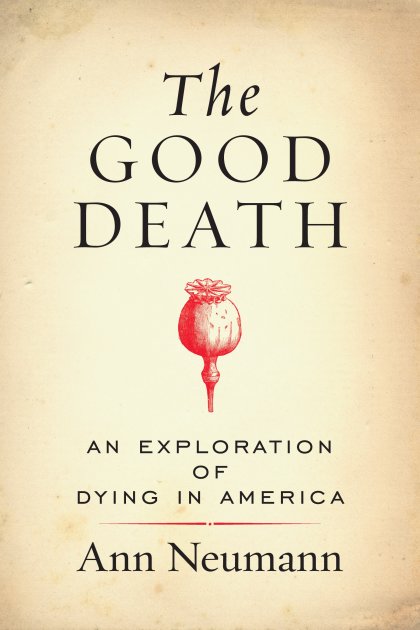
When Ann Neumann’s father was diagnosed with non-Hodgkin’s lymphoma, she left her job and moved back to her hometown of Lancaster, Pennsylvania. She became his full-time caregiver—cooking, cleaning, and administering medications. When her father died, she was undone by the experience, by grief and the visceral quality of dying. Neumann struggled to put her life back in order and found herself haunted by a question: Was her father’s death a good death?
The way we talk about dying and the way we actually die are two very different things, she discovered, and many of us are shielded from what death actually looks like. To gain a better understanding, Neumann became a hospice volunteer and set out to discover what a good death is today. She attended conferences, academic lectures, and grief sessions in church basements. She went to Montana to talk with the attorney who successfully argued for the legalization of aid in dying, and to Scranton, Pennsylvania, to listen to “pro-life” groups who believe the removal of feeding tubes from some patients is tantamount to murder. Above all, she listened to the stories of those who were close to death.
What Neumann found is that death in contemporary America is much more complicated than we think. Medical technologies and increased life expectancies have changed the very definition of medical death. And although death is our common fate, it is also a divisive issue that we all experience differently. What constitutes a good death is unique to each of us, depending on our age, race, economic status, culture, and beliefs. What’s more, differing concepts of choice, autonomy, and consent make death a contested landscape, governed by social, medical, legal, and religious systems.
In these pages, Neumann brings us intimate portraits of the nurses, patients, bishops, bioethicists, and activists who are shaping the way we die. The Good Death presents a fearless examination of how we approach death, and how those of us close to dying loved ones live in death’s wake.
STANDARD, PRIMARY, DM AND VARIANT COVERS
Standard and Primary covers are widely available through general retailers. They often have higher print runs and can be cheaper, especially during sales.
In contrast, Direct Market (DM) and variant covers are primarily sold in comic shops. DM editions tend to have more limited availability and may be more valuable to collectors.
The main differences lie in artwork style, availability, price, and collector appeal. Ultimately, the choice between standard and variant covers depends on personal preference, budget, and individual collecting goals.
PRODUCT TYPES
Comic book enthusiasts have various formats to choose from when collecting their favorite stories.
Here's a brief overview of the main types:
Omnibus
- Large, hardcover collections
- Usually contain complete runs or extensive story arcs
- Typically 800-1000+ pages
- Higher price point, often €100-€150
Oversized Hardcover (OHC)
- Similar dimensions to omnibus, but thinner
- Collect shorter runs or story arcs
- Usually 300-600 pages
- Priced between €30-€50
Hardcover (HC)
- Standard-sized hardcover books
- Collect 6-12 issues typically
- Similar dimensions to single issues, but with a hard cover
- Priced around €25-€35
Trade Paperback (TP)
- Softcover collections
- Standard comic book size
- Usually collect 4-6 issues
- Most affordable option, typically €15-€25
Other Formats
- Absolute Editions: Oversized, deluxe hardcovers (mainly DC Comics)
- Compendiums: Massive paperback collections
- Graphic Novels (OGN/GN): Original stories not previously released as single issues
The choice between these formats often depends on personal preference, budget, and collecting goals. Omnibus and OHC editions offer larger artwork and more content but at a higher price, while TPs provide a more affordable way to collect complete story arcs