

Doubleday Canada
The Green Red Green
The Green Red Green
Couldn't load pickup availability
Collapsible content
ABOUT
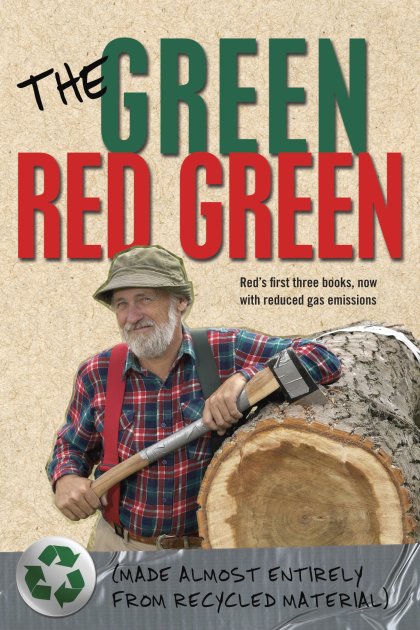
Red Green was recycling material long before the green revolution got underway. Look at the autmobiles he's driven over the years. Many of those were assembled using the same basic method employed for The Green Red Green: by welding together the surviving bits of some old wrecks. In this case, we're talking about the three Red Geen books published long ago by other, inferior publishers: Duct Tape Is Not Enough, a collection of newspaper columns by Red Green's alter-ego Steve Smith on surviving middle age; Red Green Talks Cars; and Red's literary debut The Red Green Book, a souvenir of the TV show.
The selection for his best-of pretty much made itself. Out went the Steve Smith columns with once-topical references; out went the material from The Red Green Book that was in the voices of the other characters (he's been carrying those bums for too long) and out went very little from the perenially hilarious Cars. The resulting mass of pieces have been well-shaken into a new mix; re-edited to new levels of sharpness and hilarity, and updated so that, for example, jokes about hairstyles now feature Russell Brand and not Rod Stewart. And the perfectly competent illustrations from the previous books have been replaced by much better, incompetent ones by the author, so that the look of this book very much resembles How to Do Everything.
STANDARD, PRIMARY, DM AND VARIANT COVERS
Standard and Primary covers are widely available through general retailers. They often have higher print runs and can be cheaper, especially during sales.
In contrast, Direct Market (DM) and variant covers are primarily sold in comic shops. DM editions tend to have more limited availability and may be more valuable to collectors.
The main differences lie in artwork style, availability, price, and collector appeal. Ultimately, the choice between standard and variant covers depends on personal preference, budget, and individual collecting goals.
PRODUCT TYPES
Comic book enthusiasts have various formats to choose from when collecting their favorite stories.
Here's a brief overview of the main types:
Omnibus
- Large, hardcover collections
- Usually contain complete runs or extensive story arcs
- Typically 800-1000+ pages
- Higher price point, often €100-€150
Oversized Hardcover (OHC)
- Similar dimensions to omnibus, but thinner
- Collect shorter runs or story arcs
- Usually 300-600 pages
- Priced between €30-€50
Hardcover (HC)
- Standard-sized hardcover books
- Collect 6-12 issues typically
- Similar dimensions to single issues, but with a hard cover
- Priced around €25-€35
Trade Paperback (TP)
- Softcover collections
- Standard comic book size
- Usually collect 4-6 issues
- Most affordable option, typically €15-€25
Other Formats
- Absolute Editions: Oversized, deluxe hardcovers (mainly DC Comics)
- Compendiums: Massive paperback collections
- Graphic Novels (OGN/GN): Original stories not previously released as single issues
The choice between these formats often depends on personal preference, budget, and collecting goals. Omnibus and OHC editions offer larger artwork and more content but at a higher price, while TPs provide a more affordable way to collect complete story arcs