

McClelland & Stewart
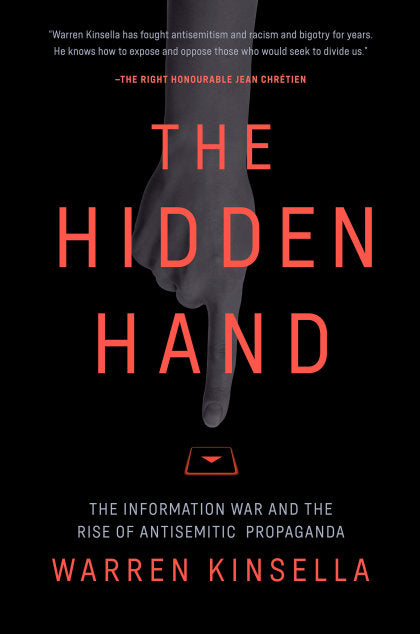
The Hidden Hand
The Hidden Hand
Couldn't load pickup availability
Collapsible content
ABOUT
October 7th, 2023 was a truly horrific day—a day in which Israeli men, women, and children were slaughtered or kidnapped, in the most barbaric fashion possible by the Iran-backed, Gaza-based terrorist group Hamas. The attack set off a bloody war, with profound consequences for both Israelis and Palestinians. That much is well known.
Less known is the propaganda campaign—the narrative war—that also began on that day. Like Hamas’ war on Israel, the narrative war had been in the works for a long time. It took, and continutes to take, planning, organization, and lots of money. Paid protestors. Professional organizers. Top-notch lobby efforts. NGOs, unions, and associations working together like a well-oiled machine. And, of course, messages designed to capture the support of legislators, voters, and the media.
There is little, if anything, organic about this campaign, even if some of its own participants aren’t quite aware of it.
Interestingly, Canada has become ground zero for this international effort, a result of shifting demographics, porous online and physical borders when it comes to foreign interference, lack of political will, and failure to enforce laws that could help prevent the spread of this type of hate. The numbers themselves are astounding, reflecting a growing tide of antisemitism, anti-Zionism, and general intolerance with a brazenness that has not been witnessed before. A country known for its historic support for the Jewish homeland and for Jews in general has become, since October 7th, a place where Jews live in fear, with skyrocketing incidents of vandalism, violence, threats, and intimidation.
A highly successful political strategist, and legal advocate for victims of hate, Warren Kinsella deconstructs the inner workings of this campaign of hate, and pulls no punches as to what is at stake here: the further spread of antisemitism within society—especially amongst the younger generations but certainly not limited to that demographic—and how to offset it.
STANDARD, PRIMARY, DM AND VARIANT COVERS
Standard and Primary covers are widely available through general retailers. They often have higher print runs and can be cheaper, especially during sales.
In contrast, Direct Market (DM) and variant covers are primarily sold in comic shops. DM editions tend to have more limited availability and may be more valuable to collectors.
The main differences lie in artwork style, availability, price, and collector appeal. Ultimately, the choice between standard and variant covers depends on personal preference, budget, and individual collecting goals.
PRODUCT TYPES
Comic book enthusiasts have various formats to choose from when collecting their favorite stories.
Here's a brief overview of the main types:
Omnibus
- Large, hardcover collections
- Usually contain complete runs or extensive story arcs
- Typically 800-1000+ pages
- Higher price point, often €100-€150
Oversized Hardcover (OHC)
- Similar dimensions to omnibus, but thinner
- Collect shorter runs or story arcs
- Usually 300-600 pages
- Priced between €30-€50
Hardcover (HC)
- Standard-sized hardcover books
- Collect 6-12 issues typically
- Similar dimensions to single issues, but with a hard cover
- Priced around €25-€35
Trade Paperback (TP)
- Softcover collections
- Standard comic book size
- Usually collect 4-6 issues
- Most affordable option, typically €15-€25
Other Formats
- Absolute Editions: Oversized, deluxe hardcovers (mainly DC Comics)
- Compendiums: Massive paperback collections
- Graphic Novels (OGN/GN): Original stories not previously released as single issues
The choice between these formats often depends on personal preference, budget, and collecting goals. Omnibus and OHC editions offer larger artwork and more content but at a higher price, while TPs provide a more affordable way to collect complete story arcs