

Penguin Publishing Group
The Intuitive Parent
The Intuitive Parent
Couldn't load pickup availability
Collapsible content
ABOUT
You already have everything you need to raise a healthy, happy, intelligent child
Parenting today is practically a competitive sport, and marketers are all too happy to cash in. Scare tactics and scientific-sounding jargon make it seem like parents are in constant danger of hard-wiring their children’s brains for failure.
In fact, this state of parental anxiety is totally unnecessary—and possibly bad for our children. Babies are born with an appetite to learn. Children are naturally curious about the world and eager to explore it. They don’t need flashcards, educational videos, or the latest iPad app to help speed their development. Attempts to get children speaking and reading before they’re developmentally ready may even harm them in the long run.
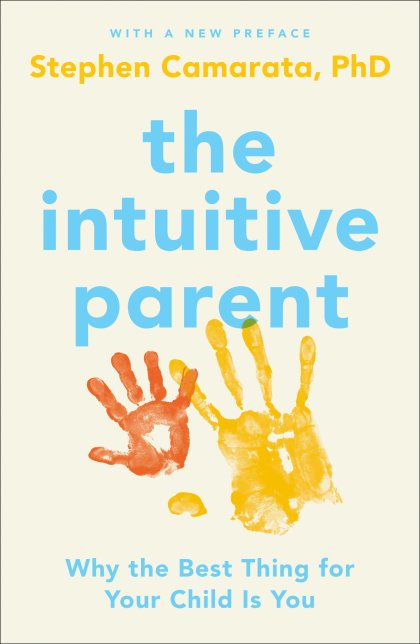
In The Intuitive Parent, Vanderbilt University child development specialist Dr. Stephen Camarata debunks the claims many of these “brain development” programs make. Using accessible, down-to-earth language he explains how parents can intuitively support their child’s brain development by simply paying attention. Babies and children develop at their own pace; what’s more, they are hardwired to signal to caregivers when they’re ready for the next step. Restrictive tools like flashcards may derail your child’s ability to learn holistically—and will definitely sap the joy from one of the most important jobs in the world: being a parent.
The key is to recognize the “ready to learn” cues your child is giving you and respond in a way that comes naturally. Routine activities, such as playing peekaboo, reading books to a toddler, talking, singing, feeding, and otherwise meeting the everyday needs of a child, are the true magic that ultimately wires a child’s brain and helps children become an intelligent, confident, curious, and talented adults.
Grounded in the latest science by a nationally recognized child development expert, The Intuitive Parent arms parents and caregivers with the confidence and knowledge they need to quit worrying and enjoy the time they have with their child—no fancy gadgets or pricey videos necessary.
STANDARD, PRIMARY, DM AND VARIANT COVERS
Standard and Primary covers are widely available through general retailers. They often have higher print runs and can be cheaper, especially during sales.
In contrast, Direct Market (DM) and variant covers are primarily sold in comic shops. DM editions tend to have more limited availability and may be more valuable to collectors.
The main differences lie in artwork style, availability, price, and collector appeal. Ultimately, the choice between standard and variant covers depends on personal preference, budget, and individual collecting goals.
PRODUCT TYPES
Comic book enthusiasts have various formats to choose from when collecting their favorite stories.
Here's a brief overview of the main types:
Omnibus
- Large, hardcover collections
- Usually contain complete runs or extensive story arcs
- Typically 800-1000+ pages
- Higher price point, often €100-€150
Oversized Hardcover (OHC)
- Similar dimensions to omnibus, but thinner
- Collect shorter runs or story arcs
- Usually 300-600 pages
- Priced between €30-€50
Hardcover (HC)
- Standard-sized hardcover books
- Collect 6-12 issues typically
- Similar dimensions to single issues, but with a hard cover
- Priced around €25-€35
Trade Paperback (TP)
- Softcover collections
- Standard comic book size
- Usually collect 4-6 issues
- Most affordable option, typically €15-€25
Other Formats
- Absolute Editions: Oversized, deluxe hardcovers (mainly DC Comics)
- Compendiums: Massive paperback collections
- Graphic Novels (OGN/GN): Original stories not previously released as single issues
The choice between these formats often depends on personal preference, budget, and collecting goals. Omnibus and OHC editions offer larger artwork and more content but at a higher price, while TPs provide a more affordable way to collect complete story arcs