

Knopf Doubleday Publishing Group
The Jews of Silence
The Jews of Silence
Couldn't load pickup availability
Collapsible content
ABOUT
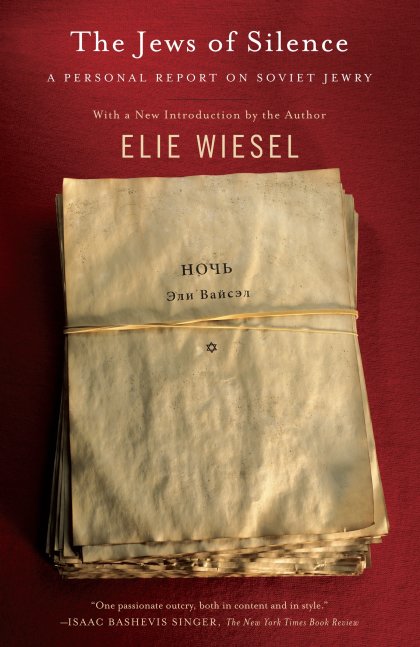
In the fall of 1965 the Israeli newspaper Haaretz sent a young journalist named Elie Wiesel to the Soviet Union to report on the lives of Jews trapped behind the Iron Curtain. “I would approach Jews who had never been placed in the Soviet show window by Soviet authorities,” wrote Wiesel. “They alone, in their anonymity, could describe the conditions under which they live; they alone could tell whether the reports I had heard were true or false—and whether their children and their grandchildren, despite everything, still wish to remain Jews. From them I would learn what we must do to help . . . or if they want our help at all.”
What he discovered astonished him: Jewish men and women, young and old, in Moscow, Kiev, Leningrad, Vilna, Minsk, and Tbilisi, completely cut off from the outside world, overcoming their fear of the ever-present KGB to ask Wiesel about the lives of Jews in America, in Western Europe, and, most of all, in Israel. They have scant knowledge of Jewish history or current events; they celebrate Jewish holidays at considerable risk and with only the vaguest ideas of what these days commemorate. “Most of them come [to synagogue] not to pray,” Wiesel writes, “but out of a desire to identify with the Jewish people—about whom they know next to nothing.” Wiesel promises to bring the stories of these people to the outside world. And in the home of one dissident, he is given a gift—a Russian-language translation of Night, published illegally by the underground. “‘My God,’ I thought, ‘this man risked arrest and prison just to make my writing available to people here!’ I embraced him with tears in my eyes.”
STANDARD, PRIMARY, DM AND VARIANT COVERS
Standard and Primary covers are widely available through general retailers. They often have higher print runs and can be cheaper, especially during sales.
In contrast, Direct Market (DM) and variant covers are primarily sold in comic shops. DM editions tend to have more limited availability and may be more valuable to collectors.
The main differences lie in artwork style, availability, price, and collector appeal. Ultimately, the choice between standard and variant covers depends on personal preference, budget, and individual collecting goals.
PRODUCT TYPES
Comic book enthusiasts have various formats to choose from when collecting their favorite stories.
Here's a brief overview of the main types:
Omnibus
- Large, hardcover collections
- Usually contain complete runs or extensive story arcs
- Typically 800-1000+ pages
- Higher price point, often €100-€150
Oversized Hardcover (OHC)
- Similar dimensions to omnibus, but thinner
- Collect shorter runs or story arcs
- Usually 300-600 pages
- Priced between €30-€50
Hardcover (HC)
- Standard-sized hardcover books
- Collect 6-12 issues typically
- Similar dimensions to single issues, but with a hard cover
- Priced around €25-€35
Trade Paperback (TP)
- Softcover collections
- Standard comic book size
- Usually collect 4-6 issues
- Most affordable option, typically €15-€25
Other Formats
- Absolute Editions: Oversized, deluxe hardcovers (mainly DC Comics)
- Compendiums: Massive paperback collections
- Graphic Novels (OGN/GN): Original stories not previously released as single issues
The choice between these formats often depends on personal preference, budget, and collecting goals. Omnibus and OHC editions offer larger artwork and more content but at a higher price, while TPs provide a more affordable way to collect complete story arcs