

Random House Worlds
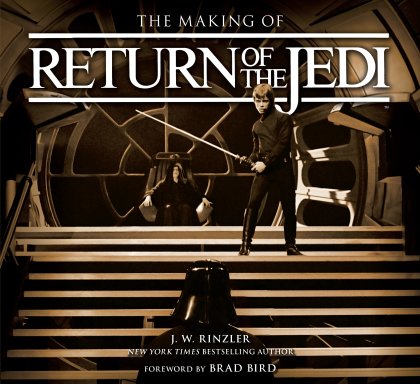
The Making of Star Wars: Return of the Jedi
The Making of Star Wars: Return of the Jedi
Couldn't load pickup availability
Collapsible content
ABOUT
Once again, the author’s unprecedented access to the formidable Lucasfilm Archives has yielded a mother lode of extremely informative, vastly entertaining, and often unexpected stories, anecdotes, recollections, and revelations straight from the closely guarded set of a big-screen blockbuster in the making. Brimming with previously unpublished photos, production artwork, script excerpts, exclusive intel, vintage on-set interviews, and present-day commentary, The Making of Star Wars: Return of the Jedi chronicles “how George Lucas and his crew of extroverted artists, misfits, and expert craftspeople roused themselves to great heights for a third time” to create the next unforgettable chapter in one of the most beloved sagas of all time.
Get up close to the action and feel like a studio insider as:
• creator George Lucas, Oscar-nominated screenwriter Lawrence Kasdan, and director Richard Marquand huddle in a script conference to debate the destinies of iconic Star Wars characters, as well as plot twists and turns for the epic final showdown between the Rebel Alliance and the Empire
• artists and craftspeople at the groundbreaking Industrial Light & Magic facility top their own revolutionary innovations—despite the infamous Black Friday—with boundary-pushing new analog visual effects
• a crack team of sculptors, puppeteers, actors, and “monster-makers” bring Jabba the Hutt and his cohorts to startling, slobbering life from the inside out
• a Who’s Who of heavyweight directors—from such films as Superman, Gremlins, Halloween, Dune, Scanners, and Time Bandits—are considered for the coveted job of bringing a new Star Wars adventure to the silver screen
• actors and crew race to the finish line at Elstree Studios, in a fiery desert, and beneath the trees of a dense redwood forest—before money runs out—to answer the questions that audiences had waited three years to find out: Is Darth Vader really Luke’s father, who is the “other”—and who or what is the Emperor?
Star Wars’ stars from both sides of the camera weigh in with candid insights on everything from technical challenges, character design, Ewoks, the Empire’s galactic city planet, and the ultimate challenge of bringing the phenomenal space fantasy to a dramatic close.
STANDARD, PRIMARY, DM AND VARIANT COVERS
Standard and Primary covers are widely available through general retailers. They often have higher print runs and can be cheaper, especially during sales.
In contrast, Direct Market (DM) and variant covers are primarily sold in comic shops. DM editions tend to have more limited availability and may be more valuable to collectors.
The main differences lie in artwork style, availability, price, and collector appeal. Ultimately, the choice between standard and variant covers depends on personal preference, budget, and individual collecting goals.
PRODUCT TYPES
Comic book enthusiasts have various formats to choose from when collecting their favorite stories.
Here's a brief overview of the main types:
Omnibus
- Large, hardcover collections
- Usually contain complete runs or extensive story arcs
- Typically 800-1000+ pages
- Higher price point, often €100-€150
Oversized Hardcover (OHC)
- Similar dimensions to omnibus, but thinner
- Collect shorter runs or story arcs
- Usually 300-600 pages
- Priced between €30-€50
Hardcover (HC)
- Standard-sized hardcover books
- Collect 6-12 issues typically
- Similar dimensions to single issues, but with a hard cover
- Priced around €25-€35
Trade Paperback (TP)
- Softcover collections
- Standard comic book size
- Usually collect 4-6 issues
- Most affordable option, typically €15-€25
Other Formats
- Absolute Editions: Oversized, deluxe hardcovers (mainly DC Comics)
- Compendiums: Massive paperback collections
- Graphic Novels (OGN/GN): Original stories not previously released as single issues
The choice between these formats often depends on personal preference, budget, and collecting goals. Omnibus and OHC editions offer larger artwork and more content but at a higher price, while TPs provide a more affordable way to collect complete story arcs