

Random House Worlds
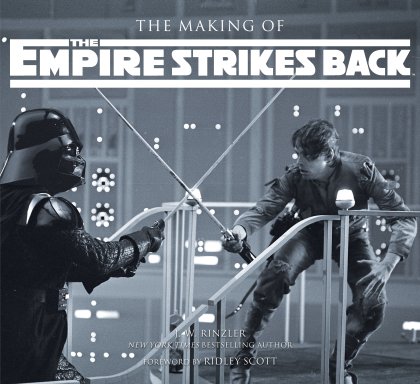
The Making of Star Wars: The Empire Strikes Back
The Making of Star Wars: The Empire Strikes Back
Couldn't load pickup availability
Collapsible content
ABOUT
Following his The Making of Star Wars, the author has once again made use of his unlimited access to the Lucasfilm Archives and its hidden treasures of previously unpublished interviews, photos, artwork, and production mementos. The result is a comprehensive behind-the-scenes, up-close-and-personal look at the trials and triumphs, risks and close calls, inspiration, perspiration, and imagination that went into every facet of this cinematic masterpiece. Here’s the inside scoop on:
• the evolution of the script, from story conference and treatment to fifth draft, as conceived, written, and rewritten by George Lucas, famed science-fiction author Leigh Brackett, and screenwriter Lawrence Kasdan
• the development of new key characters, including roguish hero Lando Calrissian, sinister bounty hunter Boba Fett, and iconic Jedi Master Yoda
• the challenges of shooting the epic ice planet battle in the frozen reaches of Norway and of conjuring up convincing creatures and craft—from tauntauns and snowspeeders to Imperial walkers
• the construction of a life-sized Millennium Falcon and the swamp planet Dagobah inside a specially built soundstage in Elstree Studios
• the technique behind master Muppeteer Frank Oz’s breathing life into the breakthrough character Yoda
• the creation of the new, improved Industrial Light & Magic visual effects facility and the founding of the now-legendary Skywalker Ranch
In addition, of course, are rare on-the-scene interviews with all the major players: actors Mark Hamill, Harrison Ford, Carrie Fisher, Billy Dee Williams, Anthony Daniels, Peter Mayhew, and David Prowse; director Irvin Kershner; producer Gary Kurtz; effects specialists Richard Edlund, Dennis Muren, Ken Ralston, and Phil Tippett; composer John Williams; and many others. Punctuating the epic account is a bounty of drawings, storyboards, and paintings by Ralph McQuarrie, Joe Johnston, and Ivor Beddoes, along with classic and rare production photos. An added bonus is a Foreword by acclaimed director Ridley Scott.
The Making of Star Wars: The Empire Strikes Back is a fittingly glorious celebration of an undisputed space-fantasy movie milestone. Search your feelings, you know it to be true.
STANDARD, PRIMARY, DM AND VARIANT COVERS
Standard and Primary covers are widely available through general retailers. They often have higher print runs and can be cheaper, especially during sales.
In contrast, Direct Market (DM) and variant covers are primarily sold in comic shops. DM editions tend to have more limited availability and may be more valuable to collectors.
The main differences lie in artwork style, availability, price, and collector appeal. Ultimately, the choice between standard and variant covers depends on personal preference, budget, and individual collecting goals.
PRODUCT TYPES
Comic book enthusiasts have various formats to choose from when collecting their favorite stories.
Here's a brief overview of the main types:
Omnibus
- Large, hardcover collections
- Usually contain complete runs or extensive story arcs
- Typically 800-1000+ pages
- Higher price point, often €100-€150
Oversized Hardcover (OHC)
- Similar dimensions to omnibus, but thinner
- Collect shorter runs or story arcs
- Usually 300-600 pages
- Priced between €30-€50
Hardcover (HC)
- Standard-sized hardcover books
- Collect 6-12 issues typically
- Similar dimensions to single issues, but with a hard cover
- Priced around €25-€35
Trade Paperback (TP)
- Softcover collections
- Standard comic book size
- Usually collect 4-6 issues
- Most affordable option, typically €15-€25
Other Formats
- Absolute Editions: Oversized, deluxe hardcovers (mainly DC Comics)
- Compendiums: Massive paperback collections
- Graphic Novels (OGN/GN): Original stories not previously released as single issues
The choice between these formats often depends on personal preference, budget, and collecting goals. Omnibus and OHC editions offer larger artwork and more content but at a higher price, while TPs provide a more affordable way to collect complete story arcs