

Random House Publishing Group
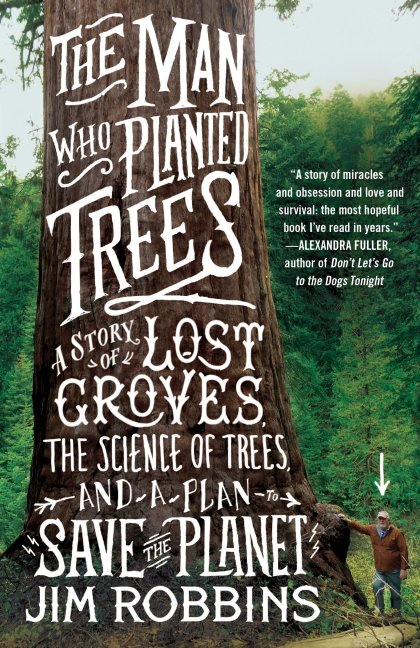
The Man Who Planted Trees
The Man Who Planted Trees
Couldn't load pickup availability
Collapsible content
ABOUT
The Man Who Planted Trees is the inspiring story of David Milarch’s quest to clone the biggest trees on the planet in order to save our forests and ecosystem—as well as a hopeful lesson about how each of us has the ability to make a difference.
“When is the best time to plant a tree? Twenty years ago. The second best time? Today.”—Chinese proverb
Twenty years ago, David Milarch, a northern Michigan nurseryman with a penchant for hard living, had a vision: angels came to tell him that the earth was in trouble. Its trees were dying, and without them, human life was in jeopardy. The solution, they told him, was to clone the champion trees of the world—the largest, the hardiest, the ones that had survived millennia and were most resilient to climate change—and create a kind of Noah’s ark of tree genetics. Without knowing if the message had any basis in science, or why he’d been chosen for this task, Milarch began his mission of cloning the world’s great trees. Many scientists and tree experts told him it couldn’t be done, but, twenty years later, his team has successfully cloned some of the world’s oldest trees—among them giant redwoods and sequoias. They have also grown seedlings from the oldest tree in the world, the bristlecone pine Methuselah.
When New York Times journalist Jim Robbins came upon Milarch’s story, he was fascinated but had his doubts. Yet over several years, listening to Milarch and talking to scientists, he came to realize that there is so much we do not yet know about trees: how they die, how they communicate, the myriad crucial ways they filter water and air and otherwise support life on Earth. It became clear that as the planet changes, trees and forest are essential to assuring its survival.
Praise for The Man Who Planted Trees
“This is a story of miracles and obsession and love and survival. Told with Jim Robbins’s signature clarity and eye for telling detail, The Man Who Planted Trees is also the most hopeful book I’ve read in years. I kept thinking of the end of Saint Francis’s wonderful prayer, ‘And may God bless you with enough foolishness to believe that you can make a difference in the world, so that you can do what others claim cannot be done.’ ”—Alexandra Fuller, author of Don’t Let’s Go to the Dogs Tonight
“Absorbing, eloquent, and loving . . . While Robbins’s tone is urgent, it doesn’t compromise his crystal-clear science. . . . Even the smallest details here are fascinating.”—Dominique Browning, The New York Times Book Review
“The great poet W. S. Merwin once wrote, ‘On the last day of the world I would want to plant a tree.’ It’s good to see, in this lovely volume, that some folks are getting a head start!”—Bill McKibben, author of Eaarth: Making a Life on a Tough New Planet
“Inspiring . . . Robbins lucidly summarizes the importance and value of trees to planet Earth and all humanity.”—The Ecologist
“ ‘Imagine a world without trees,’ writes journalist Jim Robbins. It’s nearly impossible after reading The Man Who Planted Trees, in which Robbins weaves science and spirituality as he explores the bounty these plants offer the planet.”—Audubon
STANDARD, PRIMARY, DM AND VARIANT COVERS
Standard and Primary covers are widely available through general retailers. They often have higher print runs and can be cheaper, especially during sales.
In contrast, Direct Market (DM) and variant covers are primarily sold in comic shops. DM editions tend to have more limited availability and may be more valuable to collectors.
The main differences lie in artwork style, availability, price, and collector appeal. Ultimately, the choice between standard and variant covers depends on personal preference, budget, and individual collecting goals.
PRODUCT TYPES
Comic book enthusiasts have various formats to choose from when collecting their favorite stories.
Here's a brief overview of the main types:
Omnibus
- Large, hardcover collections
- Usually contain complete runs or extensive story arcs
- Typically 800-1000+ pages
- Higher price point, often €100-€150
Oversized Hardcover (OHC)
- Similar dimensions to omnibus, but thinner
- Collect shorter runs or story arcs
- Usually 300-600 pages
- Priced between €30-€50
Hardcover (HC)
- Standard-sized hardcover books
- Collect 6-12 issues typically
- Similar dimensions to single issues, but with a hard cover
- Priced around €25-€35
Trade Paperback (TP)
- Softcover collections
- Standard comic book size
- Usually collect 4-6 issues
- Most affordable option, typically €15-€25
Other Formats
- Absolute Editions: Oversized, deluxe hardcovers (mainly DC Comics)
- Compendiums: Massive paperback collections
- Graphic Novels (OGN/GN): Original stories not previously released as single issues
The choice between these formats often depends on personal preference, budget, and collecting goals. Omnibus and OHC editions offer larger artwork and more content but at a higher price, while TPs provide a more affordable way to collect complete story arcs