

Penguin Publishing Group
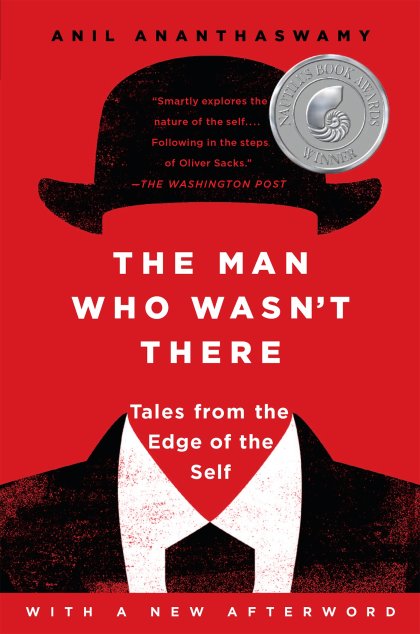
The Man Who Wasn't There
The Man Who Wasn't There
Couldn't load pickup availability
Collapsible content
ABOUT
In the tradition of Oliver Sacks, science journalist Anil Ananthaswamy skillfully inspects the bewildering connections among brain, body, mind, self, and society by examining a range of neuropsychological ailments from autism and Alzheimer’s to out-of-body experiences and body integrity identity disorder
Award-winning science writer Anil Ananthaswamy smartly explores the concept of self by way of several mental conditions that eat away at patients’ identities, showing we learn a lot about being human from people with a fragmented or altered sense of self. Ananthaswamy travelled the world to meet those who suffer from “maladies of the self” interviewing patients, psychiatrists, philosophers and neuroscientists along the way. He charts how the self is affected by Asperger’s, autism, Alzheimer’s, epilepsy, schizophrenia, among many other mental conditions, revealing how the brain constructs our sense of self. Each chapter is anchored with stories of people who experience themselves differently from the norm. Readers meet individuals in various stages of Alzheimer’s disease where the loss of memory and cognition results in the loss of some aspects of the self. We meet a woman who recalls the feeling of her first major encounter with schizophrenia which she describes as an outside force controlling her. Ananthaswamy also looks at several less familiar conditions, such as Cotard’s syndrome, in which patients believe they are dead, and those with body integrity identity disorder, where the patient seeks to have a body part amputated because it “doesn’t belong to them.”
Moving nimbly back and forth from the individual stories to scientific analysis The Man Who Wasn’t There is a wholly original exploration of the human self which raises fascinating questions about the mind-body connection.
STANDARD, PRIMARY, DM AND VARIANT COVERS
Standard and Primary covers are widely available through general retailers. They often have higher print runs and can be cheaper, especially during sales.
In contrast, Direct Market (DM) and variant covers are primarily sold in comic shops. DM editions tend to have more limited availability and may be more valuable to collectors.
The main differences lie in artwork style, availability, price, and collector appeal. Ultimately, the choice between standard and variant covers depends on personal preference, budget, and individual collecting goals.
PRODUCT TYPES
Comic book enthusiasts have various formats to choose from when collecting their favorite stories.
Here's a brief overview of the main types:
Omnibus
- Large, hardcover collections
- Usually contain complete runs or extensive story arcs
- Typically 800-1000+ pages
- Higher price point, often €100-€150
Oversized Hardcover (OHC)
- Similar dimensions to omnibus, but thinner
- Collect shorter runs or story arcs
- Usually 300-600 pages
- Priced between €30-€50
Hardcover (HC)
- Standard-sized hardcover books
- Collect 6-12 issues typically
- Similar dimensions to single issues, but with a hard cover
- Priced around €25-€35
Trade Paperback (TP)
- Softcover collections
- Standard comic book size
- Usually collect 4-6 issues
- Most affordable option, typically €15-€25
Other Formats
- Absolute Editions: Oversized, deluxe hardcovers (mainly DC Comics)
- Compendiums: Massive paperback collections
- Graphic Novels (OGN/GN): Original stories not previously released as single issues
The choice between these formats often depends on personal preference, budget, and collecting goals. Omnibus and OHC editions offer larger artwork and more content but at a higher price, while TPs provide a more affordable way to collect complete story arcs