

Crown
The Meaning of Star Trek
The Meaning of Star Trek
Couldn't load pickup availability
Collapsible content
ABOUT
"I feel differently. I think the meaning of the series can best be captured by looking at how it successfully creates a coherent universe. Like any great work of art or literature, the Star Trek universe has an integrity and a resonance all its own, a completeness unrivaled by any other kind of science fiction, whether movie, television show, or novel. The unique character of the series, taken not as a group of loosely connected stories but as a viable whole, is the subject of this book."
--From the Introduction to The Meaning of Star Trek
Star Trek has no equal. Easily the most cerebral show on television, it brought a literary sophistication to the raw material of science fiction and confounded all the formulas of television. By taking classic stories and placing them in strange new contexts, Star Trek became a modern Odyssey in outer space, a set of stories so basic to our culture that they can be told over and over again.
The Meaning of Star Trek captures the essence of this timeless television masterpiece by linking the parallel universes of classical literature and popular culture. Thomas Richards examines its portrayals of contact and conflict with other species and other cultures; its deep explorations of character and identity, and its complex conception of the idea of the individual self; its remarkably rich and varied use of story and myth; and its profound appeal to our shared sense of wonder, a reverence and awe for that which science cannot explain.
Enlightening, provocative, and enormously entertaining, The Meaning of Star Trek is essential reading for even the most casual admirer of the Star Trek universe, as well as a brilliant introduction to the worlds of literature, myth, and science fiction.
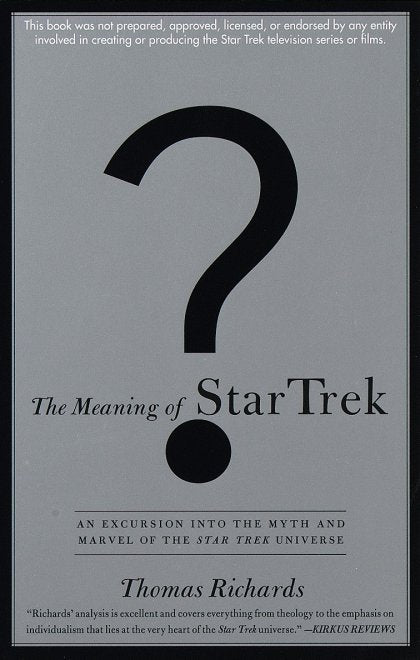
This book was not prepared, approved, licensed, or endorsed by any entity involved in creating or producing the Star Trek television series or films.
STANDARD, PRIMARY, DM AND VARIANT COVERS
Standard and Primary covers are widely available through general retailers. They often have higher print runs and can be cheaper, especially during sales.
In contrast, Direct Market (DM) and variant covers are primarily sold in comic shops. DM editions tend to have more limited availability and may be more valuable to collectors.
The main differences lie in artwork style, availability, price, and collector appeal. Ultimately, the choice between standard and variant covers depends on personal preference, budget, and individual collecting goals.
PRODUCT TYPES
Comic book enthusiasts have various formats to choose from when collecting their favorite stories.
Here's a brief overview of the main types:
Omnibus
- Large, hardcover collections
- Usually contain complete runs or extensive story arcs
- Typically 800-1000+ pages
- Higher price point, often €100-€150
Oversized Hardcover (OHC)
- Similar dimensions to omnibus, but thinner
- Collect shorter runs or story arcs
- Usually 300-600 pages
- Priced between €30-€50
Hardcover (HC)
- Standard-sized hardcover books
- Collect 6-12 issues typically
- Similar dimensions to single issues, but with a hard cover
- Priced around €25-€35
Trade Paperback (TP)
- Softcover collections
- Standard comic book size
- Usually collect 4-6 issues
- Most affordable option, typically €15-€25
Other Formats
- Absolute Editions: Oversized, deluxe hardcovers (mainly DC Comics)
- Compendiums: Massive paperback collections
- Graphic Novels (OGN/GN): Original stories not previously released as single issues
The choice between these formats often depends on personal preference, budget, and collecting goals. Omnibus and OHC editions offer larger artwork and more content but at a higher price, while TPs provide a more affordable way to collect complete story arcs