

Penguin Publishing Group
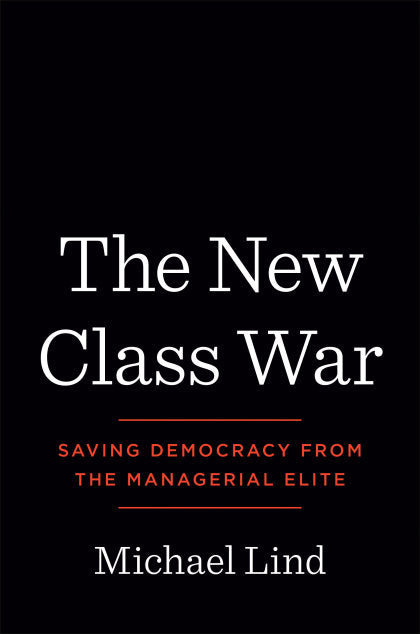
The New Class War
The New Class War
Couldn't load pickup availability
Collapsible content
ABOUT
In this controversial and groundbreaking new analysis, Michael Lind, one of America’s leading thinkers, debunks the idea that the insurgencies are primarily the result of bigotry, traces how the breakdown of mid-century class compromises between business and labor led to the conflict, and reveals the real battle lines.
On one side is the managerial overclass—the university-credentialed elite that clusters in high-income hubs and dominates government, the economy and the culture. On the other side is the working class of the low-density heartlands—mostly, but not exclusively, native and white.
The two classes clash over immigration, trade, the environment, and social values, and the managerial class has had the upper hand. As a result of the half-century decline of the institutions that once empowered the working class, power has shifted to the institutions the overclass controls: corporations, executive and judicial branches, universities, and the media.
The class war can resolve in one of three ways:
• The triumph of the overclass, resulting in a high-tech caste system.
• The empowerment of populist, resulting in no constructive reforms
• A class compromise that provides the working class with real power
Lind argues that Western democracies must incorporate working-class majorities of all races, ethnicities, and creeds into decision making in politics, the economy, and culture. Only this class compromise can avert a never-ending cycle of clashes between oligarchs and populists and save democracy.
STANDARD, PRIMARY, DM AND VARIANT COVERS
Standard and Primary covers are widely available through general retailers. They often have higher print runs and can be cheaper, especially during sales.
In contrast, Direct Market (DM) and variant covers are primarily sold in comic shops. DM editions tend to have more limited availability and may be more valuable to collectors.
The main differences lie in artwork style, availability, price, and collector appeal. Ultimately, the choice between standard and variant covers depends on personal preference, budget, and individual collecting goals.
PRODUCT TYPES
Comic book enthusiasts have various formats to choose from when collecting their favorite stories.
Here's a brief overview of the main types:
Omnibus
- Large, hardcover collections
- Usually contain complete runs or extensive story arcs
- Typically 800-1000+ pages
- Higher price point, often €100-€150
Oversized Hardcover (OHC)
- Similar dimensions to omnibus, but thinner
- Collect shorter runs or story arcs
- Usually 300-600 pages
- Priced between €30-€50
Hardcover (HC)
- Standard-sized hardcover books
- Collect 6-12 issues typically
- Similar dimensions to single issues, but with a hard cover
- Priced around €25-€35
Trade Paperback (TP)
- Softcover collections
- Standard comic book size
- Usually collect 4-6 issues
- Most affordable option, typically €15-€25
Other Formats
- Absolute Editions: Oversized, deluxe hardcovers (mainly DC Comics)
- Compendiums: Massive paperback collections
- Graphic Novels (OGN/GN): Original stories not previously released as single issues
The choice between these formats often depends on personal preference, budget, and collecting goals. Omnibus and OHC editions offer larger artwork and more content but at a higher price, while TPs provide a more affordable way to collect complete story arcs