

Penguin Publishing Group
The New Negro Aesthetic
The New Negro Aesthetic
Couldn't load pickup availability
Collapsible content
ABOUT
A Penguin Classic
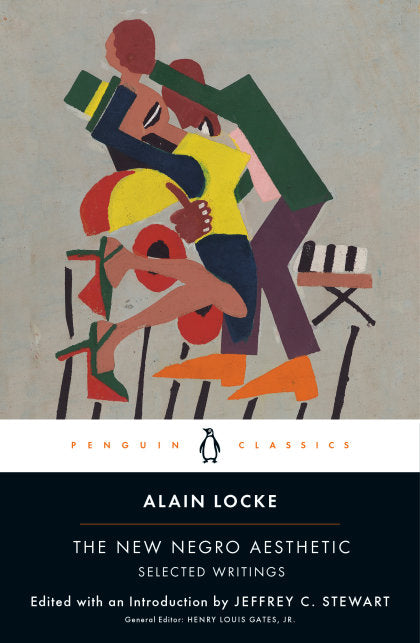
For months, the philosopher Alain Locke wrestled with the idea of the Negro as America's most vexing problem. He asked how shall Negroes think of themselves as he considered the new crop of poets, novelists, and short story writers who, in 1924, wrote about their experiences as Black people in America. He did not want to frame Harlem and Black writing as yet another protest against racism, nor did he want to focus on the sociological perspective on the "Negro problem" and Harlem as a site of crime, poverty, and dysfunction. He wanted to find new language and a new way for Black people to think of themselves. The essays and articles collected in this volume, by Locke's Pulitzer Prize–winning biographer, are the result of that new attitude and the struggle to instill the New Negro aesthetics, as Stewart calls it here, into the mind of the twentieth century. To be a New Negro poet, novelist, actor, musician, dancer, or filmmaker was to commit oneself to an arc of self-discovery of what and who the Negro was—would be—without fear that one would disappoint the white or Black bystander. In committing to that path, Locke asserted, one would uncover a "being-in-the-world" that was rich and bountiful in its creative possibilities, if Black people could turn off the noise of racism and see themselves for who they really are: a world of creative people who have transformed, powerfully and perpetually, the culture of wherever history or social forces landed them.
STANDARD, PRIMARY, DM AND VARIANT COVERS
Standard and Primary covers are widely available through general retailers. They often have higher print runs and can be cheaper, especially during sales.
In contrast, Direct Market (DM) and variant covers are primarily sold in comic shops. DM editions tend to have more limited availability and may be more valuable to collectors.
The main differences lie in artwork style, availability, price, and collector appeal. Ultimately, the choice between standard and variant covers depends on personal preference, budget, and individual collecting goals.
PRODUCT TYPES
Comic book enthusiasts have various formats to choose from when collecting their favorite stories.
Here's a brief overview of the main types:
Omnibus
- Large, hardcover collections
- Usually contain complete runs or extensive story arcs
- Typically 800-1000+ pages
- Higher price point, often €100-€150
Oversized Hardcover (OHC)
- Similar dimensions to omnibus, but thinner
- Collect shorter runs or story arcs
- Usually 300-600 pages
- Priced between €30-€50
Hardcover (HC)
- Standard-sized hardcover books
- Collect 6-12 issues typically
- Similar dimensions to single issues, but with a hard cover
- Priced around €25-€35
Trade Paperback (TP)
- Softcover collections
- Standard comic book size
- Usually collect 4-6 issues
- Most affordable option, typically €15-€25
Other Formats
- Absolute Editions: Oversized, deluxe hardcovers (mainly DC Comics)
- Compendiums: Massive paperback collections
- Graphic Novels (OGN/GN): Original stories not previously released as single issues
The choice between these formats often depends on personal preference, budget, and collecting goals. Omnibus and OHC editions offer larger artwork and more content but at a higher price, while TPs provide a more affordable way to collect complete story arcs