

Penguin Publishing Group
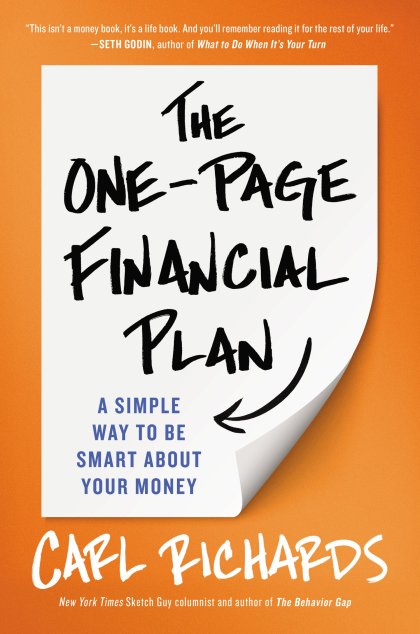
The One-Page Financial Plan
The One-Page Financial Plan
Couldn't load pickup availability
Collapsible content
ABOUT
It’s no surprise that even my most successful friends feel confused or paralyzed. Even if they have a shelfful of personal finance books, they don’t have time to make sense of all the information available. They don’t just want good advice, they want the best advice—so rather than do the “wrong thing,” they do nothing. Their 401(k) and bank statements pile up, unexamined or maybe even unopened.
What they don’t realize is that bad calls about money aren’t failures; they’re just what happens when emotional creatures have to make decisions about the future with limited information. What I tell them is that we need to scrap striving for perfection and instead commit to a process of guessing and making adjustments when things go off track. Of course we’re going to make the best guesses we can—but we’re not going to obsess over getting them exactly right.
The fact is, in a single page you can prioritize what you really want in life and figure out how to get there. That’s because a great financial plan has nothing to do with what the markets are doing, what your real estate agent is pitching, or the hot stock your brother-in-law told you about. It has everything to do with what’s most important to you.
By now you may be wondering, “What about the details? How much do I need to invest each year, and how do I allocate it? How much life insurance do I need?” Don’t worry: I’ll cover those topics and many more, sharing strategies that will take the complexity out of them.
The most important thing is getting clarity about the big picture so you can cope with the unexpected. Maybe you’ll lose the job you thought was secure; you’ll take a financial risk that doesn’t pan out; you’ll have twins when you were only budgeting for one. In other words: Life will happen.
But no matter what happens, this book will help you bridge the gap between where you are now and where you want to go.
STANDARD, PRIMARY, DM AND VARIANT COVERS
Standard and Primary covers are widely available through general retailers. They often have higher print runs and can be cheaper, especially during sales.
In contrast, Direct Market (DM) and variant covers are primarily sold in comic shops. DM editions tend to have more limited availability and may be more valuable to collectors.
The main differences lie in artwork style, availability, price, and collector appeal. Ultimately, the choice between standard and variant covers depends on personal preference, budget, and individual collecting goals.
PRODUCT TYPES
Comic book enthusiasts have various formats to choose from when collecting their favorite stories.
Here's a brief overview of the main types:
Omnibus
- Large, hardcover collections
- Usually contain complete runs or extensive story arcs
- Typically 800-1000+ pages
- Higher price point, often €100-€150
Oversized Hardcover (OHC)
- Similar dimensions to omnibus, but thinner
- Collect shorter runs or story arcs
- Usually 300-600 pages
- Priced between €30-€50
Hardcover (HC)
- Standard-sized hardcover books
- Collect 6-12 issues typically
- Similar dimensions to single issues, but with a hard cover
- Priced around €25-€35
Trade Paperback (TP)
- Softcover collections
- Standard comic book size
- Usually collect 4-6 issues
- Most affordable option, typically €15-€25
Other Formats
- Absolute Editions: Oversized, deluxe hardcovers (mainly DC Comics)
- Compendiums: Massive paperback collections
- Graphic Novels (OGN/GN): Original stories not previously released as single issues
The choice between these formats often depends on personal preference, budget, and collecting goals. Omnibus and OHC editions offer larger artwork and more content but at a higher price, while TPs provide a more affordable way to collect complete story arcs