

Crown
The Order of Days
The Order of Days
Couldn't load pickup availability
Collapsible content
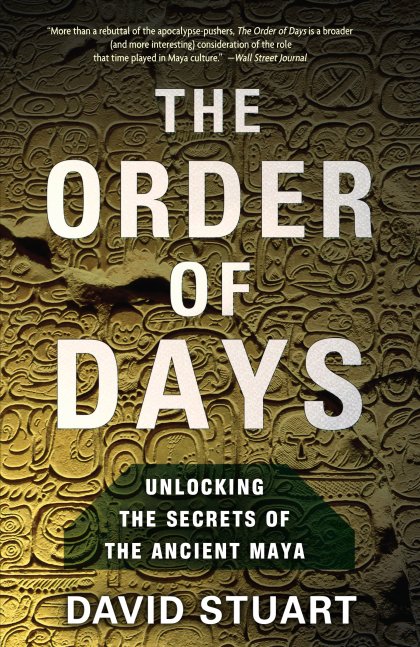
ABOUT
The world's foremost expert on Maya culture looks at 2012 hysteria and explains the truth about what the Maya meant and what we want to believe.
Apocalypse 2012: An Investigation into Civilizations End. The World Cataclysm in 2012. 2012: The return of Quetzalcoatl. According to many of these alarmingly titled books, the ancient Maya not only had a keen insight into the mystical workings of our planet and the cosmos, but they were also able to predict that the world will end in the year 2012.
David Stuart, the foremost scholar of the Maya and recipient of numerous awards for his work, takes a hard look at the frenzy over 2012 and offers a fascination (and accurate) trip through Mayan culture and belief. Stuart shows how the idea that the "end of the Mayan calendar," which supposedly heralds the end of our own existence, says far more about our culture than about the ancient Maya. The Order of Days explores how the real intellectual achievement of ancient Maya timekeeping and worldview is far more impressive and remarkable than any of the popular, and often outrageous, claims about this advanced civilization.
As someone who has studied the Maya for nearly all of his life and who specializes in reading their ancient texts, Stuart sees the 2012 hubbub as the most recent in a long chain of related ideas about Mesoamericans, the Maya in particular, that depicts them as somehow oddball, not "of this world," or as having some strong mystical link to other realms.
Because the year 2012 has no prominent role in anything the ancient Maya ever actually wrote, Stuart takes a wider look at the Maya concepts of time and their underlying philosophy as we can best understand them. The ancient Maya, Stuart contends, were worthy of study and admiration not because they were strange but because they were altogether human, and they developed a compelling vision of time unlike any other civilization before or since.
STANDARD, PRIMARY, DM AND VARIANT COVERS
Standard and Primary covers are widely available through general retailers. They often have higher print runs and can be cheaper, especially during sales.
In contrast, Direct Market (DM) and variant covers are primarily sold in comic shops. DM editions tend to have more limited availability and may be more valuable to collectors.
The main differences lie in artwork style, availability, price, and collector appeal. Ultimately, the choice between standard and variant covers depends on personal preference, budget, and individual collecting goals.
PRODUCT TYPES
Comic book enthusiasts have various formats to choose from when collecting their favorite stories.
Here's a brief overview of the main types:
Omnibus
- Large, hardcover collections
- Usually contain complete runs or extensive story arcs
- Typically 800-1000+ pages
- Higher price point, often €100-€150
Oversized Hardcover (OHC)
- Similar dimensions to omnibus, but thinner
- Collect shorter runs or story arcs
- Usually 300-600 pages
- Priced between €30-€50
Hardcover (HC)
- Standard-sized hardcover books
- Collect 6-12 issues typically
- Similar dimensions to single issues, but with a hard cover
- Priced around €25-€35
Trade Paperback (TP)
- Softcover collections
- Standard comic book size
- Usually collect 4-6 issues
- Most affordable option, typically €15-€25
Other Formats
- Absolute Editions: Oversized, deluxe hardcovers (mainly DC Comics)
- Compendiums: Massive paperback collections
- Graphic Novels (OGN/GN): Original stories not previously released as single issues
The choice between these formats often depends on personal preference, budget, and collecting goals. Omnibus and OHC editions offer larger artwork and more content but at a higher price, while TPs provide a more affordable way to collect complete story arcs