

Astra Publishing House
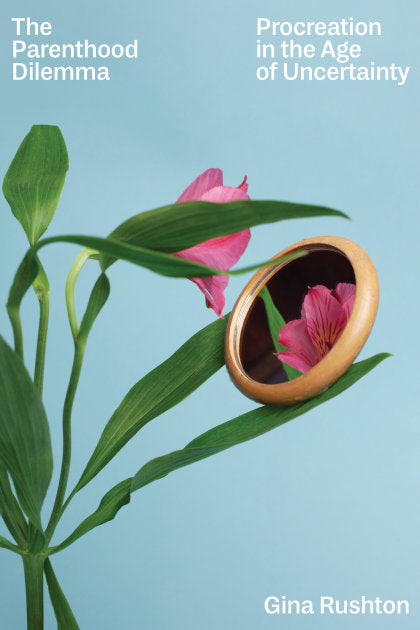
The Parenthood Dilemma
The Parenthood Dilemma
Couldn't load pickup availability
Collapsible content
ABOUT
“Rushton's work is generous, thoughtful, and honest, taking care neither to romanticize nor to disparage the choice to become a parent.”
—Jenny Hamilton, Booklist (starred review)
A bold feminist investigation into the mother of all questions; whether or not to become a parent in these turbulent times.
Should we become parents?
This timeless question forces us to reckon with who we are and what we love and fear most in ourselves, in our relationships, and in the world as it is now and as it will be.
When Gina Rushton admitted she had little time left to make the decision for herself, the magnitude of the choice overwhelmed her. Her search for her own “yes” or “no” only uncovered more questions to be answered. How do we clearly consider creating a new life on a planet facing catastrophic climate change? How do we reassess the gender roles we have been assigned at birth and by society? How do we balance ascending careers with declining fertility? How do we know if we’ve found the right co-parent, or if we want to go it alone, or if we don’t want to do it at all?
To seek clarity on these questions, Rushton spoke to doctors, sociologists, economists, and ethicists, as well as parents and childless people of all ages and from around the world. Here, she explores and presents policies, data, and case studies from people who have made this decision—one way or the other—and shows how the process can be revelatory in discovering who we are as individuals.
Drawing on the depth of knowledge afforded by her body of work as an award-winning journalist on the abortion beat, Rushton wrote the book that she needed, and we all need, to stop a panicked internal monologue and start a genuine dialogue about what we want from our lives and why.
STANDARD, PRIMARY, DM AND VARIANT COVERS
Standard and Primary covers are widely available through general retailers. They often have higher print runs and can be cheaper, especially during sales.
In contrast, Direct Market (DM) and variant covers are primarily sold in comic shops. DM editions tend to have more limited availability and may be more valuable to collectors.
The main differences lie in artwork style, availability, price, and collector appeal. Ultimately, the choice between standard and variant covers depends on personal preference, budget, and individual collecting goals.
PRODUCT TYPES
Comic book enthusiasts have various formats to choose from when collecting their favorite stories.
Here's a brief overview of the main types:
Omnibus
- Large, hardcover collections
- Usually contain complete runs or extensive story arcs
- Typically 800-1000+ pages
- Higher price point, often €100-€150
Oversized Hardcover (OHC)
- Similar dimensions to omnibus, but thinner
- Collect shorter runs or story arcs
- Usually 300-600 pages
- Priced between €30-€50
Hardcover (HC)
- Standard-sized hardcover books
- Collect 6-12 issues typically
- Similar dimensions to single issues, but with a hard cover
- Priced around €25-€35
Trade Paperback (TP)
- Softcover collections
- Standard comic book size
- Usually collect 4-6 issues
- Most affordable option, typically €15-€25
Other Formats
- Absolute Editions: Oversized, deluxe hardcovers (mainly DC Comics)
- Compendiums: Massive paperback collections
- Graphic Novels (OGN/GN): Original stories not previously released as single issues
The choice between these formats often depends on personal preference, budget, and collecting goals. Omnibus and OHC editions offer larger artwork and more content but at a higher price, while TPs provide a more affordable way to collect complete story arcs