

Random House Publishing Group
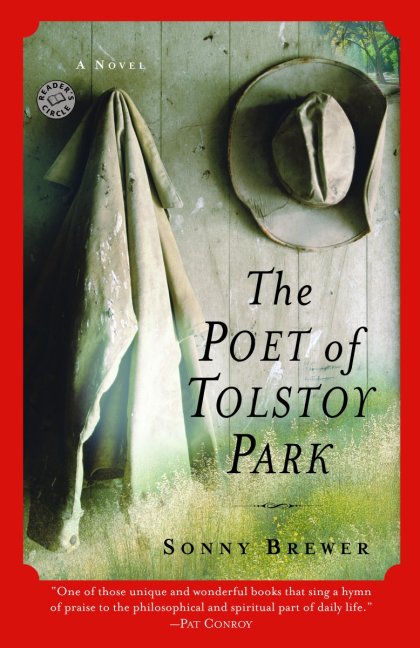
The Poet of Tolstoy Park
The Poet of Tolstoy Park
Couldn't load pickup availability
Collapsible content
ABOUT
Henry responds to the news by slogging home barefoot in the rain. It’s 1925. The place: Canyon County, Idaho. Henry is sixty-seven, a retired professor and a widower who has been told a warmer climate would make the end more tolerable. San Diego would be a good choice.
Instead, Henry chose Fairhope, Alabama, a town with utopian ideals and a haven for strong-minded individualists. Upton Sinclair, Sherwood Anderson, and Clarence Darrow were among its inhabitants. Henry bought his own ten acres of piney woods outside Fairhope. Before dying, underscored by the writings of his beloved Tolstoy, Henry could begin to “perfect the soul awarded him” and rest in the faith that he, and all people, would succeed, “even if it took eons.” Human existence, Henry believed, continues in a perfect circle unmarred by flaws of personality, irrespective of blood and possessions and rank, and separate from organized religion. In Alabama, until his final breath, he would chase these high ideas.
But first, Henry had to answer up for leaving Idaho. Henry’s dearest friend and intellectual sparring partner, Pastor Will Webb, and Henry’s two adult sons, Thomas and Harvey, were baffled and angry that he would abandon them and move to the Deep South, living in a barn there while he built a round house of handmade concrete blocks. His new neighbors were perplexed by his eccentric behavior as well. On the coldest day of winter he was barefoot, a philosopher and poet with ideas and words to share with anyone who would listen. And, mysteriously, his “last few months” became years. He had gone looking for a place to learn lessons in dying, and, studiously advanced to claim a vigorous new life.
The Poet of Tolstoy Park is a moving and irresistible story, a guidebook of the mind and spirit that lays hold of the heart. Henry Stuart points the way through life’s puzzles for all of us, becoming in this timeless tale a character of such dimension that he seems more alive now than ever.
STANDARD, PRIMARY, DM AND VARIANT COVERS
Standard and Primary covers are widely available through general retailers. They often have higher print runs and can be cheaper, especially during sales.
In contrast, Direct Market (DM) and variant covers are primarily sold in comic shops. DM editions tend to have more limited availability and may be more valuable to collectors.
The main differences lie in artwork style, availability, price, and collector appeal. Ultimately, the choice between standard and variant covers depends on personal preference, budget, and individual collecting goals.
PRODUCT TYPES
Comic book enthusiasts have various formats to choose from when collecting their favorite stories.
Here's a brief overview of the main types:
Omnibus
- Large, hardcover collections
- Usually contain complete runs or extensive story arcs
- Typically 800-1000+ pages
- Higher price point, often €100-€150
Oversized Hardcover (OHC)
- Similar dimensions to omnibus, but thinner
- Collect shorter runs or story arcs
- Usually 300-600 pages
- Priced between €30-€50
Hardcover (HC)
- Standard-sized hardcover books
- Collect 6-12 issues typically
- Similar dimensions to single issues, but with a hard cover
- Priced around €25-€35
Trade Paperback (TP)
- Softcover collections
- Standard comic book size
- Usually collect 4-6 issues
- Most affordable option, typically €15-€25
Other Formats
- Absolute Editions: Oversized, deluxe hardcovers (mainly DC Comics)
- Compendiums: Massive paperback collections
- Graphic Novels (OGN/GN): Original stories not previously released as single issues
The choice between these formats often depends on personal preference, budget, and collecting goals. Omnibus and OHC editions offer larger artwork and more content but at a higher price, while TPs provide a more affordable way to collect complete story arcs