

Random House Publishing Group
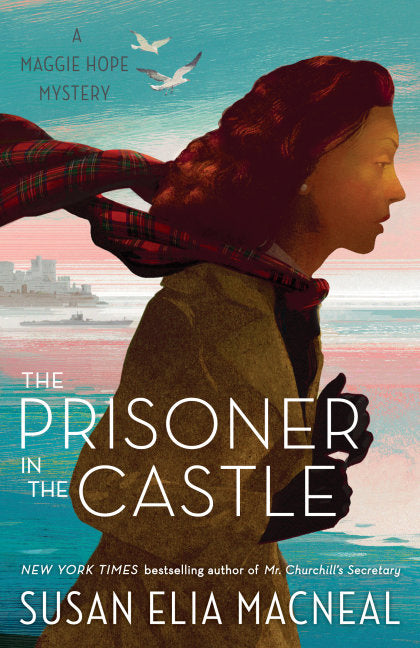
The Prisoner in the Castle
The Prisoner in the Castle
Couldn't load pickup availability
Collapsible content
ABOUT
November, 1942. World War II is raging, and former spy Maggie Hope knows too much: what the British government is willing to do to keep its secrets, who is lying, who the double-crossers are. She knows exactly who is sending agents to their deaths. These are the reasons Maggie is isolated on a remote Scottish island, in a prison known as Killoch Castle. When one of her fellow inmates drops dead in the middle of his after-dinner drink—he’s only the first. As victims fall one by one, Maggie will have to call upon all her wits and skills to escape—not just certain death . . . but certain murder. For what’s the most important thing that Maggie Hope knows? She must survive.
Praise for The Prisoner in the Castle
“The colonel sums it up best on page ten: ‘If you take a pretty girl and teach her how to kill, it can cause problems.’ Not just problems—electrifying action and nonstop surprises. I loved this book!”—R. L. Stine, author of the Goosebumps and Fear Street series
“Another literary tour de force . . . From the book’s perfectly calibrated plot to its incisively etched characters, everything is handled with perfect finesse by the author.”—Poisoned Pen Newsletter
“One pleasure of a mystery series is connecting with a character that changes and grows with each novel. . . . Maggie’s intelligence and loyalty to the war effort continue to evolve in [Susan Elia] MacNeal’s series. . . . Solid twists keep the plot of The Prisoner in the Castle churning until the surprise finale.”—Associated Press
“A mystery . . . tailor-made for readers in the post-election, #MeToo era. . . . If you love a tricky puzzle that requires you to keep track of multiple alibis over time, this is your summer read.”—The Washington Post
“Evocative.”—Publishers Weekly
“MacNeal uses [Agatha] Christie’s And Then There Were None as a framework for a character-driven mystery/thriller that successfully emulates the original.”—Kirkus Reviews
STANDARD, PRIMARY, DM AND VARIANT COVERS
Standard and Primary covers are widely available through general retailers. They often have higher print runs and can be cheaper, especially during sales.
In contrast, Direct Market (DM) and variant covers are primarily sold in comic shops. DM editions tend to have more limited availability and may be more valuable to collectors.
The main differences lie in artwork style, availability, price, and collector appeal. Ultimately, the choice between standard and variant covers depends on personal preference, budget, and individual collecting goals.
PRODUCT TYPES
Comic book enthusiasts have various formats to choose from when collecting their favorite stories.
Here's a brief overview of the main types:
Omnibus
- Large, hardcover collections
- Usually contain complete runs or extensive story arcs
- Typically 800-1000+ pages
- Higher price point, often €100-€150
Oversized Hardcover (OHC)
- Similar dimensions to omnibus, but thinner
- Collect shorter runs or story arcs
- Usually 300-600 pages
- Priced between €30-€50
Hardcover (HC)
- Standard-sized hardcover books
- Collect 6-12 issues typically
- Similar dimensions to single issues, but with a hard cover
- Priced around €25-€35
Trade Paperback (TP)
- Softcover collections
- Standard comic book size
- Usually collect 4-6 issues
- Most affordable option, typically €15-€25
Other Formats
- Absolute Editions: Oversized, deluxe hardcovers (mainly DC Comics)
- Compendiums: Massive paperback collections
- Graphic Novels (OGN/GN): Original stories not previously released as single issues
The choice between these formats often depends on personal preference, budget, and collecting goals. Omnibus and OHC editions offer larger artwork and more content but at a higher price, while TPs provide a more affordable way to collect complete story arcs