

Random House Publishing Group
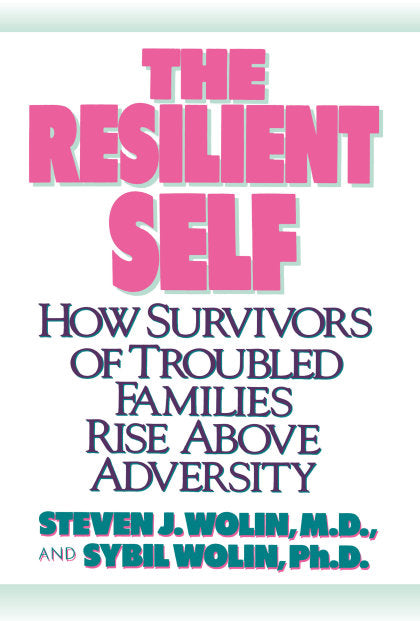
The Resilient Self
The Resilient Self
Couldn't load pickup availability
Collapsible content
ABOUT
“The Resilient Self reminds us all of the importance of being aware of and building on the strengths of our young people, whatever their early life experiences. We must work to give them hope and to craft services and programs that are respectful of the resiliencies so thoughtfully characterized by the Wolins. This guide, although based on the experiences of adults, offers extremely useful insights too for those working on behalf of children and adolescents.”—Marian Wright Edelman, president, Children’s Defense Fund
“This book offers a strong sense of hope for everyone who has grown up in a troubled family. I salute the authors for their masterful synthesis of research, clinical experiences, and insights gleaned from the voices of poetry. The Wolins’ book cautions the reader that no one emerges from troubled childhood without some scars, but it challenges us to finds ways in which we can transforms pain into joy in our lives.”—Emmy E. Werner, Ph.D., author of Vulnerable But Invincible and Overcoming the Odds
“This marvelous book can turn the tide for people injured during their childhoods, not by ignoring the ashes of the past, but by winnowing out the precious elements from which the phoenix can triumphantly rise. It is a book that has been badly needed, and for which many will long be grateful.”—Timmen L. Cermak, M.D., former chairman, National Association for Children of Alcoholics
“At last, a compassionate and realistic challenge to abandon the idea that one is a passive object of an unhappy childhood. The Resilient Self encourages readers to recognize and appreciate their strong, insightful, and creative survival.”—Barbara Mathis, author of Between Sisters: Secret Rivals, Intimate Friends
“The Resilient Self shows adult children of dysfunctional families that they can escape a painful past and become resilient survivors. It describes the strategies which have been used successfully by those who grew up in troubled homes but who managed to work well, play well, and love well as adults. I recognized myself in this book with a survivor’s pride.”—Anonymous survivor
STANDARD, PRIMARY, DM AND VARIANT COVERS
Standard and Primary covers are widely available through general retailers. They often have higher print runs and can be cheaper, especially during sales.
In contrast, Direct Market (DM) and variant covers are primarily sold in comic shops. DM editions tend to have more limited availability and may be more valuable to collectors.
The main differences lie in artwork style, availability, price, and collector appeal. Ultimately, the choice between standard and variant covers depends on personal preference, budget, and individual collecting goals.
PRODUCT TYPES
Comic book enthusiasts have various formats to choose from when collecting their favorite stories.
Here's a brief overview of the main types:
Omnibus
- Large, hardcover collections
- Usually contain complete runs or extensive story arcs
- Typically 800-1000+ pages
- Higher price point, often €100-€150
Oversized Hardcover (OHC)
- Similar dimensions to omnibus, but thinner
- Collect shorter runs or story arcs
- Usually 300-600 pages
- Priced between €30-€50
Hardcover (HC)
- Standard-sized hardcover books
- Collect 6-12 issues typically
- Similar dimensions to single issues, but with a hard cover
- Priced around €25-€35
Trade Paperback (TP)
- Softcover collections
- Standard comic book size
- Usually collect 4-6 issues
- Most affordable option, typically €15-€25
Other Formats
- Absolute Editions: Oversized, deluxe hardcovers (mainly DC Comics)
- Compendiums: Massive paperback collections
- Graphic Novels (OGN/GN): Original stories not previously released as single issues
The choice between these formats often depends on personal preference, budget, and collecting goals. Omnibus and OHC editions offer larger artwork and more content but at a higher price, while TPs provide a more affordable way to collect complete story arcs