

Penguin Publishing Group
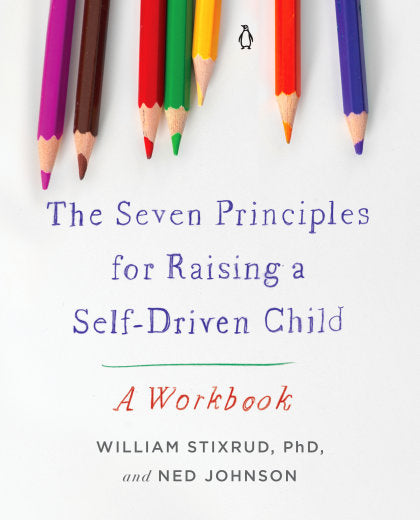
The Seven Principles for Raising a Self-Driven Child
The Seven Principles for Raising a Self-Driven Child
Couldn't load pickup availability
Collapsible content
ABOUT
A guide to move from understanding the science and value behind nonanxious parenting to developing and sharpening the essential skills parents need to be a trusted resource for growing kids.
Authors William Stixrud and Ned Johnson have watched firsthand as the crisis around education and the mental health crisis in childhood have converged in the postpandemic years. Their book The Self-Driven Child was ahead of the curve in addressing the way these forces converge in adolescents at pivotal moments as children develop their sense of autonomy, ambition, self-discipline, and learning style. As the authors have continued to lecture on the book’s subject, parents have again and again homed in on the value of the model dialogues and practice prompts.
Using material from their current work with parents and children, and pulling essential principles from the science in The Self-Driven Child, this workbook guides parents to develop the practice of being a nonanxious presence in children’s lives, as well as introducing essential skills for navigating the pressure cooker of school. With prompts to help parents diagnose and rewire their instinctual responses to stressful situations, exercises to give them the language to communicate clearly and calmly, and lists to keep anxiety responses in check and big-picture goals in view, this workbook will bring peace and clarity to parents and educators seeking to support the unique path each child traverses on the road to growing up.
STANDARD, PRIMARY, DM AND VARIANT COVERS
Standard and Primary covers are widely available through general retailers. They often have higher print runs and can be cheaper, especially during sales.
In contrast, Direct Market (DM) and variant covers are primarily sold in comic shops. DM editions tend to have more limited availability and may be more valuable to collectors.
The main differences lie in artwork style, availability, price, and collector appeal. Ultimately, the choice between standard and variant covers depends on personal preference, budget, and individual collecting goals.
PRODUCT TYPES
Comic book enthusiasts have various formats to choose from when collecting their favorite stories.
Here's a brief overview of the main types:
Omnibus
- Large, hardcover collections
- Usually contain complete runs or extensive story arcs
- Typically 800-1000+ pages
- Higher price point, often €100-€150
Oversized Hardcover (OHC)
- Similar dimensions to omnibus, but thinner
- Collect shorter runs or story arcs
- Usually 300-600 pages
- Priced between €30-€50
Hardcover (HC)
- Standard-sized hardcover books
- Collect 6-12 issues typically
- Similar dimensions to single issues, but with a hard cover
- Priced around €25-€35
Trade Paperback (TP)
- Softcover collections
- Standard comic book size
- Usually collect 4-6 issues
- Most affordable option, typically €15-€25
Other Formats
- Absolute Editions: Oversized, deluxe hardcovers (mainly DC Comics)
- Compendiums: Massive paperback collections
- Graphic Novels (OGN/GN): Original stories not previously released as single issues
The choice between these formats often depends on personal preference, budget, and collecting goals. Omnibus and OHC editions offer larger artwork and more content but at a higher price, while TPs provide a more affordable way to collect complete story arcs