

Crown
The Strangest Idea in the World
The Strangest Idea in the World
Couldn't load pickup availability
Collapsible content
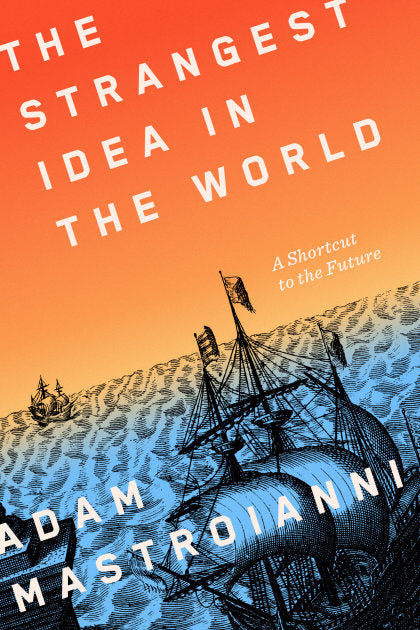
ABOUT
Here’s the biggest mystery in human history: Why did it take us 300,000 years to invent the toilet?
Come to think of it, why did discovering everything take so long? Why did we spend 1,500 years believing that you can deactivate a magnet with garlic? Why did centuries pass between the inventions of the button and the buttonhole? Why didn’t we didn’t come up with the randomized controlled trial—you know, the backbone of modern science—until 1948? Today, we’re spending more time, effort, and money on making breakthroughs, so why does the data suggest that scientific progress is slowing down?
In his debut book, creator of the hit Substack Experimental History Adam Mastroianni offers an answer: it’s hard for humans to discover things because discovery is, in the short term, a bad idea. We didn’t evolve to do it, and it’s a miracle that we can at all. That’s why we’re still living in the Dark Ages, where countless diseases remain uncured, and where we accidentally turned up the temperature and can’t figure out how to turn it back down again. We don’t even know whether flossing is good for you (really).
But there’s good news. We can overcome our psychological hurdles and build a better world—if we embrace the strange. Mastroianni draws on the little-known backstories of discovery—from Elizabethan poop jokes to physicists who set themselves on fire—to unpack the five strange ways of thinking that lead to a breakthrough, like building a tolerance for weirdness and realizing that nobody actually knows what they’re doing. Anyone who masters these moves can discover new knowledge, regardless of whether they’re a tenured professor in a lab or a teenager in a basement. Our future depends on both.
Written with the distinct blend of hilarity and rigor that has made his Substack a must-read, The Strangest Idea in the World is unlike any other book. Chock full of rabbit holes, dead ends, hidden pages, visual tricks, interactive moments, and secret endings, the book subverts expectations, busts myths about science that even scientists believe, and, most importantly, offers an antidote to despair.
STANDARD, PRIMARY, DM AND VARIANT COVERS
Standard and Primary covers are widely available through general retailers. They often have higher print runs and can be cheaper, especially during sales.
In contrast, Direct Market (DM) and variant covers are primarily sold in comic shops. DM editions tend to have more limited availability and may be more valuable to collectors.
The main differences lie in artwork style, availability, price, and collector appeal. Ultimately, the choice between standard and variant covers depends on personal preference, budget, and individual collecting goals.
PRODUCT TYPES
Comic book enthusiasts have various formats to choose from when collecting their favorite stories.
Here's a brief overview of the main types:
Omnibus
- Large, hardcover collections
- Usually contain complete runs or extensive story arcs
- Typically 800-1000+ pages
- Higher price point, often €100-€150
Oversized Hardcover (OHC)
- Similar dimensions to omnibus, but thinner
- Collect shorter runs or story arcs
- Usually 300-600 pages
- Priced between €30-€50
Hardcover (HC)
- Standard-sized hardcover books
- Collect 6-12 issues typically
- Similar dimensions to single issues, but with a hard cover
- Priced around €25-€35
Trade Paperback (TP)
- Softcover collections
- Standard comic book size
- Usually collect 4-6 issues
- Most affordable option, typically €15-€25
Other Formats
- Absolute Editions: Oversized, deluxe hardcovers (mainly DC Comics)
- Compendiums: Massive paperback collections
- Graphic Novels (OGN/GN): Original stories not previously released as single issues
The choice between these formats often depends on personal preference, budget, and collecting goals. Omnibus and OHC editions offer larger artwork and more content but at a higher price, while TPs provide a more affordable way to collect complete story arcs