

Random House Publishing Group
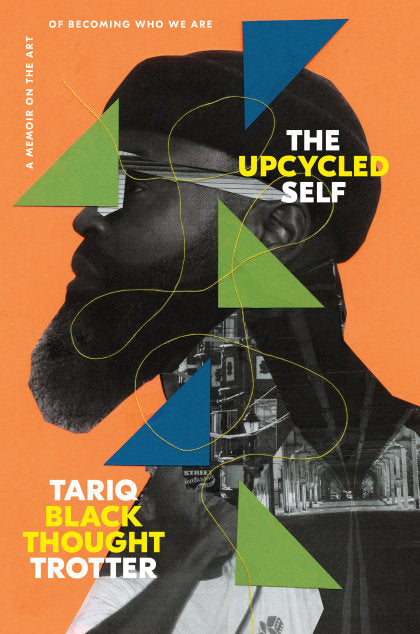
The Upcycled Self
The Upcycled Self
Couldn't load pickup availability
Collapsible content
ABOUT
From one of our generation’s most powerful artists and incisive storytellers comes a brilliantly crafted work about the art—and war—of becoming who we are.
A ROLLING STONE BEST BOOK OF THE YEAR
upcycle verb
up·cy·cle ˈəp-ˌsī-kəl
: to recycle (something) in such a way that the resulting product is of a higher value than the original item
: to create an object of greater value from (a discarded object of lesser value)
Today Tariq Trotter—better known as Black Thought—is the platinum-selling, Grammy-winning co-founder of The Roots and one of the most exhilaratingly skillful and profound rappers our culture has ever produced. But his story begins with a tragedy: as a child, Trotter burned down his family’s home. The years that follow are the story of a life snatched from the flames, forged in fire.
In The Upcycled Self, Trotter doesn’t only narrate a riveting and moving portrait of the artist as a young man, he gives readers a courageous model of what it means to live an examined life. In vivid vignettes, he tells the dramatic stories of the four powerful relationships that shaped him—with community, friends, art, and family—each a complex weave of love, discovery, trauma, and loss.
And beyond offering the compellingly poetic account of one artist’s creative and emotional origins, Trotter explores the vital questions we all have to confront about our formative years: How can we see the story of our own young lives clearly? How do we use that story to understand who we’ve become? How do we forgive the people who loved and hurt us? How do we rediscover and honor our first dreams? And, finally, what do we take forward, what do we pass on, what do we leave behind? This is the beautifully bluesy story of a boy genius’s coming-of-age that illuminates the redemptive power of the upcycle.
STANDARD, PRIMARY, DM AND VARIANT COVERS
Standard and Primary covers are widely available through general retailers. They often have higher print runs and can be cheaper, especially during sales.
In contrast, Direct Market (DM) and variant covers are primarily sold in comic shops. DM editions tend to have more limited availability and may be more valuable to collectors.
The main differences lie in artwork style, availability, price, and collector appeal. Ultimately, the choice between standard and variant covers depends on personal preference, budget, and individual collecting goals.
PRODUCT TYPES
Comic book enthusiasts have various formats to choose from when collecting their favorite stories.
Here's a brief overview of the main types:
Omnibus
- Large, hardcover collections
- Usually contain complete runs or extensive story arcs
- Typically 800-1000+ pages
- Higher price point, often €100-€150
Oversized Hardcover (OHC)
- Similar dimensions to omnibus, but thinner
- Collect shorter runs or story arcs
- Usually 300-600 pages
- Priced between €30-€50
Hardcover (HC)
- Standard-sized hardcover books
- Collect 6-12 issues typically
- Similar dimensions to single issues, but with a hard cover
- Priced around €25-€35
Trade Paperback (TP)
- Softcover collections
- Standard comic book size
- Usually collect 4-6 issues
- Most affordable option, typically €15-€25
Other Formats
- Absolute Editions: Oversized, deluxe hardcovers (mainly DC Comics)
- Compendiums: Massive paperback collections
- Graphic Novels (OGN/GN): Original stories not previously released as single issues
The choice between these formats often depends on personal preference, budget, and collecting goals. Omnibus and OHC editions offer larger artwork and more content but at a higher price, while TPs provide a more affordable way to collect complete story arcs