

Beacon Press
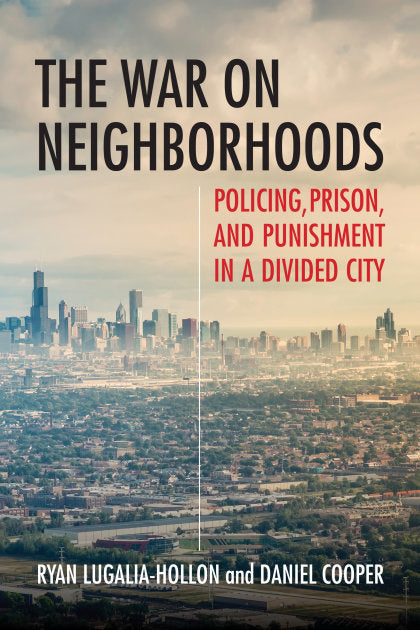
The War on Neighborhoods
The War on Neighborhoods
Couldn't load pickup availability
Collapsible content
ABOUT
For people of color who live in segregated urban neighborhoods, surviving crime and violence is a generational reality. As violence in cities like New York and Los Angeles has fallen in recent years, in many Chicago communities, it has continued at alarming rates. Meanwhile, residents of these same communities have endured decades of some of the highest rates of arrest, incarceration, and police abuse in the nation.
The War on Neighborhoods argues that these trends are connected. Crime in Chicago, as in many other US cities, has been fueled by a broken approach to public safety in disadvantaged neighborhoods. For nearly forty years, public leaders have attempted to create peace through punishment, misinvesting billions of dollars toward the suppression of crime, largely into a small subset of neighborhoods on the city’s West and South Sides. Meanwhile, these neighborhoods have struggled to sustain investments into basic needs such as jobs, housing, education, and mental healthcare.
When the main investment in a community is policing and incarceration, rather than human and community development, that amounts to a “war on neighborhoods,” which ultimately furthers poverty and disadvantage. Longtime Chicago scholars Ryan Lugalia-Hollon and Daniel Cooper tell the story of one of those communities, a neighborhood on Chicago’s West Side that is emblematic of many majority-black neighborhoods in US cities. Sharing both rigorous data and powerful stories, the authors explain why punishment will never create peace and why we must rethink the ways that public dollars are invested into making places safe.
The War on Neighborhoods makes the case for a revolutionary reformation of our public-safety model that focuses on shoring up neighborhood institutions and addressing the effects of trauma and poverty. The authors call for a profound transformation in how we think about investing in urban communities—away from the perverse misinvestment of policing and incarceration and toward a model that invests in human and community development.
STANDARD, PRIMARY, DM AND VARIANT COVERS
Standard and Primary covers are widely available through general retailers. They often have higher print runs and can be cheaper, especially during sales.
In contrast, Direct Market (DM) and variant covers are primarily sold in comic shops. DM editions tend to have more limited availability and may be more valuable to collectors.
The main differences lie in artwork style, availability, price, and collector appeal. Ultimately, the choice between standard and variant covers depends on personal preference, budget, and individual collecting goals.
PRODUCT TYPES
Comic book enthusiasts have various formats to choose from when collecting their favorite stories.
Here's a brief overview of the main types:
Omnibus
- Large, hardcover collections
- Usually contain complete runs or extensive story arcs
- Typically 800-1000+ pages
- Higher price point, often €100-€150
Oversized Hardcover (OHC)
- Similar dimensions to omnibus, but thinner
- Collect shorter runs or story arcs
- Usually 300-600 pages
- Priced between €30-€50
Hardcover (HC)
- Standard-sized hardcover books
- Collect 6-12 issues typically
- Similar dimensions to single issues, but with a hard cover
- Priced around €25-€35
Trade Paperback (TP)
- Softcover collections
- Standard comic book size
- Usually collect 4-6 issues
- Most affordable option, typically €15-€25
Other Formats
- Absolute Editions: Oversized, deluxe hardcovers (mainly DC Comics)
- Compendiums: Massive paperback collections
- Graphic Novels (OGN/GN): Original stories not previously released as single issues
The choice between these formats often depends on personal preference, budget, and collecting goals. Omnibus and OHC editions offer larger artwork and more content but at a higher price, while TPs provide a more affordable way to collect complete story arcs