

Random House Publishing Group
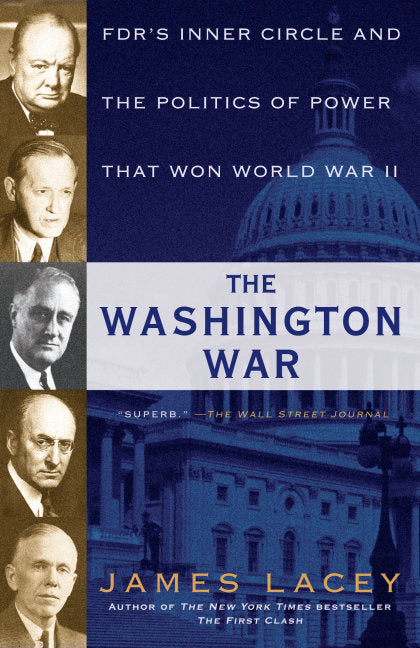
The Washington War
The Washington War
Couldn't load pickup availability
Collapsible content
ABOUT
The Washington War is the story of how the Second World War was fought and won in the capital’s halls of power—and how the United States, which in December 1941 had a nominal army and a decimated naval fleet, was able in only thirty months to fling huge forces onto the European continent and shortly thereafter shatter Imperial Japan’s Pacific strongholds.
Three quarters of a century after the overwhelming defeat of the totalitarian Axis forces, the terrifying, razor-thin calculus on which so many critical decisions turned has been forgotten—but had any of these debates gone the other way, the outcome of the war could have been far different: The army in August 1941, about to be disbanded, saved by a single vote. Production plans that would have delayed adequate war matériel for years after Pearl Harbor, circumvented by one uncompromising man’s courage and drive. The delicate ballet that precluded a separate peace between Stalin and Hitler. The almost-adopted strategy to stage D-Day at a fatally different time and place. It was all a breathtakingly close-run thing, again and again.
Renowned historian James Lacey takes readers behind the scenes in the cabinet rooms, the Pentagon, the Oval Office, and Hyde Park, and at the pivotal conferences—Campobello Island, Casablanca, Tehran—as these disputes raged. Here are colorful portraits of the great figures—and forgotten geniuses—of the day: New Dealers versus industrialists, political power brokers versus the generals, Churchill and the British high command versus the U.S. chiefs of staff, innovators versus entrenched bureaucrats . . . with the master manipulator, Franklin Delano Roosevelt, at the center, setting his brawling patriots one against the other and promoting and capitalizing on the furious turf wars.
Based on years of research and extensive, previously untapped archival resources, The Washington War is the first integrated, comprehensive chronicle of how all these elements—and towering personalities—clashed and ultimately coalesced at each vital turning point, the definitive account of Washington at real war and the titanic political and bureaucratic infighting that miraculously led to final victory.
STANDARD, PRIMARY, DM AND VARIANT COVERS
Standard and Primary covers are widely available through general retailers. They often have higher print runs and can be cheaper, especially during sales.
In contrast, Direct Market (DM) and variant covers are primarily sold in comic shops. DM editions tend to have more limited availability and may be more valuable to collectors.
The main differences lie in artwork style, availability, price, and collector appeal. Ultimately, the choice between standard and variant covers depends on personal preference, budget, and individual collecting goals.
PRODUCT TYPES
Comic book enthusiasts have various formats to choose from when collecting their favorite stories.
Here's a brief overview of the main types:
Omnibus
- Large, hardcover collections
- Usually contain complete runs or extensive story arcs
- Typically 800-1000+ pages
- Higher price point, often €100-€150
Oversized Hardcover (OHC)
- Similar dimensions to omnibus, but thinner
- Collect shorter runs or story arcs
- Usually 300-600 pages
- Priced between €30-€50
Hardcover (HC)
- Standard-sized hardcover books
- Collect 6-12 issues typically
- Similar dimensions to single issues, but with a hard cover
- Priced around €25-€35
Trade Paperback (TP)
- Softcover collections
- Standard comic book size
- Usually collect 4-6 issues
- Most affordable option, typically €15-€25
Other Formats
- Absolute Editions: Oversized, deluxe hardcovers (mainly DC Comics)
- Compendiums: Massive paperback collections
- Graphic Novels (OGN/GN): Original stories not previously released as single issues
The choice between these formats often depends on personal preference, budget, and collecting goals. Omnibus and OHC editions offer larger artwork and more content but at a higher price, while TPs provide a more affordable way to collect complete story arcs