

Kensington
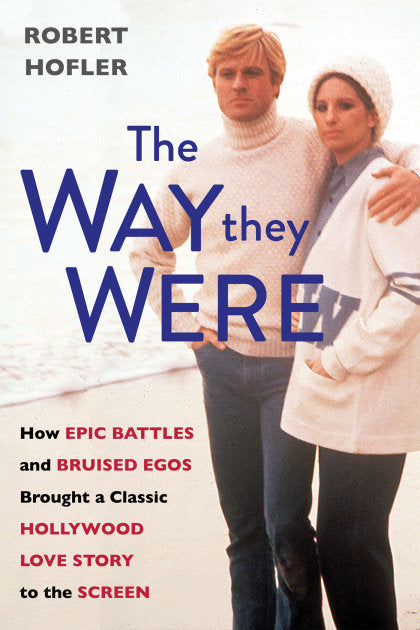
The Way They Were
The Way They Were
Couldn't load pickup availability
Collapsible content
ABOUT
It’s one of the greatest movie romances of all time. Fifty years on, the chemistry between Barbra Streisand as Jewish working-class firebrand Katie Worosky and Robert Redford as all-American golden boy Hubbell Gardiner remains potent. Yet the friction and controversy surrounding The Way We Were was so enormous, the movie was nearly never made at all.
Screenwriter Arthur Laurents wrote the role of Katie with Streisand in mind. Casting Hubble was another matter. Redford, already a superstar, was reluctant to play what he perceived as the “Ken doll” to Streisand’s lead, and demanded his role be changed and expanded. Laurents resisted, telling director Sydney Pollack, “You’ll ruin the movie if it ends up being about two people. It’s Katie’s story, not Hubbell’s.” Despite his protests, ten writers—among them Francis Ford Coppola—were brought on to rework the script.
Laurents’s fears were well founded, and the first preview was disastrous. Producer Ray Stark and Pollack, with Redford's approval, cut several scenes, upsetting Streisand and Laurents. Yet the edits worked. Such was the movie’s success that Redford was open to making a sequel, though Laurents’s script was never greenlit. Some of those "lost" scenes are now being restored to the film for its 50th anniversary.
It’s also the deep, surprising love story at the heart of The Way They Were that makes it so memorable, and Robert Hofler explores its inspiration—the relationship between Laurents, a Jewish Brooklyn-born college leftist, and his longtime partner, Tom Hatcher. Drawing on a vast trove of Laurents’s and Pollack’s unpublished writings, as well as interviews with Streisand, Redford, and other key players, this is the definitive account of a film that changed the rules of moviemaking and defined romance ever since.
STANDARD, PRIMARY, DM AND VARIANT COVERS
Standard and Primary covers are widely available through general retailers. They often have higher print runs and can be cheaper, especially during sales.
In contrast, Direct Market (DM) and variant covers are primarily sold in comic shops. DM editions tend to have more limited availability and may be more valuable to collectors.
The main differences lie in artwork style, availability, price, and collector appeal. Ultimately, the choice between standard and variant covers depends on personal preference, budget, and individual collecting goals.
PRODUCT TYPES
Comic book enthusiasts have various formats to choose from when collecting their favorite stories.
Here's a brief overview of the main types:
Omnibus
- Large, hardcover collections
- Usually contain complete runs or extensive story arcs
- Typically 800-1000+ pages
- Higher price point, often €100-€150
Oversized Hardcover (OHC)
- Similar dimensions to omnibus, but thinner
- Collect shorter runs or story arcs
- Usually 300-600 pages
- Priced between €30-€50
Hardcover (HC)
- Standard-sized hardcover books
- Collect 6-12 issues typically
- Similar dimensions to single issues, but with a hard cover
- Priced around €25-€35
Trade Paperback (TP)
- Softcover collections
- Standard comic book size
- Usually collect 4-6 issues
- Most affordable option, typically €15-€25
Other Formats
- Absolute Editions: Oversized, deluxe hardcovers (mainly DC Comics)
- Compendiums: Massive paperback collections
- Graphic Novels (OGN/GN): Original stories not previously released as single issues
The choice between these formats often depends on personal preference, budget, and collecting goals. Omnibus and OHC editions offer larger artwork and more content but at a higher price, while TPs provide a more affordable way to collect complete story arcs