

Penguin Publishing Group
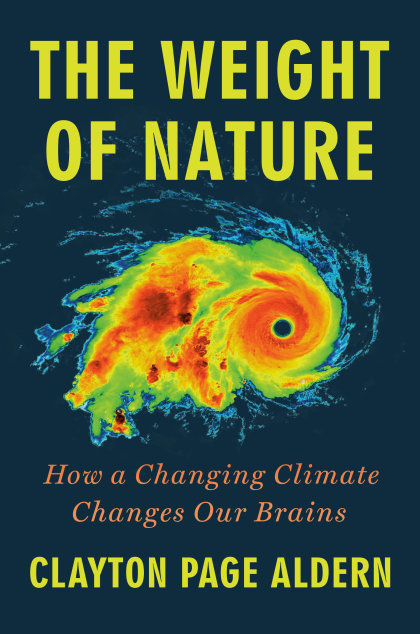
The Weight of Nature
The Weight of Nature
Couldn't load pickup availability
Collapsible content
ABOUT
A Rachel Carson Environment Book Award Finalist
A Next Big Idea Club and Sierra Magazine Must-Read Book
A Behavioral Scientist’s Notable Book of 2024
A Financial Times Best Summer Book
A Bookshop Most Notable Science Book of 2024
A deeply reported, eye-opening book about climate change, our brains, and the weight of nature on us all.
The march of climate change is stunning and vicious, with rising seas, extreme weather, and oppressive heat blanketing the globe. But its effects on our very brains constitute a public-health crisis that has gone largely unreported. Based on seven years of research, this book by the award-winning journalist and trained neuroscientist Clayton Page Aldern, synthesizes the emerging neuroscience, psychology, and behavioral economics of global warming and brain health. A masterpiece of literary journalism, this book shows readers how a changing environment is changing us today, from the inside out.
Aldern calls it the weight of nature.
Hotter temperatures make it harder to think clearly and problem-solve. They increase the chance of impulsive violence. Immigration judges are more likely to reject asylum applications on hotter days. Umpires, to miss calls. Air pollution, heatwaves, and hurricanes can warp and wear on memory, language, and sensory systems; wildfires seed PTSD. And climate-fueled ecosystem changes extend the reach of brain-disease carriers like mosquitos, brain-eating amoebas, and the bats that brought us the mental fog of long COVID.
How we feel about climate change matters deeply; but this is a book about much more than climate anxiety. As Aldern richly details, it is about the profound, direct action of global warming on our brains and behavior—and the most startling portrait yet of unforeseen environmental influences on our minds. From farms in the San Joaquin Valley and public schools across the United States to communities in Norway’s Arctic, the Micronesian islands, and the French Alps, this book is an unprecedented portrait of a global crisis we thought we understood.
STANDARD, PRIMARY, DM AND VARIANT COVERS
Standard and Primary covers are widely available through general retailers. They often have higher print runs and can be cheaper, especially during sales.
In contrast, Direct Market (DM) and variant covers are primarily sold in comic shops. DM editions tend to have more limited availability and may be more valuable to collectors.
The main differences lie in artwork style, availability, price, and collector appeal. Ultimately, the choice between standard and variant covers depends on personal preference, budget, and individual collecting goals.
PRODUCT TYPES
Comic book enthusiasts have various formats to choose from when collecting their favorite stories.
Here's a brief overview of the main types:
Omnibus
- Large, hardcover collections
- Usually contain complete runs or extensive story arcs
- Typically 800-1000+ pages
- Higher price point, often €100-€150
Oversized Hardcover (OHC)
- Similar dimensions to omnibus, but thinner
- Collect shorter runs or story arcs
- Usually 300-600 pages
- Priced between €30-€50
Hardcover (HC)
- Standard-sized hardcover books
- Collect 6-12 issues typically
- Similar dimensions to single issues, but with a hard cover
- Priced around €25-€35
Trade Paperback (TP)
- Softcover collections
- Standard comic book size
- Usually collect 4-6 issues
- Most affordable option, typically €15-€25
Other Formats
- Absolute Editions: Oversized, deluxe hardcovers (mainly DC Comics)
- Compendiums: Massive paperback collections
- Graphic Novels (OGN/GN): Original stories not previously released as single issues
The choice between these formats often depends on personal preference, budget, and collecting goals. Omnibus and OHC editions offer larger artwork and more content but at a higher price, while TPs provide a more affordable way to collect complete story arcs