

Harmony/Rodale/Convergent
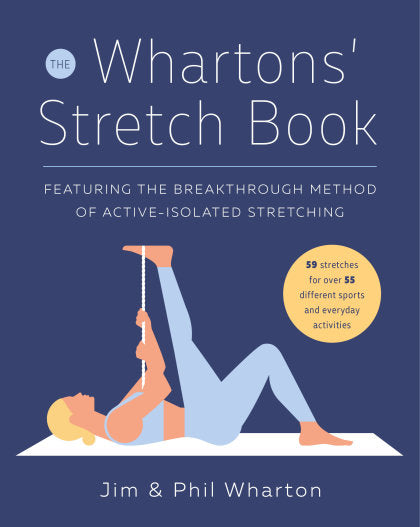
The Whartons' Stretch Book
The Whartons' Stretch Book
Couldn't load pickup availability
Collapsible content
ABOUT
Whether you’re a serious competitor or weekend warrior, you know that proper stretching before and after your workout can improve your performance, increase your flexibility, help prevent injury, and make you feel better. But did you know that the traditional way of stretching—lock your knees, bounce, hold, hurt, hold longer—actually makes muscles tighter and more prone to injury?
There’s a new and better way to stretch: Active-Isolated Stretching. And with The Whartons’ Stretch Book, the method used successfully by scores of professional, amateur, and Olympic athletes is now available to everyone.
This groundbreaking technique, developed by researchers, coaches, and trainers, and pioneered by Jim and Phil Wharton, is your new exercise prescription. The routine is simple: First, you prepare to stretch one isolated muscle at a time. Then you actively contract the muscle opposite the isolated muscle, which will then relax in preparation for its stretch. You stretch it gently and quickly—for no more than two seconds—and release it before it goes into its protective contraction. Then you repeat. Simple, but the results are outstanding. The Whartons’ Stretch Book explains it all.
Part I contains the Active-Isolated Stretch Catalog, with fully illustrated, easy-to-follow stretches for each of five body zones, from neck and shoulders to trunk, arms, and legs—over fifty stretches in all. Part II offers specific stretching prescriptions for over fifty-five sports and activities, from running, tennis, track, and aerobics to skiing, skating, and swimming. You’ll also find advice on stretching for daily activities such as driving, working at a desk, lifting, and keyboarding. Part III discusses stretching for life, with specific recommendations for expectant mothers and older athletes. It also includes specific stretching exercises that could help you avoid unnecessary surgery.
Give Active-Isolated Stretching a try for three weeks. You’ll never go back to your old stretching routines again.
STANDARD, PRIMARY, DM AND VARIANT COVERS
Standard and Primary covers are widely available through general retailers. They often have higher print runs and can be cheaper, especially during sales.
In contrast, Direct Market (DM) and variant covers are primarily sold in comic shops. DM editions tend to have more limited availability and may be more valuable to collectors.
The main differences lie in artwork style, availability, price, and collector appeal. Ultimately, the choice between standard and variant covers depends on personal preference, budget, and individual collecting goals.
PRODUCT TYPES
Comic book enthusiasts have various formats to choose from when collecting their favorite stories.
Here's a brief overview of the main types:
Omnibus
- Large, hardcover collections
- Usually contain complete runs or extensive story arcs
- Typically 800-1000+ pages
- Higher price point, often €100-€150
Oversized Hardcover (OHC)
- Similar dimensions to omnibus, but thinner
- Collect shorter runs or story arcs
- Usually 300-600 pages
- Priced between €30-€50
Hardcover (HC)
- Standard-sized hardcover books
- Collect 6-12 issues typically
- Similar dimensions to single issues, but with a hard cover
- Priced around €25-€35
Trade Paperback (TP)
- Softcover collections
- Standard comic book size
- Usually collect 4-6 issues
- Most affordable option, typically €15-€25
Other Formats
- Absolute Editions: Oversized, deluxe hardcovers (mainly DC Comics)
- Compendiums: Massive paperback collections
- Graphic Novels (OGN/GN): Original stories not previously released as single issues
The choice between these formats often depends on personal preference, budget, and collecting goals. Omnibus and OHC editions offer larger artwork and more content but at a higher price, while TPs provide a more affordable way to collect complete story arcs