

Beacon Press
The World in Flames
The World in Flames
Couldn't load pickup availability
Collapsible content
ABOUT
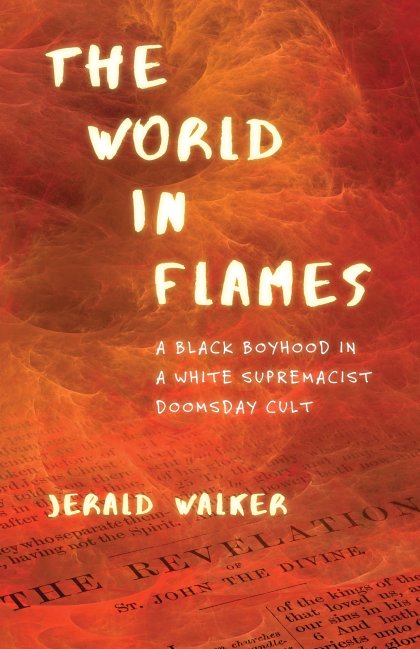
It’s 1970, and Jerry Walker is six years old. His consciousness revolves around being a member of a church whose beliefs he finds not only confusing but terrifying. Composed of a hodgepodge of requirements and restrictions—including a prohibition against doctors and hospitals—the underpinning tenet of Herbert W. Armstrong’s Worldwide Church of God was that its members were divinely chosen and all others would soon perish in rivers of flames.
The substantial membership was ruled by fear, intimidation, and threats. Anyone who dared leave the church would endure hardship for the remainder of this life and eternal suffering in the next. The next life, according to Armstrong, would arrive in 1975, three years after the start of the Great Tribulation. Jerry would be eleven years old.
Jerry’s parents were particularly vulnerable to the promise of relief from the world’s hardships. When they joined the church, in 1960, they were living in a two-room apartment in a dangerous Chicago housing project with the first four of their seven children, and, most significantly, they both were blind, having lost their sight to childhood accidents. They took comfort in the belief that they had been chosen for a special afterlife, even if it meant following a religion with a white supremacist ideology and dutifully sending tithes to Armstrong, whose church boasted more than 100,000 members and more than $80 million in annual revenues at its height.
When the prophecy of the 1972 Great Tribulation does not materialize, Jerry is considerably less disappointed than relieved. When the 1975 end-time prophecy also fails, he finally begins to question his faith and imagine the possibility of choosing a destiny of his own.
STANDARD, PRIMARY, DM AND VARIANT COVERS
Standard and Primary covers are widely available through general retailers. They often have higher print runs and can be cheaper, especially during sales.
In contrast, Direct Market (DM) and variant covers are primarily sold in comic shops. DM editions tend to have more limited availability and may be more valuable to collectors.
The main differences lie in artwork style, availability, price, and collector appeal. Ultimately, the choice between standard and variant covers depends on personal preference, budget, and individual collecting goals.
PRODUCT TYPES
Comic book enthusiasts have various formats to choose from when collecting their favorite stories.
Here's a brief overview of the main types:
Omnibus
- Large, hardcover collections
- Usually contain complete runs or extensive story arcs
- Typically 800-1000+ pages
- Higher price point, often €100-€150
Oversized Hardcover (OHC)
- Similar dimensions to omnibus, but thinner
- Collect shorter runs or story arcs
- Usually 300-600 pages
- Priced between €30-€50
Hardcover (HC)
- Standard-sized hardcover books
- Collect 6-12 issues typically
- Similar dimensions to single issues, but with a hard cover
- Priced around €25-€35
Trade Paperback (TP)
- Softcover collections
- Standard comic book size
- Usually collect 4-6 issues
- Most affordable option, typically €15-€25
Other Formats
- Absolute Editions: Oversized, deluxe hardcovers (mainly DC Comics)
- Compendiums: Massive paperback collections
- Graphic Novels (OGN/GN): Original stories not previously released as single issues
The choice between these formats often depends on personal preference, budget, and collecting goals. Omnibus and OHC editions offer larger artwork and more content but at a higher price, while TPs provide a more affordable way to collect complete story arcs