

Random House Publishing Group
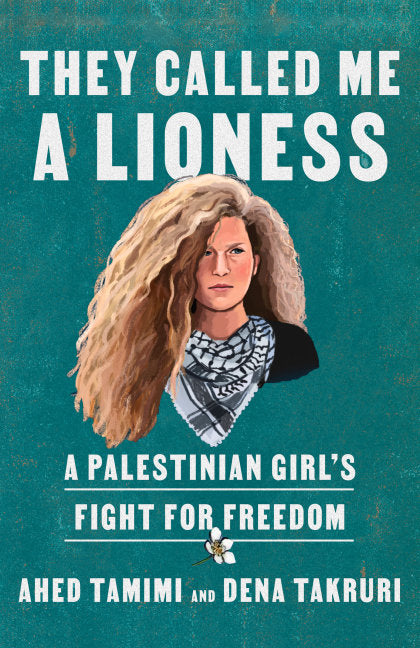
They Called Me a Lioness
They Called Me a Lioness
Couldn't load pickup availability
Collapsible content
ABOUT
“I cannot even begin to convey the clarity, the intensity, the power, the photographic storytelling of They Called Me a Lioness.”—Ibram X. Kendi, internationally bestselling author of How to Be an Antiracist
ONE OF THE BEST BOOKS OF THE YEAR: Kirkus Reviews
“What would you do if you grew up seeing your home repeatedly raided? Your parents arrested? Your mother shot? Your uncle killed? Try, for just a moment, to imagine that this was your life. How would you want the world to react?”
Ahed Tamimi is a world-renowned Palestinian activist, born and raised in the small West Bank village of Nabi Saleh, which became a center of the resistance to Israeli occupation when an illegal, Jewish-only settlement blocked off its community spring. Tamimi came of age participating in nonviolent demonstrations against this action and the occupation at large. Her global renown reached an apex in December 2017, when, at sixteen years old, she was filmed slapping an Israeli soldier who refused to leave her front yard. The video went viral, and Tamimi was arrested.
But this is not just a story of activism or imprisonment. It is the human-scale story of an occupation that has riveted the world and shaped global politics, from a girl who grew up in the middle of it . Tamimi’s father was born in 1967, the year that Israel began its occupation of the West Bank and he grew up immersed in the resistance movement. One of Tamimi’s earliest memories is visiting him in prison, poking her toddler fingers through the fence to touch his hand. She herself would spend her seventeenth birthday behind bars. Living through this greatest test and heightened attacks on her village, Tamimi felt her resolve only deepen, in tension with her attempts to live the normal life of a daughter, sibling, friend, and student.
An essential addition to an important conversation, They Called Me a Lioness shows us what is at stake in this struggle and offers a fresh vision for resistance. With their unflinching, riveting storytelling, Ahed Tamimi and Dena Takruri shine a light on the humanity not just in occupied Palestine but also in the unsung lives of people struggling for freedom around the world.
STANDARD, PRIMARY, DM AND VARIANT COVERS
Standard and Primary covers are widely available through general retailers. They often have higher print runs and can be cheaper, especially during sales.
In contrast, Direct Market (DM) and variant covers are primarily sold in comic shops. DM editions tend to have more limited availability and may be more valuable to collectors.
The main differences lie in artwork style, availability, price, and collector appeal. Ultimately, the choice between standard and variant covers depends on personal preference, budget, and individual collecting goals.
PRODUCT TYPES
Comic book enthusiasts have various formats to choose from when collecting their favorite stories.
Here's a brief overview of the main types:
Omnibus
- Large, hardcover collections
- Usually contain complete runs or extensive story arcs
- Typically 800-1000+ pages
- Higher price point, often €100-€150
Oversized Hardcover (OHC)
- Similar dimensions to omnibus, but thinner
- Collect shorter runs or story arcs
- Usually 300-600 pages
- Priced between €30-€50
Hardcover (HC)
- Standard-sized hardcover books
- Collect 6-12 issues typically
- Similar dimensions to single issues, but with a hard cover
- Priced around €25-€35
Trade Paperback (TP)
- Softcover collections
- Standard comic book size
- Usually collect 4-6 issues
- Most affordable option, typically €15-€25
Other Formats
- Absolute Editions: Oversized, deluxe hardcovers (mainly DC Comics)
- Compendiums: Massive paperback collections
- Graphic Novels (OGN/GN): Original stories not previously released as single issues
The choice between these formats often depends on personal preference, budget, and collecting goals. Omnibus and OHC editions offer larger artwork and more content but at a higher price, while TPs provide a more affordable way to collect complete story arcs