

Penguin Publishing Group
This Is Your Brain on Birth Control
This Is Your Brain on Birth Control
Couldn't load pickup availability
Collapsible content
ABOUT
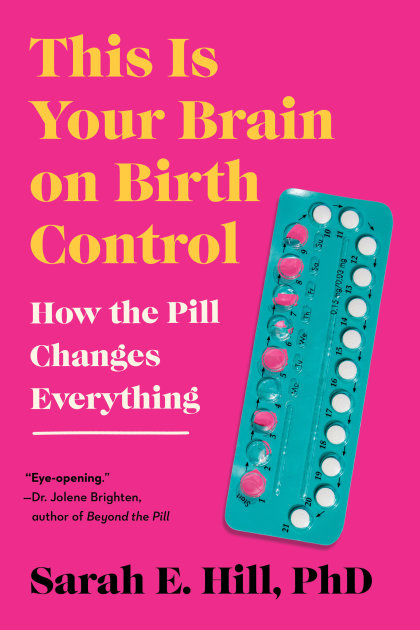
This groundbreaking book sheds light on how hormonal birth control affects women--and the world around them--in ways we are just now beginning to understand. By allowing women to control their fertility, the birth control pill has revolutionized women's lives. Women are going to college, graduating, and entering the workforce in greater numbers than ever before, and there's good reason to believe that the birth control pill has a lot to do with this. But there's a lot more to the pill than meets the eye.
Although women go on the pill for a small handful of targeted effects (pregnancy prevention and clearer skin, yay!), sex hormones can't work that way. Sex hormones impact the activities of billions of cells in the body at once, many of which are in the brain. There, they play a role in influencing attraction, sexual motivation, stress, hunger, eating patterns, emotion regulation, friendships, aggression, mood, learning, and more. This means that being on the birth control pill makes women a different version of themselves than when they are off of it. And this is a big deal. For instance, women on the pill have a dampened cortisol spike in response to stress. While this might sound great (no stress!), it can have negative implications for learning, memory, and mood. Additionally, because the pill influences who women are attracted to, being on the pill may inadvertently influence who women choose as partners, which can have important implications for their relationships once they go off it. Sometimes these changes are for the better . . . but other times, they're for the worse. By changing what women's brains do, the pill also has the ability to have cascading effects on everything and everyone that a woman encounters. This means that the reach of the pill extends far beyond women's own bodies, having a major impact on society and the world.
This paradigm-shattering book provides an even-handed, science-based understanding of who women are, both on and off the pill. It will change the way that women think about their hormones and how they view themselves. It also serves as a rallying cry for women to demand more information from science about how their bodies and brains work and to advocate for better research. This book will help women make more informed decisions about their health, whether they're on the pill or off of it.
STANDARD, PRIMARY, DM AND VARIANT COVERS
Standard and Primary covers are widely available through general retailers. They often have higher print runs and can be cheaper, especially during sales.
In contrast, Direct Market (DM) and variant covers are primarily sold in comic shops. DM editions tend to have more limited availability and may be more valuable to collectors.
The main differences lie in artwork style, availability, price, and collector appeal. Ultimately, the choice between standard and variant covers depends on personal preference, budget, and individual collecting goals.
PRODUCT TYPES
Comic book enthusiasts have various formats to choose from when collecting their favorite stories.
Here's a brief overview of the main types:
Omnibus
- Large, hardcover collections
- Usually contain complete runs or extensive story arcs
- Typically 800-1000+ pages
- Higher price point, often €100-€150
Oversized Hardcover (OHC)
- Similar dimensions to omnibus, but thinner
- Collect shorter runs or story arcs
- Usually 300-600 pages
- Priced between €30-€50
Hardcover (HC)
- Standard-sized hardcover books
- Collect 6-12 issues typically
- Similar dimensions to single issues, but with a hard cover
- Priced around €25-€35
Trade Paperback (TP)
- Softcover collections
- Standard comic book size
- Usually collect 4-6 issues
- Most affordable option, typically €15-€25
Other Formats
- Absolute Editions: Oversized, deluxe hardcovers (mainly DC Comics)
- Compendiums: Massive paperback collections
- Graphic Novels (OGN/GN): Original stories not previously released as single issues
The choice between these formats often depends on personal preference, budget, and collecting goals. Omnibus and OHC editions offer larger artwork and more content but at a higher price, while TPs provide a more affordable way to collect complete story arcs